Blog

Brisbane bus and coach hire company

How Do You Choose a Reliable Brisbane Bus and Coach Hire Company?

Before booking private bus hire in Brisbane, check the operator’s accreditation and insurance, ask about driver authorisations, confirm the vehicle suits the passengers and luggage, and provide a complete itinerary. These essentials matter because a suitable vehicle is only one part of a successful group journey.

Qualified drivers, safety processes, appropriate insurance, vehicle suitability, clear communication and careful route planning all affect how smoothly a corporate event, study tour or school activity runs. This guide explains the practical checks that help organisers choose group transport with confidence.

Hi, I’m Cam Storey, owner of Brisbane360. I’ve worked in passenger transport since 2009 and have hands-on experience coordinating private group travel across Brisbane and South East Queensland.

My work with vehicle selection, route planning, pickup coordination and event logistics has shown me that businesses, schools and group organisers need more than a vehicle: they need a clear plan, realistic timing and a professional driver who understands the journey.

Interior view of modern coach seating for comfortable Brisbane group transport

Key Things to Check When Choosing a Reliable Bus Hire Company in Brisbane

  • Confirm the operator can explain its accreditation, insurance and safety procedures.
  • Ask about driver authorisations, relevant experience and checks for school travel.
  • Match passenger numbers, luggage and journey length to the right vehicle size.
  • Provide a complete itinerary so pickup times, stops and venue arrivals can be planned properly.
  • Choose a provider with experience coordinating corporate, educational and group transport.

What Makes a Bus Hire Company Reliable and Safe?

Is the Bus Hire Company Properly Accredited and Insured?

A reliable bus hire company should be open about the operational standards behind its service. In Queensland, operator accreditation and driver authorisation requirements can apply to public passenger transport services, with exemptions in some circumstances.

The Queensland Government explains the operator accreditation framework, including the requirement for accredited operators to meet ongoing responsibilities. Organisers should feel comfortable asking how an operator manages accreditation, vehicle maintenance and insurance, then requesting current documentation relevant to the booking.

Clear answers and current records help confirm that the provider is prepared to manage group travel responsibly.

The company provides private bus and coach hire with a professional driver for groups across Brisbane and South East Queensland. For school groups, corporate organisers and tour coordinators, the practical question is whether the provider can explain the arrangements that support the itinerary rather than simply confirming a vehicle is available.

What Should You Check About Drivers for Coach Hire Brisbane?

Driver experience affects more than driving. For busy event days, multi-stop business itineraries and educational travel, professional drivers need to work to the agreed schedule, assist passengers appropriately and communicate clearly when conditions change. This matters when arranging coach hire in Brisbane.

Ask how the operator confirms passenger transport driver authorisations, relevant licences, ongoing training and any child-safety screening or Working with Children Checks required for the service.

The Queensland Government also provides a process for checking the currency and category of operator accreditation, giving organisers an independent step to discuss with a provider before confirming group travel.

Brisbane 360 private coach travelling through scenic South East Queensland

How Do You Assess Vehicles for Private Bus Hire?

Vehicle selection should reflect the actual group, not simply the largest available option. Consider passenger numbers, seating comfort, travel distance, luggage, sporting equipment and any accessibility requirements before confirming a booking.

Rather than relying on a broad fleet claim, ask the provider to confirm the seating capacity, luggage allowance and accessibility suitability of the specific vehicle proposed for the journey. Brisbane360 has vehicle options suited to a range of group sizes, and the recommended vehicle should be matched to the itinerary rather than selected on capacity alone.

A smaller vehicle can suit an executive team or compact itinerary, while a larger coach may be more practical for school camps, conferences or groups carrying equipment. Discussing these details early helps the provider recommend an appropriate private bus hire option or coach hire service and build a workable schedule.

Does the Bus Hire Company Offer the Right Transport Services for Your Group?

A dependable provider should first understand why the group is travelling, then plan the vehicle and itinerary around that purpose. Corporate groups, study tours and school activities each create different timing, passenger and equipment requirements.

Passengers boarding a Brisbane 360 executive coach for a South East Queensland event

Corporate Transport for Business Travel, Tours and Events

Corporate transport can involve private business tours, property inspections, familiarisation visits, meetings, conferences and staff events.

A useful provider asks about the full sequence of venues, the time required at each stop and the passenger mix before recommending a vehicle. That planning keeps groups together and reduces the complexity of separate travel arrangements.

For executive teams and smaller groups, a minibus can be a practical choice. Larger vehicles may suit conference delegates or a full-day itinerary with several locations. The corporate group transport service is designed around private journeys with a professional driver, allowing organisers to coordinate timings and stops in one plan.

Study Tours and Educational Group Transport

Study tours often involve students, teachers, faculty and accompanying staff moving between accommodation, campuses, attractions and organised activities. The right provider needs to understand group numbers, supervision needs, luggage, daily timing and whether the itinerary runs across several days.

When evaluating a provider for an educational itinerary, ask how it manages clear pickup instructions, changes to the daily plan and vehicle capacity for both passengers and belongings. The study tour transport service supports organised educational group travel across Brisbane and South East Queensland.

School Transport for Excursions, Camps and Sporting Events

School travel needs different planning from ordinary business transport. Excursions, camps, sporting events and interschool competitions may involve early starts, multiple pickup points, luggage, sporting equipment and firm arrival windows. Organisers should confirm seating capacity, driver checks, itinerary communication and the information teachers or group leaders need before departure.

For school groups, clear coordination helps students, teachers and accompanying staff travel together with fewer moving parts to manage. The school group transport service can be planned around the destination, group size and practical requirements of the day.

What Information Helps You Request a Reliable Quote?

A useful bus hire quote request includes the travel date, operating hours, passenger numbers, pickup and destination addresses, any additional stops, return arrangements, luggage or equipment needs and timing constraints. Detailed information helps the provider recommend a suitable vehicle and prepare a more accurate plan for the journey.

Professional driver greeting group passengers for private coach hire in Brisbane

Common Questions About Booking Group Transport in Brisbane

What should I look for in a reliable bus hire company in Brisbane?

Look for clear information about accreditation, insurance, driver qualifications, vehicle suitability and itinerary planning. A reliable provider should also ask questions about passenger numbers, stops, luggage and timing before recommending a vehicle.

How can I check whether a bus hire operator is accredited in Queensland?

Ask the operator to explain its accreditation and safety processes, and request current documentation where it is relevant to your booking. A legitimate provider should be able to discuss the standards that support its commercial passenger transport service.

What size bus should I hire for a corporate group?

Choose the vehicle around the number of passengers, the length of the journey, luggage and the number of stops. A minibus may suit a smaller executive group, while a coach can be more practical for a conference group or a full-day itinerary.

Can I arrange private transport for multiple business meetings or property inspections?

Yes. A private group transport plan can be built around multiple meetings, site visits or property inspections. Provide the full list of venues, preferred arrival times and expected time at each stop so the itinerary can be coordinated realistically.

Does Brisbane360 provide transport for school camps and sporting events?

The company provides private bus and coach transport with a professional driver for school excursions, camps, sporting events and organised activities. When requesting a quote, include student numbers, teacher and staff numbers, luggage, equipment and the complete travel schedule.

Can a bus hire company accommodate multi-day study tours?

Yes, provided the itinerary, passenger numbers, luggage and daily movements are planned in advance. For multi-day educational travel, it is useful to confirm accommodation locations, activity timings, pickup arrangements and any changes that may affect the schedule.

How far in advance should I organise group transport in Brisbane?

Organise transport once the date, approximate passenger numbers and itinerary are known. Earlier planning gives the provider more time to recommend the right vehicle and coordinate the practical details of the journey.

How Can You Compare Bus Hire Companies and Prepare for a Reliable Booking?

A practical comparison starts with the journey rather than a headline price. Share the group size, travel date, operating hours, pickup and destination addresses, additional stops, luggage or equipment needs, return arrangements and any non-negotiable arrival times. That information helps a provider recommend a vehicle that fits the group and allows enough time for the itinerary.

Does the Provider Have the Right Fleet for Your Group?

The right vehicle balances passenger capacity, comfort, luggage space and the distance being travelled. A smaller minibus may suit a compact business group, while a larger coach can be more appropriate for students, conference delegates or groups travelling with bags and equipment. Confirm the seating layout and storage requirements before the booking is finalised. Depending on the itinerary, Corporate Bus Hire, School Bus Transport or Private Bus Hire may be relevant options to discuss.

Can the Company Coordinate Your Itinerary and Pickup Requirements?

For multi-stop travel, a reliable provider should work through the order of locations, pickup points, venue access and realistic travel time between each stop.

Corporate events may need timed arrivals for meetings and presentations, while educational groups may need clear instructions for teachers, students and accompanying staff. Early communication makes it easier to account for changes without losing sight of the wider plan.

What Should You Include When Requesting a Bus Hire Quote?

Include the travel date, required operating hours, estimated passenger numbers, all pickup and destination addresses, additional stops, luggage or equipment requirements, return travel needs and any special timing considerations. The more complete the itinerary, the more accurately a transport plan can be prepared.

Choosing a Reliable Bus Hire Company in Brisbane for Your Group

Modern coach seating inside a Brisbane tour bus for comfortable group transport.

Reliable group transport comes down to practical preparation: confirm operational standards, choose experienced drivers, match the vehicle to the group and share a complete itinerary. These steps matter whether you are organising corporate travel, a study tour or a school activity across Brisbane and South East Queensland.

Brisbane360 brings hands-on experience in private group travel, vehicle selection and route planning. Discussing the journey details early helps the team recommend a suitable private bus or coach option with a professional driver.

employee transport services Brisbane

Employee Transport Services Brisbane: A Guide for Business Teams

Businesses searching for employee transport services Brisbane can use to move staff between designated pickup points, transport hubs and worksites on a planned schedule. This guide explains how to assess pickup locations, choose a suitable vehicle, plan around shift times and prepare for the first trip. For early starts, rotating shifts or regular travel to an industrial site, dedicated staff transport can simplify commuting and reduce reliance on individual cars.

Brisbane360 provides private group transport across Brisbane and South East Queensland, with vehicle options for different group sizes and travel requirements. Routes, pickup times and vehicle allocation can be arranged around a team’s schedule, making daily staff movements easier to coordinate. For businesses considering regular staff movements, documenting pickup times, routes and vehicle requirements makes it easier to coordinate daily travel.

Hi, I’m Cam Storey, owner of Brisbane360. I’ve worked in passenger transport across South East Queensland since 2009, helping organise group travel, vehicle allocation, pickup logistics and practical route planning for businesses.

A Brisbane360 bus parked on a city street, representing reliable employee transport services in Brisbane for business teams.

Employee Transport Services in Brisbane at a Glance

  • Best suited to coordinated workplace travel: Employee transport can support teams travelling to the same site for shifts, projects or events.
  • Planning matters more than promises: Clear pickup points, passenger numbers and access instructions help make each service easier to coordinate.
  • Vehicle choice depends on the full brief: Group size, equipment, pickup access and separate shift times should be considered together.

How Employee Transport Services Support Brisbane Workplaces

A Brisbane360 corporate transport coach parked on a city street for employee transport services in Brisbane.

For businesses comparing employee transport services Brisbane providers can arrange, coordinated staff travel can be especially helpful when public transport, parking availability or staggered start times make individual commuting less practical. They can suit offices, industrial sites, construction teams, project sites and other workplaces that need people to arrive at a designated location together. They are especially relevant where early starts, rotating rosters, limited parking or a remote worksite make individual commuting less practical. The most useful arrangements begin with a clear picture of who is travelling, where they need to be, and what time they must arrive.

According to the Australian Bureau of Statistics 2021 Census for Greater Brisbane, households in the region averaged 1.9 motor vehicles each. That does not determine whether a business needs staff transport, but it reinforces the value of assessing parking, public-transport connections, shift times and site access before deciding how employees will travel.

Employee Transport Services Brisbane: Shift Workers and Industrial Sites

Employee transport is particularly useful for shift workers and industrial-site teams who need to arrive at a designated location at a similar time. For these workplaces, a shared vehicle can make handovers easier to coordinate and reduce the number of cars arriving at the same time. Businesses can nominate practical pickup points near staff catchments or transport hubs, then align departure times with rostered starts. For recurring staff transport, a consistent route sheet, passenger contact list and nominated workplace coordinator can make daily or weekly movements easier to manage. For example, a Brisbane construction or warehouse team may need separate pickup arrangements for early and late crews, a designated waiting area away from site traffic, and a site contact who can confirm access changes before departure. Brisbane360’s employee transport options across South East Queensland can be useful where worksites have limited parking or are difficult to reach by regular public transport.

It is worth confirming the site-entry process before the first trip. A workplace may have separate gates for heavy vehicles and staff, sign-in requirements, restricted access times or a designated drop-off area. Sharing those details with the driver and passengers beforehand helps keep the arrival process straightforward. For construction and industrial sites, the brief should also confirm safe waiting areas, high-visibility or identification requirements, induction arrangements and the contact person responsible for access on the day. Queensland’s on-site traffic-management guidance is a useful reference when a workplace needs to manage interactions between pedestrians and vehicles at the final drop-off point.

Pickup Planning for Staff Transport

A reliable staff transport plan starts with realistic pickup locations, journey times and passenger numbers. Pickups should be easy to find, safe to use and practical for the vehicle, particularly where roads are narrow or busy during peak periods. If staff are travelling from different suburbs, a small number of well-chosen meeting points is often easier to manage than a long sequence of individual collections. For businesses with multiple pickup locations, map each stop in order, set a clear departure window and nominate a single contact who can report no-shows or late roster changes before the vehicle leaves.

Businesses should also consider how passengers will reach the pickup point. Locations near public transport connections, established car parks or clearly recognisable landmarks can reduce confusion. For workplace drop-off planning, Queensland’s guidance on on-site traffic management is a useful reference where pedestrians and vehicles share the final access area. For additional planning ideas, Brisbane360’s employee transport solutions guide explains how businesses can organise staff travel around practical pickup and workplace requirements.

Choosing the Right Bus or Coach for Your Team

Selecting the right vehicle starts with the confirmed passenger count, but it also depends on luggage, work equipment, pickup access and whether separate shifts need separate trips. Smaller groups may suit a compact vehicle where pickup streets are tight, while larger teams travelling to industrial areas such as Wacol or Yatala may need a coach with more seating and storage. Brisbane360 can confirm a suitable vehicle configuration once the itinerary and group requirements are known.

Group size Vehicle planning consideration Potential use
Small team A compact vehicle option with straightforward pickup access Small crews or local workplace transfers
Medium group A bus sized for the confirmed passenger count and equipment Department movements or larger work teams
Large group A coach with sufficient seating and storage Larger shift groups or travel to major sites

Exact seating configurations should be confirmed with Brisbane360 before booking, particularly when numbers vary between shifts. It is also sensible to allow for supervisors, visitors or replacement staff who may need to travel at short notice. A confirmed passenger list gives the operator a better basis for recommending a practical option.

What Should Businesses Confirm Before Booking a Corporate Bus Rental?

Before booking, prepare a short transport brief covering the date, pickup points, required arrival time, passenger count, luggage or equipment, and any site-access requirements. Include a contact person who can confirm changes on the day. This reduces the risk of last-minute uncertainty and makes it easier to assess whether one vehicle, separate departures or a revised route would be more suitable.

A corporate bus rental can be matched to the number of passengers, route length and equipment staff need to bring. When choosing a transport provider, ask about driver authorisations, insurance, vehicle maintenance and site-access requirements. Brisbane360’s guide to arranging corporate bus hire outlines further practical considerations for workplace travel.

Planning Employee Transport: Costs, Safety and Scheduling

Planning employee transport is most effective when costs, passenger safety and scheduling are considered together. A clear brief helps businesses compare suitable vehicle options and arrange a practical service around operational needs. It also gives staff and site managers a consistent set of instructions before the first trip.

How Much Do Employee Transport Services Cost in Brisbane?

Employee transport costs in Brisbane generally depend on the vehicle size, travel distance, service duration, pickup locations, time of day and how often transport is required. A detailed itinerary helps provide an accurate quote and reduces changes after the service is arranged. If travel is needed across several shifts, provide the expected timing and passenger numbers for each departure rather than only the first trip.

It is also useful to confirm whether the service is a one-off requirement, a short project arrangement or an ongoing workplace transport need. That context can affect route planning, vehicle availability and the amount of coordination required. Confirm which costs and service details are included before booking so the quote reflects the actual transport requirement.

Driver Requirements and Passenger Safety

Professional drivers, suitable vehicle maintenance and clear passenger information are essential parts of workplace transport. When comparing providers, check that the operator can explain driver authorisations, insurance, maintenance practices and site-specific access arrangements. This staff transport information can help businesses identify the practical details to confirm before booking.

For trips that involve longer operating hours or multiple departures, fatigue management is also an important planning consideration. The National Heavy Vehicle Regulator’s bus-industry fatigue-management guidance explains the broader importance of managing fatigue in heavy-vehicle operations. Businesses do not need to manage a driver’s compliance obligations, but they should give the provider realistic schedules, accurate route information and early notice of changes. This helps the operator plan each service around the actual workplace timetable rather than assumptions about shift times or site access.

How to Plan a Reliable Staff Transport Route

A reliable staff transport route starts with staff numbers, shift times, pickup areas and the destination’s access requirements. Work backwards from the required arrival time, allowing for boarding, traffic variation and site entry before a shift begins. Regular communication about pickup points and roster changes helps keep the service straightforward for passengers and managers. Where crews change between weekdays, nights or project stages, provide revised passenger numbers and pickup details early so the transport plan can be reviewed before the next service.

A practical route plan should cover:

  • Pickup locations: Choose accessible meeting points close to staff catchments or public transport connections.
  • Travel time: Allow for peak-period traffic, shift-change congestion and realistic boarding time.
  • Shift coordination: Set departure times by working backwards from the required arrival time and site-access process.
  • Passenger numbers: Confirm expected attendance for each day or shift, including changes to crew sizes.
  • Contingency communication: Nominate who will communicate delays, cancellations or changed pickup points to passengers and site contacts.
  • Roster updates: Give the workplace coordinator one clear process for reporting changed crew numbers, shift times or replacement staff before each service.

A simple route sheet can make these details easier to share. It should list each pickup point, the planned departure time, the site contact, the arrival location and any instructions passengers need to know. Keep the sheet current if rosters, access routes or contact details change. For additional planning ideas, see Brisbane360’s guide to reliable employee bus transport, which covers practical staff-travel coordination in more detail.

For example, a warehouse team travelling to an industrial site could use two accessible pickup points near public transport, set departures around the rostered start time and confirm the expected passenger list before each shift. This is an illustrative planning example rather than a documented Brisbane360 case study. It demonstrates how clear pickup points and confirmed passenger lists can support practical scheduling.

Scheduling for Different Workplace Needs

Businesses may need transport for a single project, an event, a temporary worksite or regular staff movements. The key is to define the timetable, passenger numbers and pickup requirements early, then confirm any changes before the service date. Where start times differ, it may be more practical to arrange separate departures than to expect one group to wait for another. A workplace coordinator can collect roster updates, confirm which pickup points are active and share any changes with passengers before each departure.

Before the first service, confirm the final timetable, pickup instructions, passenger contacts and the process for reporting delays. Reviewing these details after the first few trips can help businesses adjust the plan as staff numbers or site requirements change. Scheduled staff transport helps businesses coordinate shift arrivals, although journey times can still vary with traffic and road conditions.

Questions to Ask Before the First Trip

Ask who has authority to approve timetable changes, who will update the passenger list and how site contacts should be reached if conditions change. Clarify where the vehicle can wait, whether passengers need identification, and whether there are restrictions on luggage or work equipment. These details may seem minor, but resolving them early can make the service easier for both staff and site managers.

A modern coach parked on a Brisbane city street for professional employee transport services.

Frequently Asked Questions About Employee Transport

For businesses reviewing employee transport services Brisbane options, these common questions can help clarify their requirements before arranging employee transport services in Brisbane. A useful starting point is to prepare the likely passenger numbers, shift times and preferred pickup areas before requesting a quote. That gives the operator enough information to discuss a practical vehicle and route.

How far in advance should we book employee transport?

Booking early gives more time to confirm the preferred vehicle, route and pickup schedule. For regular or complex staff movements, allow time to review access requirements, share passenger instructions and test the proposed timetable. Early planning is particularly helpful when travel is needed during busy periods or for a large team.

Can employee transport accommodate different shift times?

Yes, planning can account for different start and finish times when passenger numbers, pickup points and the timetable are provided in advance. Some workplaces may need separate departures for day and night shifts, while others may be able to use one route with adjusted pickup times. Clear communication is important if rosters change frequently. A nominated coordinator should provide updated shift times, passenger numbers and active pickup points early enough for the transport arrangements to be reviewed.

How is employee transport priced?

Quotes are usually based on the vehicle, route, distance, duration, pickup requirements and service timing. Sharing a complete itinerary makes it easier to receive a quote that reflects the actual transport requirement. If the plan includes several departures, note the time and expected number of passengers for each one.

What size bus do we need for our workforce?

Choose a vehicle based on confirmed passenger numbers, luggage or equipment needs, trip length and site access. It is also important to consider whether separate shifts need separate trips and whether the pickup area can accommodate the vehicle. A provider can help match the vehicle capacity to the group and route.

What information should staff receive before travelling?

Staff should receive the pickup location, departure time, a contact number for day-of-travel updates and any site-entry instructions. Ask passengers to arrive early enough to board without rushing, especially when the service has more than one pickup point. A short written message can help avoid missed collections and uncertainty on the day.

Employee Transport Services Brisbane: Practical Next Steps

A Brisbane360 minibus parked on a city street, representing reliable employee transport services in Brisbane for business teams.

Effective employee transport services in Brisbane start with a clear brief: who is travelling, where they will be collected, when they need to arrive and what site conditions apply. Allow for traffic variation, communicate changes early and confirm the final passenger numbers before the service date. These steps help businesses make staff travel more organised without promising conditions that road or site circumstances can affect.

Brisbane360 provides professional-driver private bus and coach transport for group travel across Brisbane and South East Queensland. For businesses arranging staff movements, the team can help review the itinerary, group size, pickup access and workplace requirements to identify a practical option for corporate group transport.

To coordinate your organisation’s transport requirements, explore Corporate Group Transport Services or request a Custom Corporate Transport Quote.

coomera employee transport

Can Coomera Employee Transport Reduce Site Parking Pressure?

Coomera employee transport can ease site parking pressure by moving groups of workers on a planned route instead of relying on separate cars for every shift. For industrial estates, warehouses and depots near the M1, the practical goal is simple: make arrivals predictable, protect loading areas and keep staff access safer during busy changeovers.

A workable service starts with real operating data: shift start and finish times, where employees travel from, how many cars arrive at once and which bays or access roads become constrained. From there, businesses can test pickup hubs such as Coomera station, set a suitable vehicle size and refine the schedule around the busiest workforce movements.

Hi, I’m Cam Storey, owner of Brisbane360. I’ve worked in passenger transport since 2009, with hands-on experience in group and event travel across South East Queensland. At Brisbane360, I’ve helped coordinate private bus and coach transport with professional drivers, and I know that effective Coomera employee transport depends on matching the route, vehicle, pickup points and shift times to the way a workplace actually operates.

Key Takeaways

  • Group transport can reduce the number of employee vehicles competing for limited on-site bays during shift changes.
  • Peak-shift planning works best when pickup times are built around roster data, not assumed travel times.
  • Coomera station can provide a practical meeting point when staff can connect from rail or nearby suburbs.
  • Reliable shared arrivals can support punctuality, safer site access and smoother freight movements.
  • A short trial route gives managers a clear way to assess take-up, timing and parking outcomes before expanding the service.

Why Do Coomera Worksites Need a Plan for Employee Parking?

Coomera and Upper Coomera workplaces often need to manage staff cars alongside freight vehicles, visitor access and operational yard space. When large teams arrive independently within a short window, overflow parking can affect turning areas, sightlines and access to loading zones. The issue is often most visible where early-morning, afternoon and night crews overlap.

Private-car travel remains a major part of the commuting mix. The Australian Bureau of Statistics 2021 Census data shows that travelling by car was the most common method of getting to work in Queensland. That statewide finding is not specific to Coomera, but it helps explain why a workplace transport option can be useful when public transport connections do not align with rostered hours.

For facilities managers, the first step is to identify the precise pressure point. Review vehicle counts at each gate, occupied bays at shift change, recurring kerbside parking and the time lost when trucks or staff must wait for access. This creates a practical baseline for deciding whether a dedicated employee route could make a meaningful difference. The Gold Coast Travel Behaviour Change Plan 2017–2022 also provides useful regional context on reducing private-car dependence and congestion.

How to Organise Coomera Employee Transport for Peak Shifts

Peak-shift transport should be designed around the times when a site feels the most pressure, not around a generic timetable. Start with the busiest two or three arrival and departure windows, then compare staff home areas, rail connections and realistic travel times along the M1 and local access roads.

Build routes around actual roster patterns

Commercial transit vehicle in Upper Coomera

A practical route usually starts with a staff survey and a short roster review. Look for clusters of employees travelling from Coomera, Upper Coomera, Oxenford, Helensvale or a rail connection, then establish one or two safe, well-lit pickup points. Avoid adding stops that only save a few minutes for one traveller but make the whole service less reliable.

Businesses can also compare route options with tailored employee transport solutions to decide whether a direct depot run, a station connection or a small number of suburb-based pickups best suits their workforce.

Match vehicle capacity to the shift, not the full workforce

The right vehicle is based on likely passengers for one service, including a sensible allowance for growth, rather than the total number of employees on the payroll. A smaller group may need a compact vehicle, while a major shift change may need a larger coach or staggered services. Reviewing attendance after the first few weeks helps avoid paying for unused seats or leaving regular passengers behind.

Use a short trial and clear operating rules

Run an initial trial for a defined group or shift team. Confirm booking or attendance expectations, final pickup locations, contact details for changes and what happens when a shift finishes late. A simple weekly review should track passenger numbers, on-time arrivals, available parking bays and feedback from supervisors. Gold Coast staff transport options offer further practical context for adapting services to workforce travel needs.

For workplaces with teams travelling across a wider area, workforce transport across SEQ provides useful examples of how planned group travel can be adapted to different operating locations.

Smart Ways Coomera Employee Transport Can Improve Punctuality and Site Operations

A well-run employee transport service does more than reduce parked cars. It gives staff a more consistent arrival plan, helps supervisors start shifts with the right people on site and makes it easier to manage access roads during busy periods.

Keep arrivals reliable without overcomplicating the route

Scheduled private group transport departing Coomera station

Use a route with a clear primary pickup point, limited stops and a realistic buffer for recurring congestion. Set the scheduled arrival early enough for staff to walk in, complete sign-in requirements and start safely, rather than aiming for the exact shift commencement time. If a route connects with rail, allow for the reliability of the relevant train service and provide a contact process for disruptions.

Support smoother handovers, safer access and workforce transport across SEQ

When incoming and outgoing teams use coordinated group transport, fewer cars need to circulate through the site at once. That can reduce congestion near boom gates, staff entrances and truck turning areas. It also gives managers a clearer view of expected arrivals and departures during handovers.

Measure benefits that matter to the workplace

Track a small set of operational measures before and during the trial:

  • Available parking bays: compare availability during the busiest changeover periods.
  • On-time starts: review whether scheduled group arrivals reduce late starts linked to road delays.
  • Passenger take-up: monitor repeat use, wait-list demand and no-shows.
  • Access issues: record blocked bays, kerbside overflow and conflicts with freight movements.
  • Staff feedback: ask whether the route, pickup locations and timing make the commute easier.

Brisbane360 provides private bus and coach transport with a professional driver, allowing businesses to focus on their workforce and site operations rather than coordinating vehicles themselves. For organisations reviewing several locations or roster types, staff transport services can help frame a practical starting point.

What Should Businesses Consider When Budgeting for Employee Transport?

For facilities managers, operations managers and business owners, budgeting for Coomera employee transport starts with defining the service requirement rather than looking for a one-size-fits-all option. The main considerations are expected passenger numbers, the distance between pickup points and the workplace, the number of pickups needed for each shift, roster patterns and the vehicle capacity required at the busiest times. A service running across several pickup locations or covering different shift windows may need a different arrangement from a direct workplace run for one regular team.

It is also useful to compare the transport commitment with the operational pressures the service is intended to address. Consider whether employee transport services could reduce demand for limited parking bays, make shift arrivals more consistent or keep access roads clearer for staff, visitors and freight vehicles. This gives decision-makers a practical basis for assessing workforce transport as part of site operations, rather than treating it as a stand-alone travel expense.

Before committing to an ongoing arrangement, businesses can trial a route with a defined shift group and review actual passenger numbers, attendance patterns and timing. The trial can show whether a smaller vehicle, a larger coach, an adjusted pickup frequency or a revised shift service would better match demand. Brisbane360’s private bus hire and private coach hire services can be planned around these real operating needs, helping businesses select a suitable approach without relying on assumptions.

Frequently Asked Questions

How much parking can employee transport free up at a worksite?

The result depends on passenger numbers and how many people would otherwise drive alone. A route carrying a regular group of workers can remove the same number of individual employee vehicles from the site during that shift, which may free bays for visitors, freight activity and operational vehicles.

Can Coomera employee transport connect with train services?

Yes, where the roster and rail arrival times are workable. Coomera station can be a useful meeting point for employees who can reach it by train or local transport, but the final pickup time should include a buffer for walking, sign-in and normal service variability.

How far in advance should a business plan a peak-shift route?

Begin with a staff survey and roster review several weeks before launch where possible. This gives time to identify likely passengers, confirm pickup points and communicate the trial. A short trial can then be adjusted using real attendance and timing data.

Is a dedicated employee route only useful for large depots?

No. It can also suit smaller teams where a concentrated arrival time, limited parking or difficult public transport access creates regular pressure. The key is consistent demand from a group travelling to the same workplace at similar times.

Are professional drivers included with Brisbane360 transport services?

Yes. Brisbane360 provides private bus and coach transport with experienced professional drivers, supporting safe and dependable group travel for workplace teams.

How Can Coomera Employee Transport Solve Site Parking Challenges?

White coach parked at a depot, representing reliable Coomera employee transport solutions for shift workers.

Coomera employee transport is most effective when it is treated as an operational tool, not simply a transport arrangement. By planning around peak shifts, concentrated staff home areas and realistic travel times, businesses can reduce pressure on parking bays, support more dependable starts and keep access areas clearer for essential site activity.

Brisbane360 can help businesses plan private bus hire, private coach hire and group transport around their operating hours, workforce size and pickup needs. To discuss a suitable service, explore:

Brisbane360 bus ready for private group transport in Brisbane

How Can You Compare Safe and Reliable Brisbane Bus Hire Companies?

When you are arranging transport for a group, you want to know the people travelling with you are in capable hands. From workplace events to school outings and community days, the small decisions made before departure set the tone for the whole trip.

The safest way to compare Brisbane bus hire companies is to look past broad claims and ask each provider for the same current information. A reputable operator should be able to discuss its accreditation, insurance arrangements, proposed vehicle, driver arrangements and the plan for your day in clear terms. Check that the operator is recognised, ask whether it has appropriate insurance cover for the trip, and discuss seating, luggage space and comfort for the people travelling.

Hi, I’m Cam Storey, owner of Brisbane360. I’ve worked in passenger transport since 2009 and have coordinated group travel for schools, workplaces, community groups and events across Brisbane and South East Queensland. My experience with route planning, vehicle selection, pickups and event logistics has shown me that a good booking conversation matters. In this guide, I share the practical questions worth asking before you choose a bus hire provider.

Key Takeaways

  • Check recognition first: Ask for current Queensland operator accreditation details rather than relying on a website claim.
  • Compare the same trip: Give every provider the same passenger numbers, route, pickup times, luggage and accessibility needs.
  • Ask about insurance clearly: Check that the company has appropriate cover and can provide the paperwork your organisation needs.
  • Look beyond seat numbers: Compare the proposed vehicle’s seating, luggage space, passenger comfort and access arrangements.
  • Read the quote closely: It should make the inclusions, pickup points, timings and day-of contact clear.
What to compare What to ask for or check A useful warning sign
Operator accreditation Current Queensland operator accreditation details and a clear explanation of who is providing the service. The provider avoids the question or gives only general marketing claims.
Insurance arrangements Confirmation that appropriate cover is in place for the booking and the documents your organisation requires. The answer is vague or changes when you ask follow-up questions.
Driver arrangements What driver qualifications or authorisations apply, who will be your contact, how the driver is briefed on the itinerary and how updates will be handled on the day. No one can explain how the day will be coordinated.
Vehicle condition and safety How the proposed bus or coach is kept ready for service and how it suits the trip, including seating, luggage, passenger comfort and any access needs. The quote names no vehicle type or does not address the group’s practical needs.
Passenger capacity and accessibility The seating layout, luggage allowance and any accessibility arrangements needed for your passengers. The provider promises a fit without asking about passengers or equipment.
Booking reliability A written quote with the route, pickup points, timings, inclusions and day-of contact details. Important details are missing or the written quote does not match the conversation.

Queensland Transport Regulations and Operator Accreditation

When comparing bus hire providers, accreditation is a useful place to begin. It lets you check that the business is recognised to provide passenger transport in Queensland, rather than taking a website claim at face value.

Ask the provider for its accreditation details before you commit, then use the Queensland Department of Transport and Main Roads guidance on operator accreditation to understand why it matters. You do not need to learn the regulations. The practical point is to establish that you are dealing with a recognised passenger transport operator, then compare every quote on the same basis. For more local planning advice, Brisbane360 also has guides on passenger transport standards and choosing a reliable passenger transport service.

Why Public Liability Insurance Matters for Group Organisers

Brisbane360 coach prepared for private group transport in Brisbane

You do not need to be an insurance expert to make a sensible booking decision. Ask whether the company has appropriate public liability cover and request a current Certificate of Currency if your organisation needs formal evidence. It can confirm that a policy is current on the document date, but it does not replace reading any conditions your organisation needs to understand or taking insurance advice where required. Public liability cover is not the same as every other arrangement that may relate to a vehicle or passengers, so ask the provider what is relevant to your booking rather than assuming one document answers every question.

From years of organising group travel, I have found that the most useful booking conversations are specific. Tell the provider who is travelling, where the group needs to be and what needs to come on board. That makes it easier to compare the vehicles and practical arrangements each company is actually proposing. Brisbane360 can provide relevant accreditation and insurance information for your planned journey on request.

How to Verify Bus Hire Safety Claims and Compare Providers

For Brisbane bus hire safety, look beyond broad statements about being safe, experienced or fully insured. A useful comparison starts with asking each provider for the same information, then checking whether the answers are clear and consistent. Queensland’s operator accreditation responsibilities are a practical starting point: ask for the operator’s current accreditation details and the category that applies to the service being offered. You can also ask who is responsible for the booking and the vehicle on the day, and how the driver is authorised for the work.

Passenger transport compliance is not something an organiser needs to master. It is about seeing whether a provider can explain the basics without hesitation. Ask what vehicle has been proposed, whether it has the seating and luggage space your group needs, and how the operator keeps it ready for service. Queensland TMR publishes guidance on maintenance of public passenger vehicles, while operators also have responsibilities around driver fatigue and safety management. A clear answer should focus on the arrangements for your trip rather than vague promises.

Useful questions to put to every provider include:

  • Can you provide your current Queensland operator accreditation details and explain the service category?
  • Who will be the day-of contact, and how will the driver receive the final itinerary and any updates?
  • What vehicle are you proposing, and how does it suit our passenger numbers, luggage and accessibility needs?
  • What evidence can you provide about the operator’s insurance arrangements and the booking details we have agreed?
  • If our plans change, who will confirm the revised pickup points, timings and group requirements?

A provider should be able to answer those questions plainly and put the important details in writing. Queensland-wide road-crash data can help explain broader road-safety issues, but it cannot establish the individual safety record of a private bus hire company. For that reason, it is more useful to compare current accreditation information, the vehicle and driver arrangements proposed, and the clarity of the written booking.

From my experience coordinating group travel since 2009, the best booking conversations are usually the most specific. When a provider understands the group, the route, pickup points, luggage and timing, it is much easier to see whether the proposed service genuinely fits the day.

How to Compare a Provider’s Credentials and Booking Details

Most organisers are not trying to conduct a formal audit. They want enough clear information to feel comfortable booking. Start by asking each provider the same questions about recognition, insurance arrangements, the vehicle proposed and who will manage the day.

This matters even more for a busy itinerary, a large group or several pickup points. In my experience, the best comparison starts with one clear brief: where the group is going, when it needs to arrive, who is travelling, what luggage is coming and whether anyone has access needs. A provider should be able to explain the proposed plan in plain language and confirm what is included. If a quote is cheaper but leaves the vehicle, timing, contacts or inclusions unclear, ask for those details before treating it as a like-for-like option.

Key Safety Documentation and Verification Checklist

Brisbane360 coach used for private group travel in South East Queensland

Before you finalise a group booking, use this checklist to gather details you can compare side by side:

  • Accreditation details: Ask for the operator’s current Queensland details instead of relying on a general website statement.
  • Insurance information: Check what evidence of cover the company can provide for your organisation’s booking process.
  • Driver and service questions: Ask who will be your contact, how the itinerary will be shared and how updates will be communicated.
  • Vehicle proposal: Confirm seating, luggage room, passenger comfort and any accessibility needs against the actual group.
  • Written quote: Check that the agreed route, pickup points, timing, inclusions and day-of contact are recorded clearly.

A smooth day depends on more than the bus itself. Let the provider know about the group, the route and any arrangements that may need extra care, then ask how communication will work on the day. Our safe bus hire in Brisbane guide covers further booking questions.

Assessing Passenger Capacity, Fleet Condition, and Reliability

Passenger numbers are only one part of choosing the right bus. Since 2009, I have found that luggage, equipment, mobility needs, travel time and the number of pickup points often make more difference to the day than people expect. A suitable vehicle is one that fits the real itinerary, not simply the headcount.

Interior seating inside a Brisbane360 coach for group travel

Brisbane360 helps groups choose private buses and coaches by starting with the itinerary, passenger needs, pickup plan and what needs to travel with the group. That conversation helps identify an option that suits the day:

  • Bags and equipment: Sports gear, personal luggage and event materials can take up more room than expected.
  • Time on the road: Longer trips may call for more space to keep passengers comfortable.
  • Individual needs: Raise accessibility needs, younger travellers, older passengers or bulky items early.
  • Pickup details: Agreeing on locations and timing helps avoid confusion before departure. For additional ideas, see our private coach hire planning guide.

Frequently Asked Questions

Which insurance paperwork may an organiser need?

If your organisation needs evidence of cover, ask for a current Certificate of Currency before confirming the booking. It shows that the policy listed on the document was current when issued, while your organisation’s insurance contact can advise on any requirements that apply to the event.

How can I prepare the driver for our group?

Share useful details before the day, such as the passenger mix, luggage, pickup locations and any access needs. The provider should then explain the plan in clear, practical language.

How can I tell whether a provider is recognised?

Ask the business for its Queensland Department of Transport and Main Roads accreditation details. This is a practical way to establish that you are dealing with a recognised passenger transport operator, without needing to interpret transport regulations yourself.

What should I clarify before travel day?

Confirm the main contact, pickup locations and expected timings before the group sets off. Knowing how updates will be shared makes it easier to respond calmly if plans move.

Is it reasonable to check a company’s insurance arrangements?

Yes. Ask what cover the provider has for the planned trip and whether it can provide relevant paperwork your organisation requires. If your organisation needs advice on how a policy applies, speak with its own insurer.

Making an Evidence-Based Brisbane Bus Hire Comparison

A modern luxury coach parked and ready for private group transport in Brisbane.

When you are comparing bus hire companies in Brisbane, avoid treating broad safety or insurance claims as a ranking. A meaningful comparison comes from the current documentation, vehicle proposal and booking details each provider can discuss for your group. Price matters, but it should sit alongside recognition, insurance arrangements, seating, luggage room and the clarity of the service proposed.

Brisbane360 has hands-on experience coordinating private group travel across Brisbane and South East Queensland. Cam Storey has worked in passenger transport since 2009 and can talk through your itinerary, help identify a suitable vehicle for the group and provide relevant accreditation and insurance information for the journey.

If you are planning group transport, start with a conversation about your itinerary, passenger numbers and what the day needs to run well. You can explore our services below:

  • Corporate Bus Hire – Private group transport for conferences, workplace events and executive travel across Brisbane.
  • School Bus Transport – Private transport for school excursions, sports days and educational camps.
  • Community Group Transport – Group transport tailored to senior clubs, social groups and special events.
Brisbane360 coach for corporate group transport

How to Organise Corporate Bus Rental in SEQ for a Business Event

Corporate bus rental in SEQ is simplest when you confirm the group size, pickup points, event schedule, luggage and accessibility needs before requesting a quote. A clear brief helps match your event to the right private bus or coach hire service with a professional driver, realistic travel times and practical boarding arrangements.

This guide explains how to choose a suitable vehicle, build a workable route, allow for multi-stop travel and book with enough notice. It is designed for conferences, site visits, executive meetings, staff transport and other business events across Brisbane and South East Queensland.

Hi, I’m Cam Storey, owner of Brisbane360. I’ve worked in passenger transport since 2009, and over that time I’ve planned routes, chosen vehicles, coordinated pickups and managed event logistics for countless corporate groups. My team and I at Brisbane360 coordinate private group transport across Brisbane and South East Queensland, and that hands-on experience is what shapes the practical advice in this guide.

Key Takeaways for Corporate Bus Rental in SEQ

Corporate team boarding modern executive coach in Brisbane

  • Confirm passenger numbers, luggage, mobility needs and every pickup point before comparing vehicle options.
  • Build the itinerary around venue access, boarding time, peak-period traffic and a realistic contingency buffer.
  • Choose a vehicle with the seating capacity and onboard features that suit the journey rather than paying for unnecessary capacity.
  • Share a final run sheet with contact details, pickup times and the on-site organiser before travel day.
  • Book early for larger events, multi-vehicle movements and busy conference periods.

Planning Corporate Bus Rental in SEQ: Vehicles, Routes and Booking

Executive conference transport moving through South East Queensland

For business event transport, the best plan is usually the one that gives organisers the fewest decisions to make on the day. Provide your travel date, group size, venue addresses, pickup order, luggage requirements and preferred arrival time when requesting a quote. This allows the operator to recommend an appropriate vehicle and flag practical issues, such as coach access, loading zones or staggered pickups.

Choose the right vehicle and passenger experience

Match the vehicle to the confirmed passenger count, not the maximum number of invitees. Allow space for luggage, presentation equipment and any passengers who need easier access. For a small executive group, a luxury minibus may be more practical; a larger conference movement may require a full-sized coach or several vehicles.

Useful questions to ask before booking include:

  • How many seats are available after allowing for luggage and equipment?
  • Are USB charging, climate control and Wi-Fi available for the planned journey?
  • Can the vehicle accommodate a wheelchair or other mobility requirements?
  • Is the vehicle suitable for the venue’s access and loading area?
  • Does the corporate event bus hire service suit the event format, and can accessible transport services support the group’s mobility requirements?

For events that need specialist seating or mobility support, discuss requirements early with Brisbane360’s corporate transport team so the suitable configuration can be confirmed before the itinerary is finalised.

Build a route that protects the event schedule

A useful corporate transport run sheet lists every pickup point, the boarding contact, the target arrival time and the final drop-off instructions. For multi-stop travel, set an arrival deadline first, then work backwards to allow for passenger boarding, venue access and likely traffic conditions. This is particularly important when delegates are travelling between Brisbane, the Gold Coast and the Sunshine Coast, or when an event has a fixed registration or presentation start time.

Keep the route simple where possible. Consolidating nearby pickups can reduce missed connections and make it easier for the organiser to communicate one clear plan. For recurring staff movements, employee transport across SEQ can also be planned around shift times, consistent meeting points and realistic travel windows.

Driver fatigue obligations are another reason not to over-compress a schedule. Queensland’s Department of Transport and Main Roads explains that accredited operators must manage driver fatigue through appropriate scheduling and work-rest arrangements. See its guidance on managing driver fatigue for the regulatory context. Building sensible time buffers supports a safer, more dependable itinerary.

Confirm accessibility, changes and booking details for corporate bus rental

Accessibility should be part of the first enquiry, rather than an event-day adjustment. Share any wheelchair, mobility aid, step-free boarding or seating requirements so the appropriate vehicle can be allocated. It is also helpful to confirm who can approve changes, how late amendments will be communicated and the best mobile contact for the day.

Before travel, send attendees a concise itinerary with their pickup location, boarding time and organiser contact details. Reconfirm the final passenger count and route a few days beforehand, especially for conferences, site visits and events with several pickup points. For more detailed event planning guidance, Brisbane360’s corporate event bus hire guide outlines what to prepare before requesting transport.

Booking lead time depends on the date, group size and number of vehicles needed. Larger events and peak periods generally need earlier confirmation, while a straightforward single-vehicle trip may have more flexibility. A detailed quote request is the most reliable way to check availability for your exact itinerary. For a broader view of corporate transport in South East Queensland, review the related planning guide before finalising your travel arrangements.

Frequently Asked Questions About Corporate Group Transport

How far ahead should a business book corporate transport in SEQ?

Book as soon as your date, venues and approximate passenger numbers are known. Earlier booking is particularly helpful for conferences, busy event periods, multi-stop routes and movements that need more than one vehicle. A detailed enquiry also makes it easier to confirm the right vehicle and timing.

What information is needed for a corporate bus hire quote?

Provide the travel date, passenger count, pickup and drop-off locations, preferred timings, luggage or equipment needs, accessibility requirements and any planned stops. If the event has a fixed start time, include the time delegates need to arrive at the venue rather than only the departure time.

Can one vehicle collect staff from several locations?

Yes, provided the route and timetable are planned around realistic boarding and travel times. Grouping nearby pickup points and setting one nominated contact for each location helps keep the movement organised.

What accessibility information should be shared before booking?

Let the transport provider know about wheelchair access, mobility aids, step-free boarding, seating preferences and any assistance requirements. Confirming these details early gives the provider time to allocate an appropriate vehicle and plan the pickup safely.

What happens if attendee numbers or pickup times change?

Contact the transport provider as early as possible. Whether a change can be accommodated depends on the final route, vehicle capacity, driver schedule and availability, so early notice gives the best chance of keeping the itinerary on track.

Secure Corporate Bus Rental in SEQ for Your Next Business Event

Corporate bus rental in SEQ works best when the itinerary is confirmed early, the vehicle suits the group and every pickup point has a clear plan. By allowing realistic travel time, sharing accessibility needs and giving attendees one final run sheet, organisers can make business travel easier to coordinate and less disruptive on the day.

Brisbane360 provides private bus hire and private coach hire with a professional driver for corporate events and group movements across Brisbane and South East Queensland. Explore the services that best fit your itinerary:

hire bus brisbane

How to hire a bus in Brisbane with confidence

To hire a bus in Brisbane, first confirm the passenger count, travel date, pickup points, destination, luggage needs and accessibility requirements. Then request a written quote for private bus or coach transport with a professional driver, check what is included, and finalise the timetable before booking. This guide explains how to choose the right vehicle, build a workable itinerary and ask the practical questions that prevent last-minute changes.

The best option is not simply the largest vehicle available. It is the vehicle that suits your group size, luggage, pickup access and event schedule while leaving enough room for realistic travel times.

Hi, I’m Cam Storey, owner of Brisbane360. I’ve worked in passenger transport since 2009, and I’ve spent years planning routes, selecting vehicles and coordinating event pickups across South East Queensland. When groups organise private bus hire in Brisbane, I use my practical knowledge of vehicle selection, pickup planning and event logistics, together with Brisbane360’s hands-on experience coordinating private group travel, to turn an outline into a clear, workable plan.

Key Takeaways

  • Start with passenger numbers, luggage, pickup locations and the final destination before choosing a vehicle.
  • Allow time for loading, late arrivals, venue access and multi-stop pickups when setting the schedule.
  • Ask for a written quote that confirms the vehicle, professional driver, route, operating hours and booking terms.
  • For schools, events and larger groups, confirm safety documentation, accessibility needs and the responsible contact person early.
  • A tailored itinerary is usually more useful than trying to fit a group plan into a fixed timetable.

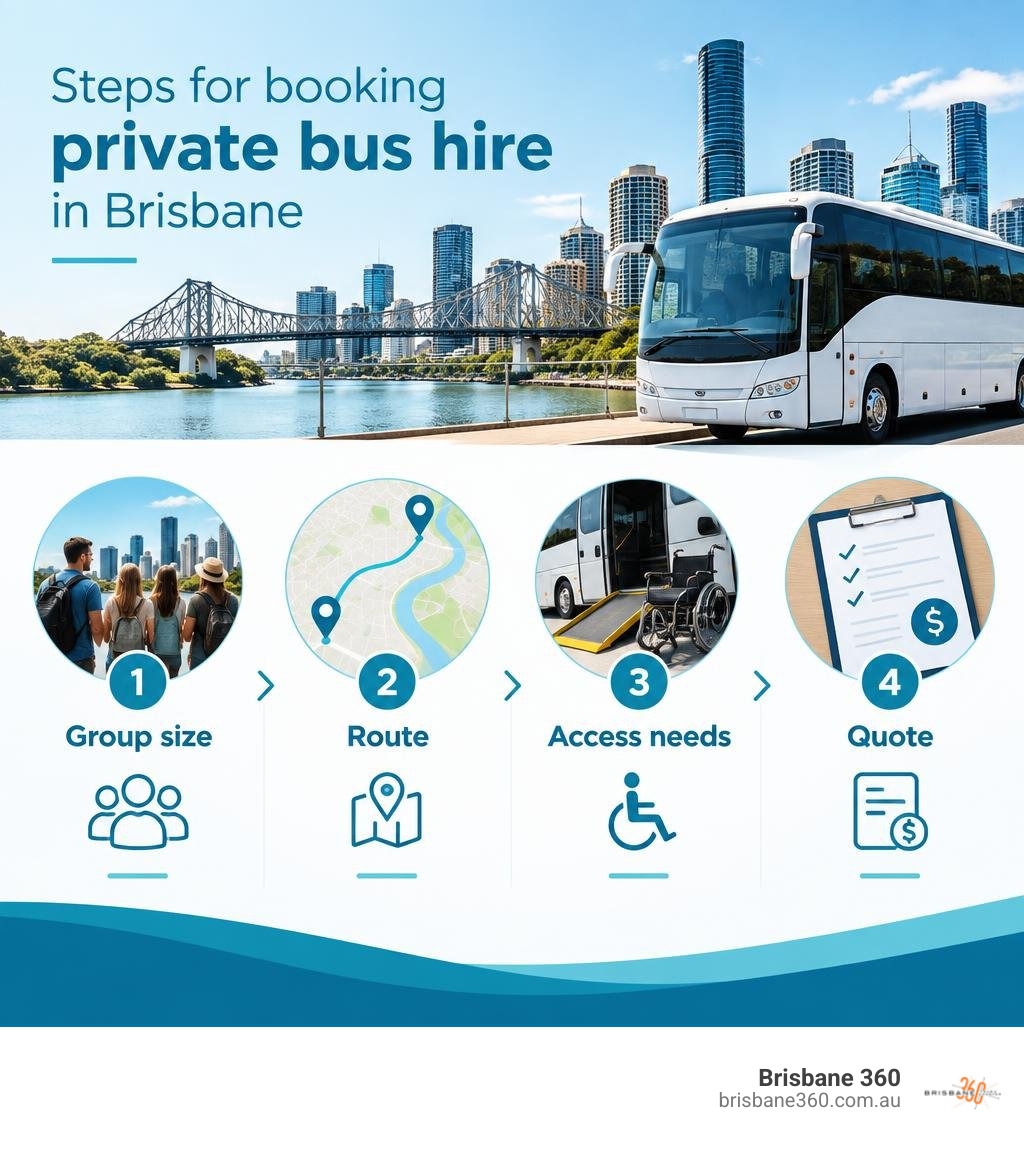
Steps for booking private bus hire in Brisbane: group size, route, access needs and quote infographic

What details should you prepare before requesting a quote?

Have one organiser collect the travel date, approximate passenger count, pickup addresses, destination, return time, luggage details and any mobility requirements. For weddings, corporate events and school outings, it also helps to nominate one on-the-day contact who can manage final boarding and timing changes.

Queensland passenger transport operators are subject to an operator accreditation framework covering areas such as safety and driver authorisations. The Queensland Government operator accreditation information is a useful reference when you are checking the credentials of a transport provider.

Which bus or coach size is right for your group?

Premium minibus and full-size coach parked near Brisbane river

Choosing the right vehicle means matching capacity to the real trip, not only the number of seats. Consider luggage, whether passengers will join at different locations, access at the pickup and destination, and how long the group will be travelling. When you organise private bus hire in Brisbane, the vehicle and professional driver should be planned around the timetable rather than added as an afterthought.

Our fleet of luxury mini buses is constantly growing and updating and includes 7, 13, 24, 33, 37/39, 57 and 61 seats to cater for different group sizes. Modern vehicles feature climate-controlled air conditioning, luggage storage, tinted panoramic windows and safety systems. The most suitable option depends on passenger numbers, bags and the locations on your itinerary.

Selecting the right fleet size for your journey

  • Compact and mid-size minibuses, 7, 13, 24 and 33 seats: A practical choice for corporate teams, wedding guests, family groups and smaller private outings. They can suit suburban pickups and venues with tighter access. Explore Brisbane minibus options when this capacity range suits your group.
  • Full-size coaches, 37/39, 57 and 61 seats: Better suited to larger groups, conferences and school travel where passenger capacity and luggage space are the main priorities. Large coach hire is suited to groups that need additional capacity and luggage room.
Trip consideration What to confirm before booking
Passenger numbers Use the highest expected number, then allow for a few late confirmations.
Luggage and equipment Share details about suitcases, prams, sports gear or presentation materials early.
Pickup access Check whether the street, driveway or loading zone can safely accommodate the selected vehicle.
Group type Schools, corporate groups and weddings often need different boarding times and contact arrangements.
Accessibility Raise wheelchair access or other mobility needs when requesting the quote.

What affects private bus hire pricing in Brisbane?

Pricing is tailored to the vehicle size, date, operating hours, total distance, pickup pattern and any special access requirements. A clear itinerary helps avoid avoidable waiting time or route changes, while a written quote makes it easier to compare what is included.

For a fuller overview of the booking process, read Brisbane360’s definitive guide to bus hire in Brisbane. If keeping costs practical is a priority, the guide to hiring a bus in Brisbane on a budget explains the information that helps a provider prepare an accurate quote. For service details, see bus hire with a professional driver.

How do you plan pickup times, routes and booking details?

Passengers boarding a modern coach in Brisbane

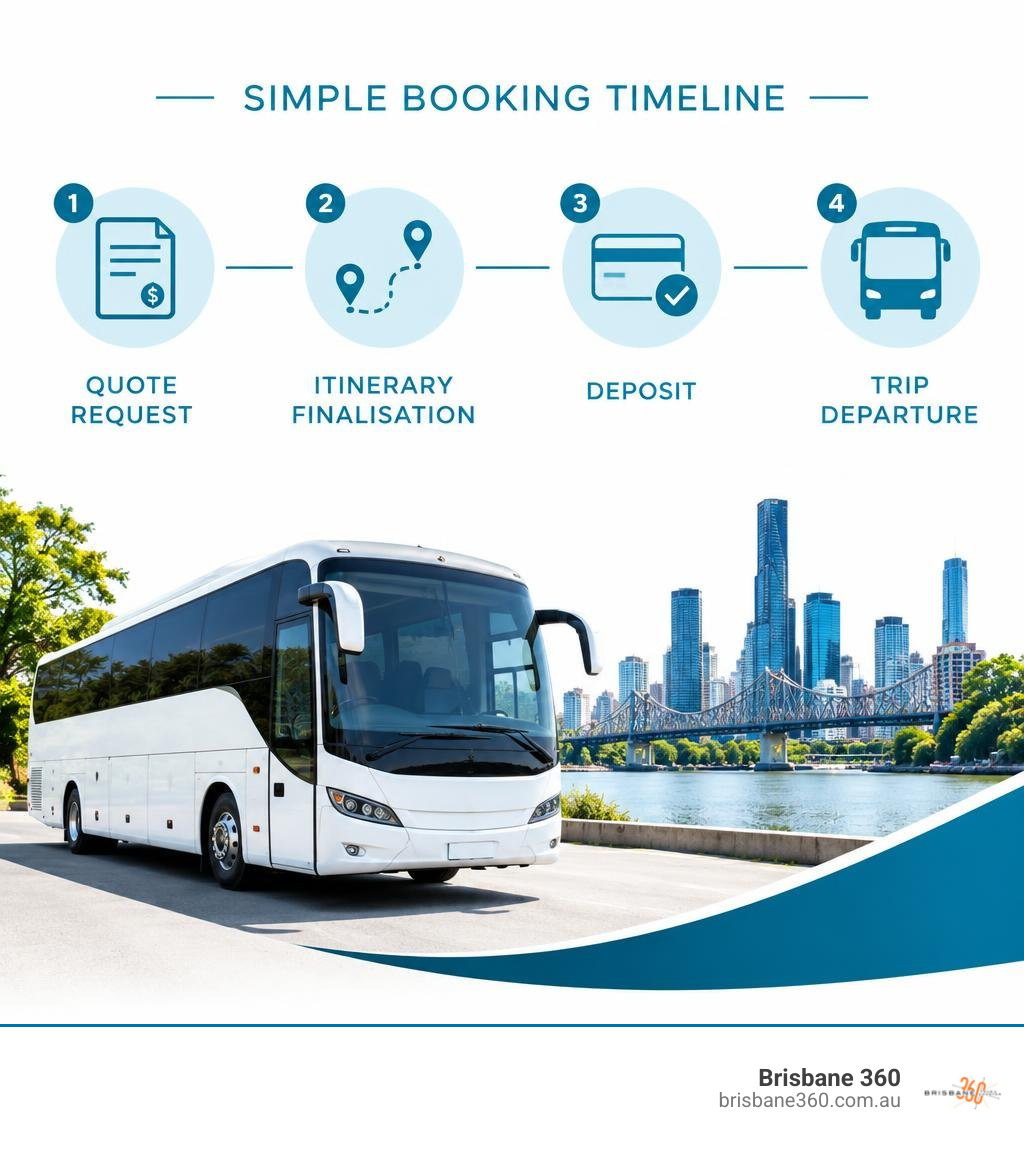
A reliable group itinerary accounts for more than driving time. Build in time for passengers to gather, board, load luggage and reach the correct venue access point. For multi-stop travel, set a clear order for pickups and give each location a realistic time window.

Simple booking timeline showing quote request, itinerary finalisation, deposit, and trip departure infographic

How should you organise multi-stop pickups and regional travel?

Start with the final arrival time, then work backwards. Group nearby pickups where possible, confirm who will communicate changes on the day and share venue instructions in advance. This approach is useful for travel across Brisbane, Logan, Moreton Bay, Redlands, Ipswich and regional corridors such as the Sunshine Coast or Gold Coast.

A private bus hire planning guide can help organisers turn a rough route into a clear pickup and return schedule. For longer days, include meal breaks, driver breaks where required and a buffer for venue departure delays. Groups travelling south can also use the Gold Coast private transport guide when refining their itinerary.

What safety and booking checks matter most?

Before confirming, ask for the vehicle capacity, driver arrangements, insurance information, booking terms and the process for itinerary changes. Schools and event organisers should also confirm their responsible contact, passenger list process and any venue-specific loading instructions.

Passenger safety remains central to every trip. Key checks include Queensland operator accreditation, current driver authorisations, appropriate licences, vehicle servicing and inspections, public liability insurance, and written booking terms.

Frequently Asked Questions

How far in advance should our group book?

For end-of-year events, spring weddings and major sporting dates, booking several weeks ahead gives you the best chance of securing the vehicle size and timetable you need. For smaller private trips, availability can vary, so it is still worth enquiring as soon as the date is known.

Are wheelchair-accessible vehicles available?

Accessible minibuses and coaches can be arranged on request. Mention mobility needs in the first enquiry so the proposed vehicle and boarding arrangements can be assessed properly.

Can our group arrange multiple pickup points?

Yes. Provide the full list of pickup locations, preferred order and latest acceptable arrival time at the destination. This helps build a route that is practical for the group rather than relying on estimates on the day.

What information do I need to provide when booking group transport?

Provide the date, passenger count, pickup and destination addresses, key timings, luggage details, accessibility needs and an organiser’s contact number. If the trip includes several venues, include the planned dwell time at each stop.

Are food and beverages permitted on board?

Bottled water is welcome on all vehicles. To maintain fleet presentation, hot food and open sugary drinks are restricted, while alcohol consumption requires prior written approval in line with the booking terms and applicable Queensland requirements.

What should you confirm before you hire a bus in Brisbane?

Before paying a deposit, review the final itinerary in one place. Confirm the vehicle size, passenger numbers, pickup order, destination access, planned departure and return times, inclusions, booking terms and the contact person for the day.

For a wedding, corporate function or school outing, send the final schedule to the group before departure and keep the organiser’s phone available for genuine last-minute updates. This simple check reduces confusion at pickup points and helps the day run to plan.

For groups that want the reassurance of a professional driver and a tailored timetable, bus hire with a professional driver explains the service in more detail.

How to hire a bus in Brisbane for a smooth group trip

Hiring a bus in Brisbane is easier when the group size, route, access needs and timetable are confirmed before booking. A practical plan gives your passengers clear pickup information and gives the transport provider the detail needed to match the right vehicle and professional driver to the trip. Brisbane360 brings hands-on experience coordinating private group travel across Brisbane and South East Queensland for weddings, corporate events and school outings.

When you are ready to organise the journey, explore the service that best fits your group: