
A Comprehensive Guide to the Best Times of Year for Group Tours in South East QLD
Best Times of Year for Group Tours in South East QLD: Top 5 Unbeatable 2025 Choices
Why Timing Makes All the Difference for Group Tours

Best Times of Year for Group Tours in South East QLD depends on balancing weather, crowds, and costs. Here’s what you need to know:
Quick Answer:
• Best Overall: March-May & September-November (shoulder seasons)
• Driest Weather: June-August (winter)
• Budget-Friendly: November-December & February (low season)
• Avoid: January & peak school holidays for crowds and high prices
South East Queensland’s subtropical climate means you can plan group tours year-round, but choosing the right season makes a huge difference to your experience and budget. Brisbane enjoys around 280-300 days of sunshine annually, making it one of Australia’s most reliable destinations for outdoor group activities.
The shoulder seasons offer the sweet spot – comfortable temperatures averaging 22°C, lower rainfall, and reduced crowds. Meanwhile, winter months (June-August) deliver clear skies perfect for whale watching and outdoor trips, though accommodation prices peak as southern Australians escape the cold.
Summer brings heat, humidity, and afternoon storms, but also the lowest accommodation rates outside school holiday periods. Understanding these patterns helps you avoid the disappointment of booking during the wet season or paying premium rates during peak demand.
As Cam Storey, owner of Brisbane360 with over a decade of experience in passenger transport across South East Queensland, I’ve helped countless groups steer the Best Times of Year for Group Tours in South East QLD to maximise both their experience and budget. Through years of coordinating everything from corporate retreats to school excursions, I’ve seen how the right timing transforms a good trip into an unforgettable one.
Easy Best Times of Year for Group Tours in South East QLD word list:
Understanding South East Queensland’s Seasons & Micro-Climates
Planning the Best Times of Year for Group Tours in South East QLD starts with understanding our unique subtropical climate. Unlike the four distinct seasons you’ll find down south, our weather patterns create their own rhythm that smart group planners learn to work with.
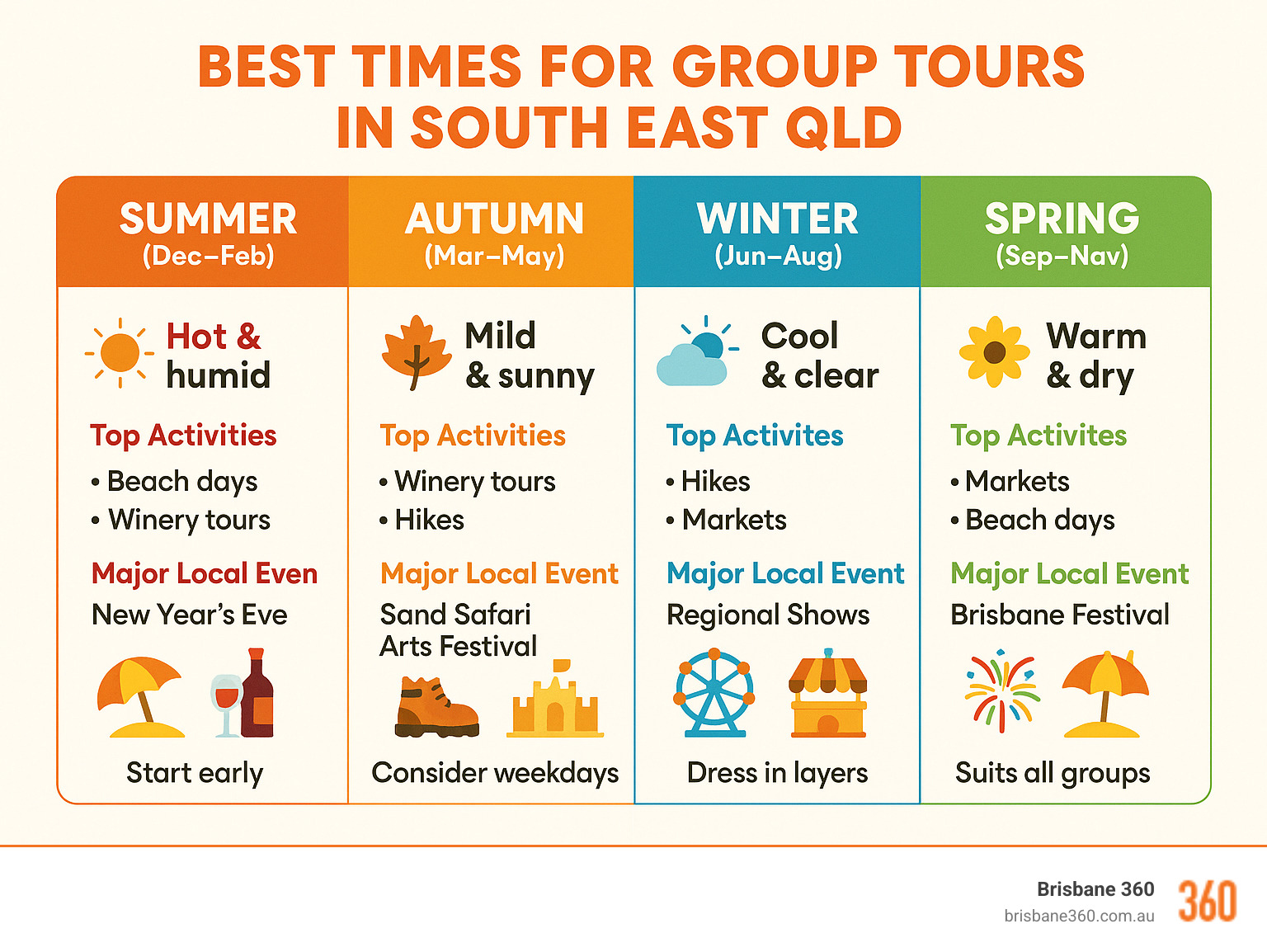
Summer (December-February) is when South East Queensland really shows its tropical personality. Temperatures hover between 20-30°C, but it’s the humidity that catches visitors off guard – reaching 65-70% in February. The upside? This is beach weather at its finest. The downside? Those famous afternoon thunderstorms can roll in fast and dramatic, sometimes reshuffling outdoor plans. These storms are actually quite spectacular to watch, but they’re worth factoring into your itinerary.
When autumn arrives (March-May), you’ll understand why locals consider this one of the Best Times of Year for Group Tours in South East QLD. Temperatures drop to a comfortable 15-25°C range, humidity becomes bearable, and the wet season starts winding down. By May, rainfall drops significantly, making it ideal for those outdoor trips your group has been planning.
Winter (June-August) might be our “coldest” season, but don’t pack your snow boots just yet. With temperatures between 11-23°C, you’ll rarely need more than a light jacket. This season delivers the driest conditions of the year with consistently clear skies – perfect for whale watching, theme park visits, or any outdoor group activities where weather reliability matters.
Spring (September-November) brings warming temperatures of 17-27°C and marks the return of those lovely afternoon sea breezes. It’s also when the hinterland comes alive with wildflower blooms and the whale migration season kicks into gear.
Our rainfall patterns follow two main seasons: the wet period (October-April) and the dry season (May-September). During the wet months, expect short tropical downpours that break the humidity and cool things down. The dry season gives you those consistently clear skies that make group planning so much easier.
Coastal vs Inland Weather Considerations
The Gold Coast surf beaches and Sunshine Coast sea breezes create their own weather personality. Those ocean influences keep coastal temperatures 3-5°C cooler than inland areas, even during the hottest summer days. The easterly trade winds along the Gold Coast make beach activities comfortable year-round, while the Sunshine Coast’s protected bays offer calmer conditions for water-based group activities.
Head inland to the Scenic Rim temperate ranges, and you’ll find a completely different climate story. These hinterland areas experience more dramatic temperature swings, with genuinely cool nights year-round and crisp winter mornings that might require a jumper. This makes destinations like Lamington National Park particularly appealing during our warmer months when the coast gets sticky and humid.
Understanding these micro-climates helps us plan itineraries that keep your group comfortable no matter the season. Whether you’re after consistent beach weather or prefer the cooler mountain air, South East Queensland’s diverse climate zones mean there’s always somewhere perfect for your group trip.
Best Times of Year for Group Tours in South East QLD: Peak, Shoulder & Low Seasons
South East Queensland’s tourism patterns follow a rhythm as predictable as the region’s seasonal weather shifts. After coordinating countless group tours through our Group Travel Coach Hire services, we’ve learned to read these patterns like a well-worn map.
Peak Season arrives in two distinct waves. The main surge runs from May through September, when Australia’s southern states send families northward to escape their chilly winters. During these months, Brisbane’s comfortable 10-22°C temperatures make every outdoor activity a pleasure, but accommodation prices soar accordingly. January creates a secondary peak despite the heat and humidity, driven purely by summer school holidays when families have no choice but to travel.
The crowds during peak season can be overwhelming. Theme parks stretch to capacity, beaches fill with interstate visitors, and restaurant bookings become precious commodities. Yet the guaranteed sunshine and dry conditions make this premium worthwhile for groups prioritising weather certainty.
Shoulder Season encompasses March through April and October through November – the sweet spots that savvy group organisers target. These months deliver what most groups actually want: pleasant weather without the chaos or cost premiums of peak periods. We’ve watched countless groups find the joy of exploring attractions without queues and enjoying restaurant meals without rushed service.
Low Season spans November through December and February, bringing the year’s most challenging weather but also its best value. The heat and humidity can be intense, but smart planning around air-conditioned venues and early morning activities makes these months surprisingly workable for budget-conscious groups.
Shoulder Season Sweet Spot: March–May & September–November
There’s magic in shoulder season timing that our Group Travel Brisbane clients find year after year. March through May offers the perfect transition from summer’s intensity to winter’s clarity, with temperatures settling into that goldilocks zone of 15-25°C – not too hot, not too cold, just right for any group activity.
The September through November window brings its own rewards. Wildflowers carpet the hinterland in brilliant displays, while humpback whales begin their spectacular migration along the coast. International flights cost significantly less during these months, making them ideal for visiting groups stretching their budgets.
What really sets shoulder seasons apart is the breathing room they provide. Attractions become accessible again, with photo opportunities free from crowds of tourists. Restaurant staff have time to accommodate the special dietary requirements that group travel often demands. Our coaches steer more easily through less congested roads, making transfers smoother and more enjoyable.
The reduced demand during shoulder seasons also means better availability for group bookings. We can secure preferred departure times and create more flexible itineraries without the rigid constraints that peak season demands impose.
High & Dry Winter (June–August) for Sunshine Seekers
Winter transforms South East Queensland into Australia’s favourite escape destination. The dry season delivers its promise with remarkable consistency – clear skies, comfortable temperatures, and virtually guaranteed sunshine for outdoor group activities.
This reliability comes at a premium, but many groups find the extra cost worthwhile. Whale watching reaches its peak during these months, with humpback whales creating unforgettable moments for tour groups. The festival calendar bursts with events like the Brisbane Festival in September, adding cultural richness to any itinerary.
We’ve found winter particularly appeals to senior groups and corporate retreats seeking outdoor team-building activities. The comfortable conditions mean everyone can participate fully without weather-related concerns limiting the program.
Budget-Friendly Heat: Summer (December–February excl. Jan holidays)
Summer outside the January holiday rush offers remarkable value for groups willing to accept the heat. Accommodation operators slash rates to attract visitors during the quieter periods, while tour companies create attractive packages to fill capacity.
The heat and humidity demand strategic planning, but they’re far from impossible. Air-conditioned transport becomes essential rather than optional, and indoor attractions provide welcome relief during the hottest parts of the day. However, summer also delivers the warmest ocean temperatures of the year, making beach and water activities particularly appealing.
Afternoon thunderstorms arrive with dramatic flair but typically pass quickly, often providing spectacular light shows and blessed relief from the heat. Smart itinerary planning includes indoor alternatives for these periods, ensuring your group’s activities remain flexible and enjoyable regardless of weather.
Why Shoulder Season Often Delivers the Best Times of Year for Group Tours in South East QLD
Through years of coordinating group transport across the region, we’ve consistently observed shoulder seasons providing the optimal combination of factors that determine tour success. The mild temperatures create comfortable coach travel conditions without excessive air conditioning demands, while lower rainfall dramatically reduces weather-related itinerary disruptions.
The logistics advantages become apparent immediately. Accommodation bookings secure more easily, restaurant reservations happen without stress, and attraction visits proceed without the crush of peak season crowds. Group coordinators find their jobs significantly easier when they’re not competing with thousands of other visitors for the same limited resources.
Perhaps most importantly, shoulder seasons allow groups to experience South East Queensland as locals do – with space to breathe, time to appreciate, and freedom to explore without constant time pressures or overcrowded conditions.
Seasonal Highlights: Festivals, Events & Wildlife That Shape Your Itinerary
South East Queensland’s vibrant event calendar plays a huge role in determining the Best Times of Year for Group Tours in South East QLD. The region comes alive with festivals, sporting events, and natural phenomena that can either improve your group’s experience or create logistical challenges if you’re not prepared.
The famous Ekka Brisbane in August transforms the city into a celebration of Australian culture, complete with showbags, agricultural displays, and carnival rides. While this iconic event offers fantastic group experiences, it also means accommodation becomes scarce and transport routes get congested. We’ve learned that groups wanting to experience the Ekka need to book well in advance.
Brisbane Festival in September turns the city into an outdoor gallery with spectacular light shows along the river, street performances, and cultural events. The timing couldn’t be better – spring weather makes outdoor exploration comfortable, and the month-long celebration gives groups plenty of flexibility to catch different events.
The legendary State of Origin rugby league matches in May, June, and July create an electric atmosphere across Queensland. These matches can make accommodation impossible to find, but they also offer groups a taste of Queensland’s passionate sporting culture. Laneway Music Festival in February brings international artists to Brisbane, though the summer heat means groups need to plan for plenty of shade and hydration.
Nature provides its own spectacular events that wise group planners weave into their itineraries. Humpback whale migration from June to November offers breathtaking viewing opportunities along the entire coastline. We’ve coordinated countless whale-watching trips, and the reliability of sightings during these months makes it a group favourite.
Coral spawning occurs 4-6 days after the full moon between October and December, creating once-in-a-lifetime diving and snorkelling experiences. Sea turtle nesting season runs from November to March at places like Mon Repos Conservation Park, with the magical hatching period from January to March. Wildflower seasons paint the hinterland in brilliant colours during August and September, making scenic drives absolutely spectacular.
Must-Book Group Experiences Around Major Events
Our experience with Bus Hire for Events has taught us that timing and preparation make the difference between a smooth group experience and a stressful scramble. Major events like the Ekka, Brisbane Festival, and sporting fixtures can increase accommodation costs dramatically and create transport nightmares if you’re not prepared.
We’ve found that booking 12 months ahead for winter events and major festivals gives groups the best chance of securing both accommodation and preferred transport times. This might seem excessive, but we’ve seen too many groups disappointed when they leave planning until the last minute.
Traffic management becomes crucial during major events. Our drivers know the back streets and alternative routes that keep your group moving when main roads become car parks. We maintain relationships with event organisers that give us access to preferred drop-off zones, so your group doesn’t have to walk kilometres from distant parking areas.
The key is understanding that these events don’t just affect the day they’re happening – accommodation fills up for entire weeks, and transport availability shrinks as everyone tries to move around the same areas. But with proper planning, your group can be part of these incredible celebrations rather than fighting against them.
Timing Destinations & Activities for Maximum Enjoyment
The secret to unforgettable group tours lies in matching destinations with their optimal seasons. Each corner of South East Queensland has its own personality that changes dramatically with the weather, wildlife patterns, and local rhythms.

Beach destinations transform with the seasons in ways that can make or break your group’s experience. The Gold Coast and Sunshine Coast shine year-round, but summer brings the warmest ocean temperatures perfect for swimming alongside those challenging afternoon storms. Winter delivers crystal-clear photography conditions and comfortable temperatures for beach walks, though you’ll need to pack light jackets for evening coastal dining.
Theme parks become much more enjoyable during winter’s mild temperatures when your group won’t be wilting in queues under the blazing summer sun. We’ve seen groups appreciate the shorter wait times and comfortable conditions that make winter the ideal season for these popular attractions.
Island trips require careful seasonal planning to avoid disappointment. Rough seas and seasonal track closures can turn dream destinations into logistical nightmares if you don’t time them right.
The hinterland regions offer a completely different seasonal experience. The Scenic Rim’s liftd position creates natural air conditioning that makes summer hiking comfortable when the coast becomes sweltering. Winter brings those magical crisp nights perfect for campfire experiences and stargazing that groups remember for years.
Wine regions welcome visitors year-round, but each season tells a different story. Harvest season from February to April offers unique behind-the-scenes experiences, while winter tastings provide cosy cellar door moments that create perfect group bonding opportunities.
Coastal & Island Trips: Picking the Best Months
Through our Bus Tours Sunshine Coast operations, we’ve finded that May through September consistently delivers the most satisfied coastal touring groups. The combination of mild temperatures, minimal rainfall, and comfortable coach travel conditions creates the perfect recipe for memorable experiences.
Gold Coast surf beaches welcome groups year-round, but winter months provide the clearest visibility for those Instagram-worthy group photos and the most comfortable conditions for beach activities. The reliable easterly trade winds act like nature’s air conditioning system during the warmer months, making even summer visits manageable with proper planning.
K’gari (Fraser Island) experiences dramatic seasonal changes that directly impact your group’s trip possibilities. The dry season from May to September offers the best 4WD track conditions and those crystal-clear lake swimming opportunities that make the island famous. Summer’s wet season can render some tracks impassable, though it creates spectacular waterfalls and transforms the landscape into a lush paradise.
Moreton Island snorkelling benefits enormously from winter’s clear skies and calmer seas, creating underwater visibility that summer storms can’t match. While water temperatures are cooler, the comfortable air temperatures and reliable weather make it worthwhile.
The Top Things to Do in Straddie include world-class whale watching that peaks during winter migration season. September and October provide the most spectacular displays as humpback whales pause to rest and play in Moreton Bay, creating unforgettable moments for groups lucky enough to witness these gentle giants.
Hinterland & National Park Escapes for Groups
The Scenic Rim’s temperate climate makes it the perfect escape valve during the coast’s warmer months. Winter nights become crisp enough for authentic campfire experiences, while summer days remain comfortable due to the elevation. This natural climate control means groups can enjoy outdoor activities year-round without the oppressive heat that affects coastal regions.
Lamington National Park’s rainforest walks showcase different personalities throughout the year. The dry season provides the most reliable conditions for group hiking, with well-maintained tracks and predictable weather. The park’s liftd position creates a microclimate that feels like natural air conditioning, making it comfortable even during summer when the coast becomes challenging.
Springbrook National Park’s waterfalls reach their most impressive during and immediately after the wet season, though heavy rainfall can create access challenges that require flexible itinerary planning. The famous glow-worm displays shine brightest during darker winter months, creating magical evening experiences that groups treasure.
Mount Tamborine’s wine region benefits from the cooler hinterland climate throughout the year. The elevation provides blessed relief from coastal humidity while maintaining comfortable temperatures for outdoor wine tastings and rainforest walks that showcase the region’s natural beauty.
Urban Culture & Wine Regions
Brisbane’s cultural attractions remain accessible year-round thanks to excellent air conditioning in museums and galleries that provide welcome refuge during summer’s intensity. The city’s riverfront precincts truly come alive during cooler months when outdoor dining and leisurely walking become genuine pleasures rather than endurance tests.
Our Wine Tours from Brisbane showcase regions offering distinctly different seasonal personalities. The Granite Belt around Stanthorpe delivers cool-climate wines and stunning autumn colours, while coastal wine regions benefit from year-round sea breezes that moderate temperatures and create consistently pleasant touring conditions.
Harvest season from February to April opens unique doors for groups interested in winemaking processes. Participating in grape picking and witnessing fermentation creates authentic experiences that connect groups with the land. However, this busy period can limit winemaker availability, requiring advance coordination for group tastings.
Winter wine tours offer cosy cellar door experiences that encourage lingering conversations and deeper appreciation of aged wines. The cooler temperatures make coach travel more comfortable and naturally moderate alcohol effects, creating safer and more enjoyable group experiences that everyone can remember clearly.
Practical Booking Tips for Stress-Free Group Travel
Planning the Best Times of Year for Group Tours in South East QLD goes beyond choosing the right season – it’s about understanding the booking landscape that can make or break your group’s experience. After years of coordinating transport through our South East Queensland Bus Services, we’ve learned that timing your bookings correctly saves both money and stress.
Australian school holidays create the biggest waves in South East Queensland’s tourism calendar. Queensland schools typically break in January, April, July, and September-October, with slight variations between government and private institutions. During these periods, domestic tourism explodes – accommodation prices can triple, attractions become crowded, and transport bookings fill up months in advance.
Public holidays add another layer of complexity, particularly those long weekends that tempt interstate visitors. Easter, Anzac Day, and Queen’s Birthday weekends can transform what should be quiet shoulder periods into busy tourist hotspots. We’ve seen groups arrive expecting peaceful destinations only to find packed beaches and fully booked restaurants.
The Queensland sun demands respect year-round, with Scientific research on sun safety showing UV levels reach dangerous heights most days. SPF50+ sunscreen isn’t optional – it’s essential equipment for any outdoor group activity. We always remind our groups that Queensland’s subtropical location means serious sun exposure even during winter months.
Packing strategies vary dramatically by season. Summer groups need light layers, rain jackets, and plenty of water bottles for those afternoon thunderstorms and high humidity. Winter travellers might pack t-shirts for daytime but need warm clothing for hinterland evenings where temperatures can drop significantly. Spring and autumn offer the easiest packing – comfortable clothes that work from morning to night.
How Far in Advance Should You Lock In Transport & Accommodation?
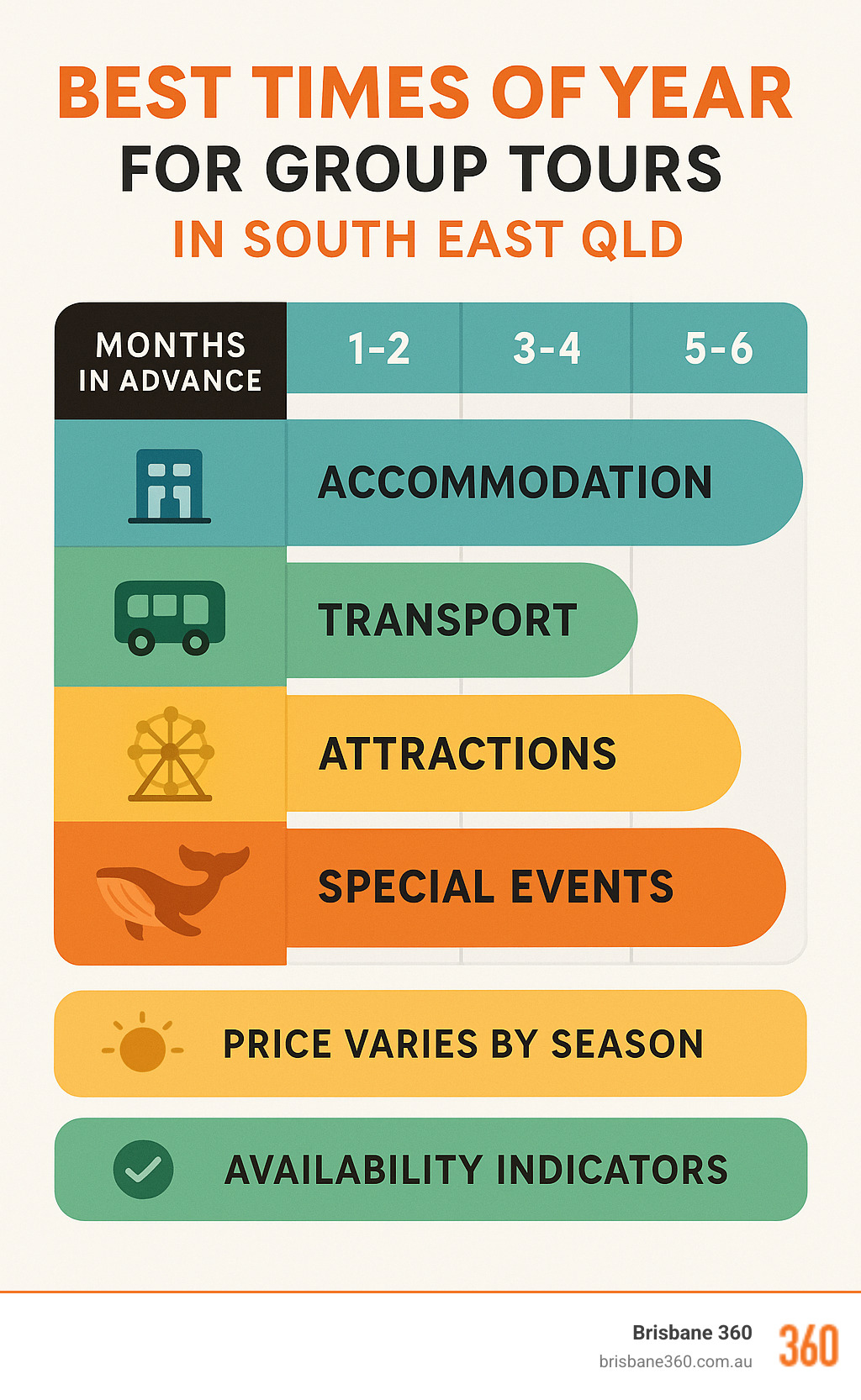
The booking timeline for successful group travel follows predictable patterns we’ve observed over countless tours. Winter travel demands the longest lead times – we recommend securing accommodation and transport 12 months ahead for June through August. This isn’t excessive planning; it’s necessary survival in Queensland’s peak season when southern Australians escape their cold winters.
Shoulder seasons offer more flexibility with 6-month advance bookings typically providing excellent availability and reasonable rates. This timing sweet spot allows you to negotiate group discounts while avoiding the panic of last-minute arrangements. We’ve found this timeframe also gives attractions and restaurants enough notice to accommodate special dietary requirements and group needs.
Summer bookings outside school holidays can often wait until 3 months before departure, though popular attractions still fill up early. The reduced demand during hot, humid periods means more negotiating power and flexibility with dates. However, don’t assume everything will be available – even summer has its busy periods.
Major events flip these rules completely. The Ekka, Brisbane Festival, and State of Origin matches require booking the moment dates are announced, often 12-18 months in advance. We’ve seen accommodation sell out within hours of major event tickets being released, leaving late planners with expensive options or disappointment.
Our fleet allocation follows similar patterns, with early bookings ensuring not just availability but also vehicle customisation options that improve your group’s experience. Early planning allows us to arrange special requirements like extra luggage space or accessibility features that make everyone’s journey more comfortable.
Money-Saving Hacks for Large Groups
Smart group organisers understand that timing and flexibility open up significant savings across South East Queensland. Early bird discounts reward advance planning with 10-20% savings on accommodation and major attractions. Many operators offer these incentives because early bookings help them plan staffing and resources more effectively.
Mid-week departures avoid weekend premiums while maintaining excellent availability for attractions and activities. Tuesday through Thursday travel often provides the best value, with accommodation rates noticeably lower and restaurants more willing to accommodate large groups. We’ve found mid-week travel also means less traffic and more personalised service everywhere you visit.
Combo attraction passes become increasingly valuable as group sizes grow. Theme parks, museums, and tourist attractions often provide graduated discounts that increase with party size. A group of 20 might save 15%, while 40 people could secure 25% off individual ticket prices. These savings compound quickly across multiple attractions.
Flexible date strategies give us negotiating power with suppliers. Groups willing to adjust their travel dates by a few days can often secure premium accommodation at significant discounts. This flexibility also allows us to take advantage of last-minute deals when operators need to fill capacity.
The most dramatic savings come from off-peak season travel during November-December and February. Accommodation rates can drop 50-70% below peak season, freeing up budget for additional activities or extended stays. While weather conditions require more planning, the financial benefits often outweigh the challenges for budget-conscious groups.
Frequently Asked Questions about the Best Times of Year for Group Tours in South East QLD
What months give the best balance of weather and price?
March through May and September through November consistently deliver the sweet spot where comfortable weather meets reasonable pricing. These shoulder seasons are like finding the perfect middle ground – you’ll avoid summer’s sticky humidity while keeping your budget happy compared to winter’s premium rates.
March and April are particularly magical as they mark the end of the wet season. You’ll notice the humidity dropping and rainfall becoming less frequent, making outdoor activities much more enjoyable. The temperatures settle into that comfortable 15-25°C range that makes everyone happy, whether they’re heat-lovers or prefer cooler conditions.
September and October bring the excitement of spring without summer’s intensity. The wildflowers start blooming in the hinterland, and there’s a fresh energy in the air as temperatures warm up gradually. These months also coincide with whale migration season, giving your group spectacular marine wildlife opportunities.
During shoulder seasons, you’ll find tourist numbers are more manageable, which translates to better service at attractions, easier restaurant bookings, and more personalised experiences for your group. The mild temperatures also mean our coaches don’t need to work as hard with air conditioning, contributing to a more comfortable and cost-effective journey.
How do Queensland school holidays impact group availability?
Queensland school holidays create dramatic shifts that can completely transform your group travel experience. January holidays coincide with the hottest, most humid weather, but they also bring the highest domestic tourism numbers. It’s like everyone in Australia decides to visit Queensland at once, making accommodation scarce and expensive.
April holidays occur during autumn’s most pleasant weather, creating a perfect storm of high demand. These dates are particularly challenging because the weather is ideal, but availability becomes extremely limited. July holidays during winter’s peak season require the earliest booking and command premium pricing – sometimes double the off-peak rates.
September-October holidays can be tricky because they vary between state and private schools, creating extended periods of increased demand. We always recommend checking specific school calendar dates when planning, as these can vary by region and even individual schools.
Corporate and adult groups often find significant advantages by travelling during school term time. Family-oriented attractions are quieter, accommodation rates drop considerably, and you’ll have more flexibility with booking preferred dates and venues. However, this strategy requires advance planning to secure the best options.
When should we book whale-watching or wildlife-focused tours?
Humpback whale migration from June through November offers one of South East Queensland’s most spectacular natural experiences. The peak viewing opportunities occur in September and October when whales pause in Moreton Bay to rest and play with their calves. Early winter months feature the northbound migration as whales head to warmer breeding waters, while spring offers the southbound journey with mothers teaching their young.
Whale-watching tours book out incredibly quickly during peak season, particularly weekend departures. We’ve found that securing bookings 3-6 months in advance works best for winter whale watching, though you’ll want flexibility for weather-dependent rescheduling. The ocean can be unpredictable, and operators prioritise passenger safety above all else.
Sea turtle experiences require completely different timing. Nesting occurs from November through March, while the magical hatching season runs from January to March. Mon Repos Conservation Park offers guided experiences that require advance booking due to strict conservation requirements and limited visitor numbers.
Bird migration seasons vary by species, but August through April generally provides the most diverse wildlife viewing opportunities. Coral spawning events create unique diving experiences for groups interested in marine biology, occurring 4-6 days after full moons between October and December. These natural phenomena are truly spectacular but require precise timing and weather cooperation.
We’re Setting the Standard for Passenger Transport
At Brisbane 360, we know that choosing the Best Times of Year for Group Tours in South East QLD is only half the equation – partnering with a transport provider who can adapt to every seasonal quirk is what truly makes a trip seamless.
Our family-owned team has conquered everything from steamy summer beach runs to frosty hinterland dawn departures. That experience shows in our climate-controlled fleet, accredited by Transport and Main Roads and backed by the highest level of public liability insurance in the industry.
What really sets us apart is local insight. Our drivers understand how summer storms shift traffic, where festival road closures pop up, and which back routes keep your itinerary on track during peak holiday congestion. Whether you’re planning a corporate retreat in shoulder season, a school excursion around term dates, or a community getaway timed for whale-watching, we make the logistics effortless.
Every vehicle – from luxe minibuses to full-size coaches – features powerful air-conditioning, comfortable high-back seats and ample luggage capacity. Need accessibility features or extra storage? Early booking gives us time to customise the coach to your group’s needs.
For personalised quotes or itinerary advice, reach out to us at enquiries@brisbane360.com.au. Our general charter services are designed to maximise comfort, minimise stress, and keep your group smiling – whatever the season throws your way.