Blog

bus hire for corporate event

Is Corporate Bus Hire Worth It for Your Next Event?

Corporate bus hire can be worthwhile when a group needs coordinated private transport, particularly when several people are travelling together, the itinerary includes multiple locations, or everyone needs to arrive at a set time. It is not automatically the right choice for every event. The value depends on passenger numbers, pickup and drop-off requirements, parking, timing and the level of coordination needed.

This guide helps organisers weigh those practical factors before requesting a quote for corporate event transport in Brisbane or across South East Queensland.

I have worked in passenger transport since 2009, and my experience with route planning, vehicle selection, pickups and event logistics has shown me that the best transport plan starts with the real itinerary. At Brisbane360, I have hands-on experience coordinating private group travel for business events across Brisbane and South East Queensland. My focus is on helping organisers match the vehicle and schedule to what their group actually needs.

What Makes Corporate Bus Hire Worth Considering?

Private group transport can make sense when individual travel would create too many moving parts. A dedicated vehicle and professional driver can help keep a larger group together, support planned arrivals, manage multiple pickup points, and reduce the need for every attendee to navigate unfamiliar venues or limited parking separately.

It can also be useful where an event involves travel between accommodation, a conference venue, a dinner location or a site visit. However, a small group with a simple itinerary and easy parking may not need a larger vehicle. The practical question is whether coordinated transport will make the event easier to run, not whether it is always the cheapest option.

What Should You Consider Before Hiring a Corporate Bus?

How Many People Need Transport?

Passenger numbers are the starting point for vehicle selection, but they should not be considered in isolation. A group of 20 people travelling locally without luggage may need a different arrangement from 20 people carrying presentation materials or travelling for several hours. Brisbane360 provides private bus and coach transport with a professional driver in a range of capacities, so the aim is to match the vehicle to the group, comfort expectations and itinerary rather than selecting more seats than the event requires.

How Complicated Is the Event Itinerary?

Write down every pickup point, venue, arrival time, waiting period and return journey before requesting a quote. Multiple locations do not make private bus hire essential, but they increase the value of having one clear run sheet and a single point of coordination. This is especially important where delegates are joining at different locations, an event changes venue during the day, or the vehicle needs to wait while the group attends a meeting or function.

What Are the Parking and Access Arrangements?

Parking can affect the decision as much as travel distance. Consider whether the venue has limited spaces, whether a group can be dropped close to the entrance, and whether access is different at each stop. Coordinating many individual vehicles can be straightforward at some venues, but it can become harder where guests are unfamiliar with the area or the programme has a fixed start time. Queensland operators work within formal accreditation requirements, which organisers can review through the Queensland bus operator accreditation scheme.

Does Everyone Need to Arrive Together?

Coordinated arrival can be useful for conferences, corporate meetings, team events, retreats, client functions and site tours. If registration, a presentation or a venue access window starts at a specific time, keeping the group on one planned journey can reduce uncertainty. For less time-sensitive events, organisers may decide that individual travel remains practical. The right approach depends on the consequences of late arrivals and how much coordination the event already requires.

When Does Corporate Bus Hire Make Sense?

Conferences and Seminars

A conference often has a fixed registration time, a single arrival window and attendees travelling from accommodation or a workplace. Private group transport can be worthwhile where organisers want delegates to arrive together or need planned travel between accommodation and the event venue. It is particularly useful when parking is limited or attendees are unfamiliar with the location.

Corporate Retreats and Team Events

Retreats and off-site team events often take groups outside their usual workplace, sometimes to venues with less direct access or several planned activities. A dedicated vehicle can keep the day organised without requiring every attendee to follow separate directions. For broader planning ideas, see Brisbane360’s corporate event planning guide.

Client Functions and Business Events

For client functions, the decision is usually about timing, presentation and practical coordination rather than making a blanket claim about convenience. If guests, staff or delegates need to move together between a meeting point and a function venue, corporate group transport can provide a clear schedule and a professional driver. If guests are arriving independently at one easy-to-access venue, it may be unnecessary.

Site and Property Tours

Site and property tours can involve several stops, changing access conditions and tight timeframes. Keeping the group together makes it easier for the organiser to explain the programme, confirm who is present and move on when the visit is complete. This can be a sensible option when the group needs to see several locations in a planned order.

Multi-Venue Events

Multi-venue events are often where careful transport planning has the greatest value. Consider the order of venues, travel time between them, loading areas, meal breaks and the final return journey. A detailed itinerary allows Brisbane360 to assess whether private bus hire or private coach hire suits the group and how the day can be scheduled realistically.

How Much Does Corporate Bus Hire Cost?

Corporate bus hire costs vary according to the vehicle size, journey distance, hire duration, number of stops, itinerary complexity, timing and any specific vehicle requirements. It is better not to compare a quote only with one individual travel cost. A fair comparison considers how many separate arrangements the group would otherwise need, whether people must arrive together, and how much coordination the organiser would need to manage.

Private bus hire will not always be the lower-cost option. For a straightforward event with a small group and simple access, separate travel may be practical. Where the itinerary is more complex, a clear group transport plan may provide better overall value by reducing the number of separate arrangements. Providing accurate event details is the best way to receive a quote that reflects the actual requirements.

What Should You Check Before Booking Corporate Bus Hire?

Before booking, prepare a simple brief that includes:

  • passenger numbers and any expected changes
  • pickup and drop-off locations
  • the event schedule and required arrival times
  • total hire duration, including waiting time where relevant
  • luggage, equipment or presentation-material requirements
  • accessibility needs and onboard requirements
  • return journey details
  • the need for a professional driver throughout the itinerary

When arranging bus hire for corporate event transport, a clear brief helps Brisbane360 recommend an appropriate vehicle and build a workable run sheet. It also makes it easier to identify whether the event needs one direct journey or a more detailed plan with several stops.

Frequently Asked Questions About Corporate Bus Hire

Is corporate bus hire worth it for a small group?

It can be, but group size alone does not decide it. A smaller group may still benefit from private transport when the itinerary has multiple pickup points, a fixed arrival time, limited parking or several venue changes. The vehicle should be matched to the group and journey rather than chosen simply because it is the largest option.

How many people do you need to hire a corporate bus?

There is no single passenger threshold. The appropriate vehicle depends on how many people are travelling, their luggage or equipment, the distance, and whether the event needs everyone to travel together. A quote can be based on the actual group size and planned itinerary.

Can a corporate bus accommodate multiple pickup locations?

Yes, private group transport can be planned around multiple pickup points, provided the route and schedule allow sufficient time. Include every location and preferred pickup time in the initial enquiry so the journey can be assessed properly.

Can corporate bus hire include return transport?

Yes. A return journey can be included in the planned itinerary, whether the group is returning to one location or making several final drop-offs. Confirm the expected finish time and any flexibility needed if the event runs late.

How far ahead should I book corporate bus hire?

Early planning is helpful for busy conference periods, end-of-year events and dates with a fixed schedule. There is no universal booking timeframe, but requesting a quote once the core itinerary is known gives organisers more time to confirm the right vehicle and timing.

What information do I need to request a corporate bus hire quote?

Provide the event date, passenger numbers, pickup locations, destination, event schedule, return requirements, approximate hire duration and any relevant vehicle requirements. You can then request a tailored bus hire quote based on the details that matter to your event.

Is Corporate Bus Hire Right for Your Next Event?

Corporate bus hire may be worth considering when an event needs coordinated group transport, multiple locations, planned arrival times or a dedicated vehicle with a professional driver. It is not a one-size-fits-all decision. The most useful next step is to review the actual passenger numbers, itinerary, access arrangements and timing before deciding what type of transport support is appropriate.

Brisbane360 has hands-on experience coordinating private group travel across Brisbane and South East Queensland, helping organisers turn a clear event brief into a practical transport plan. Explore the relevant next step for your event. Request a bus hire quote here.

Planning the transport is only one part of organising a successful corporate event. For more practical guidance on event planning, group transport and moving your team, explore these Brisbane360 resources:

Brisbane360 private coach for a corporate group at a business event venue

Corporate Buses for Hire: When Do They Make Sense for an Event?

Event transport can become complicated when several people need to reach the same place at roughly the same time. Corporate buses for hire are not necessary for every event, but they can be a practical option when coordinating individual cars becomes difficult.

The decision usually comes down to the details of the day: group size, fixed timing, pickup locations, parking, distance and the number of stops. When those factors create a more complex itinerary, travelling together in private group transport can make the plan easier to manage.

I am Cam Storey, and I have worked in passenger transport since 2009. Through Brisbane360, I have hands-on experience with route planning, vehicle selection, pickups and event logistics for private group travel across Brisbane and South East Queensland. I know that the best transport plan is the one that suits the event rather than adding unnecessary complexity.

Key Takeaways

  • Corporate bus hire makes sense when a group needs to arrive, travel or depart together on a defined schedule.
  • Conferences, team days, functions, property tours and multi-stop business itineraries commonly benefit from coordinated group transport.
  • Fixed arrival times and multiple pickup locations can make individual travel harder to coordinate.
  • Vehicle size should reflect passengers, luggage, comfort, accessibility needs and the full itinerary, not seat numbers alone.
  • Early planning gives organisers more time to confirm passenger numbers, routes, stops and suitable vehicle options.

When Does Corporate Bus Hire Make Sense for an Event?

Corporate bus hire makes sense when a group needs to travel together and the event has enough logistical complexity that arranging separate travel becomes inconvenient. It is most useful when timing, pickup points, parking, distance or multiple destinations need to be managed as one coordinated plan.

Your Event Has a Fixed Start or Finish Time

Brisbane360 private coach for a corporate group at a business event venue

Conferences, seminars, meetings and corporate functions often have firm registration, presentation or dining times. When every attendee makes their own way there, arrivals can become staggered and organisers may need to account for several separate delays.

A shared private bus or coach lets the transport schedule be planned around the event timetable. It does not guarantee that every journey will be free from delays, so realistic buffers remain important, particularly when travelling through Brisbane and wider South East Queensland traffic conditions. When assessing an operator, it is also sensible to ask about accreditation and compliance requirements under Queensland operator accreditation.

Your Group Is Travelling From Different Locations

Employees, clients and guests may be leaving from different offices, hotels or suburbs. Rather than trying to coordinate numerous individual arrival times, organisers can establish practical pickup points and give the group a clearer travel plan.

This can be particularly helpful for groups moving across Brisbane, Logan, Ipswich, Redlands, Moreton Bay, the Gold Coast or the Sunshine Coast. The aim is not to collect every passenger at their front door; it is to make the group journey more manageable and keep the itinerary clear.

Parking Is Limited or Inconvenient

Multiple cars can create extra parking logistics, especially at CBD venues, busy conference sites or locations where parking is limited or expensive. A single private vehicle can consolidate the main group journey and reduce the number of individual parking decisions attendees need to make.

Group transport will not solve every parking issue, but it can create a central arrival and departure point that is simpler for the organiser and passengers to follow.

The Event Is an Evening Function

Corporate dinners, awards nights and evening functions often involve a fixed venue and a shared finish time. Having a professional driver manage the journey gives the group an organised way to travel to and from the function without asking each attendee to arrange their own driving.

This is especially useful when guests are travelling from an office, hotel or meeting location before the event, then returning together afterwards.

Your Itinerary Includes Multiple Stops

Private transport becomes more valuable when it forms part of the event itinerary rather than simply getting people to one venue. A day might involve an office to a meeting and then a function, or a hotel to a conference followed by dinner. Property and familiarisation tours can also involve several locations across one day.

With a professional driver and an agreed itinerary, the group can remain together while the organiser plans the order of stops, timing and practical travel buffers.

You’re Travelling Outside Brisbane

Longer journeys can make coordinated transport more practical when a group is travelling to the Gold Coast, Sunshine Coast or a regional event venue, or collecting passengers across Logan, Ipswich, Redlands and Moreton Bay.

The important consideration is not the destination alone. It is whether coordinating multiple cars, changing arrival times and longer distances would make the event harder to manage than travelling together in one planned vehicle.

Which Corporate Events Are a Good Fit for Bus Hire?

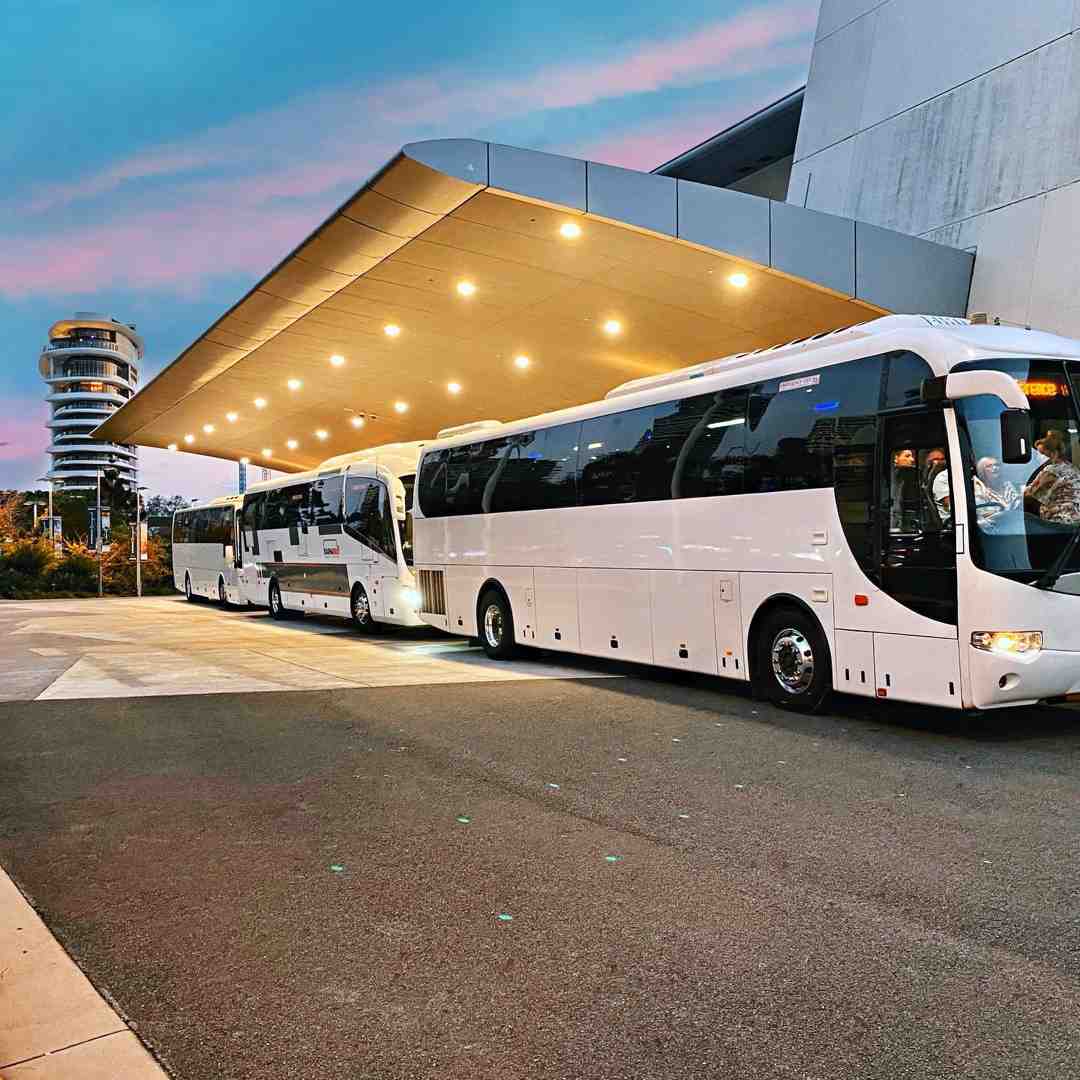
White coach buses used for corporate events and school activities.

The decision factors above apply differently depending on the type of event. The following situations are often a good fit for private bus hire or private coach hire when the group needs a coordinated itinerary.

Conferences and Seminars

Conferences and seminars usually have fixed registration and session times. Groups may be travelling from hotels, offices or different suburbs, so coordinated group transport can simplify arrivals and departures while allowing organisers to build realistic travel time into the day.

Corporate Retreats and Team Days

Retreats and team days are often held away from the usual workplace. Travelling together keeps the group on the same itinerary and can be particularly useful for destinations outside Brisbane, where journey time and parking arrangements may need more planning.

Corporate Functions and Awards Nights

For evening events, shared arrival and return arrangements can make the occasion easier to organise. A professional driver handles the driving, while attendees can focus on the function rather than coordinating separate journeys.

Business Meetings and Executive Travel

Corporate bus hire is not only for large groups. A smaller executive group may still need dedicated private transport when there are several meetings, appointments or venues in one day. In these situations, the value comes from a well-managed itinerary rather than sheer passenger numbers.

Property and Familiarisation Tours

Property investors, visiting agents and business groups may need to visit multiple locations in a limited time. Keeping the group together can simplify the schedule, reduce uncertainty between stops and make it easier for the organiser to keep the day moving.

Hotel, Venue and Group Arrival Logistics

When several passengers are travelling on similar schedules, private group transport can coordinate movements between accommodation, arrival points and event venues. The focus should be on the corporate event itinerary: who is travelling, when they need to be there and whether travelling together makes the schedule easier to manage.

How Do You Know What Size Corporate Bus You Need?

Passenger numbers are the starting point, but they are not the only factor when choosing a corporate bus. Consider luggage and event materials, pickup locations, the number of stops, journey length, accessibility requirements, preferred comfort level and the overall itinerary before selecting a vehicle.

Smaller Executive Groups

Smaller private vehicles can suit executive groups, clients and business travellers who need flexibility and comfortable travel. They can be a practical choice when the itinerary involves several appointments or when a small group needs to travel together on a defined schedule.

Medium-Sized Corporate Groups

Mini buses and mid-size buses can suit teams attending meetings, training days and smaller events. The right option balances passenger capacity with luggage, pickup points and the time needed to complete the planned route comfortably.

Larger Conferences and Events

Larger coaches can be useful when many people are travelling along the same route or need to arrive at a fixed venue together. Rather than choosing by the biggest available capacity, confirm the final passenger count, belongings, event materials and travel plan so the vehicle is suitable for the group.

When Might Corporate Bus Hire Not Be Necessary?

Corporate bus hire may not be necessary when the group is very small, attendees are already travelling independently, everyone is staying close to the venue, arrival times are flexible, parking is easy or there are no coordinated stops to manage.

The key question is not simply, “How many people are attending?” It is, “How complicated is the transport plan?” If individual travel is straightforward, private group transport may add little value. If the itinerary involves shared timing, several locations or a longer journey, it may be worth considering.

Frequently Asked Questions

Is corporate bus hire only suitable for large events?

No. Smaller groups can benefit when timing, pickup locations or a multi-stop itinerary make individual travel inconvenient. The complexity of the plan matters as much as the number of passengers.

How many people do you need to hire a corporate bus?

There is no universal number. The appropriate vehicle depends on passenger numbers, luggage, route, comfort requirements, accessibility needs and the itinerary.

Is it better to hire a bus or have everyone drive separately?

It depends on the event. Compare practical factors such as arrival times, parking, travel distance, pickup locations and whether the group needs to make several stops. Neither option is universally better for every event.

Does corporate bus hire include a driver?

Brisbane360 provides private bus and coach transport with a professional driver. This allows the group to focus on the event itinerary while an experienced driver manages the agreed route.

Can a corporate bus make multiple stops?

Yes, subject to the agreed itinerary, vehicle and route. Multiple stops can be useful for corporate events that involve offices, hotels, meetings, functions or several business locations in one day.

How far in advance should I book corporate bus hire?

Booking earlier is generally more practical for fixed-date events, larger groups and busy periods. Confirming passenger numbers and itinerary details early helps determine suitable vehicle availability and route planning.

Does corporate bus hire make sense for a Brisbane-to-Gold Coast event?

It can, particularly for an organised group travelling to a fixed event or following a multi-stop itinerary. Consider the group size, timing, distance, parking and number of stops before deciding.

When Corporate Bus Hire Is Worth Considering

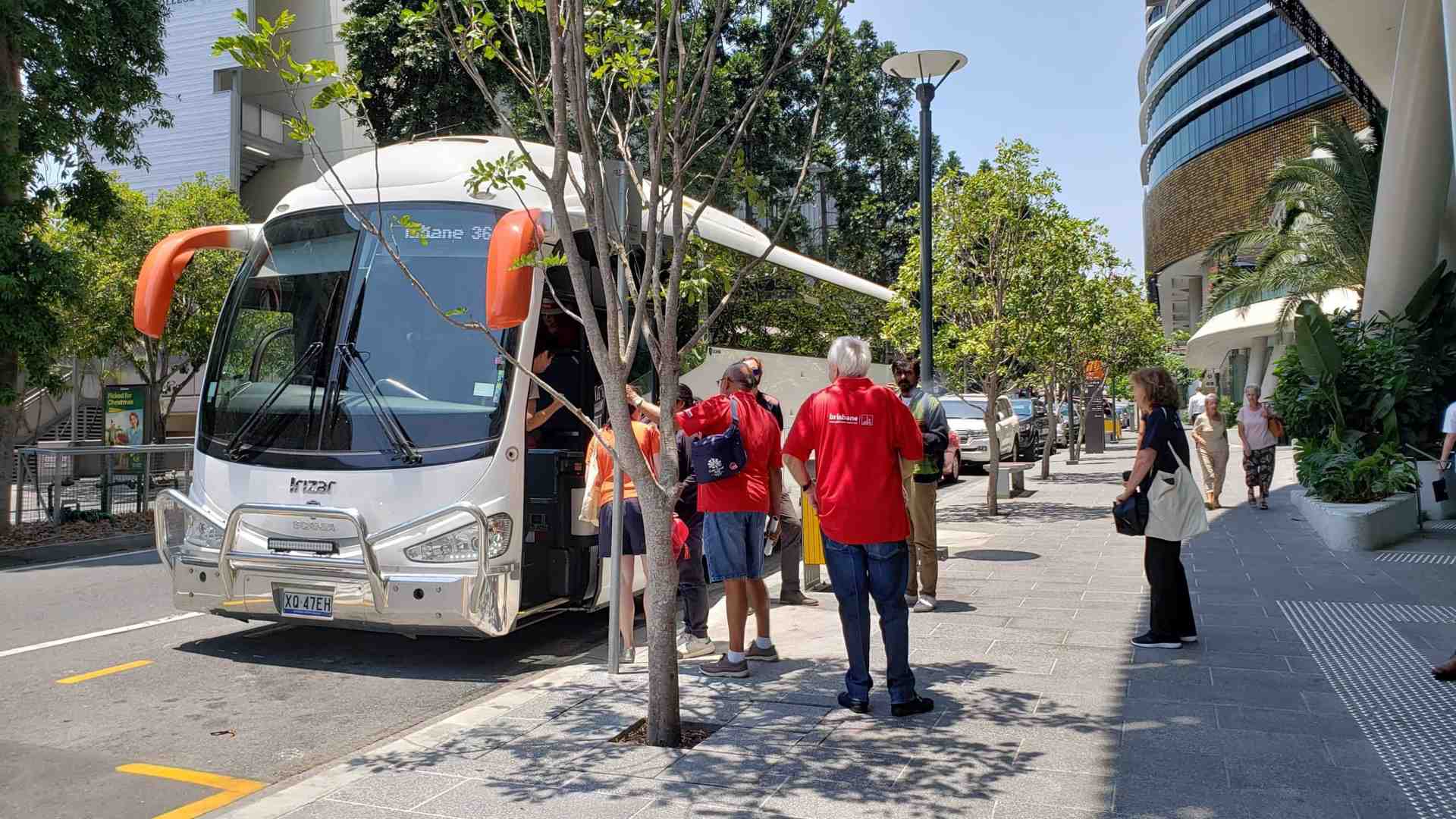
White coach buses at a bus stop, ready for corporate event transport.

Corporate bus hire is worth considering when a group is travelling together and the transport logistics would be easier to manage through one coordinated vehicle and professional driver. Fixed arrival or departure times, multiple pickup points, limited parking, several destinations, longer distances and evening events can all make private group transport more practical.

Brisbane360 provides private bus hire, private coach hire and group transport across Brisbane and South East Queensland, with practical planning around your group, route and event schedule. To discuss an upcoming event, explore:

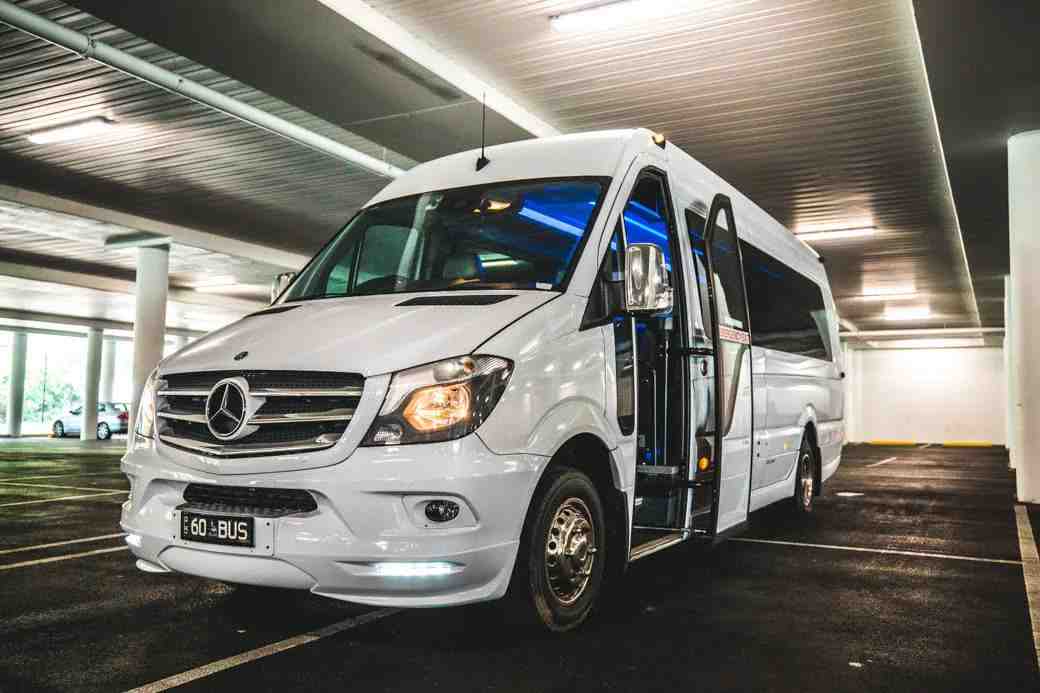
Private bus ready for a corporate group event in Brisbane

Corporate Bus Hire for Corporate Group Transport in Brisbane

Organising a corporate event can be straightforward until everyone needs to arrive at the right place at the right time. Separate cars, rideshares and unfamiliar routes can create extra administration for an organiser, particularly when an event includes several venues or a tight schedule.

Corporate bus hire gives you one coordinated transport plan. Your group can follow agreed pickup and drop-off points, travel together with a professional driver, and avoid the hassle of asking every attendee to manage parking, navigation and timing independently. Brisbane360 provides private bus and coach transport with a professional driver for business events across Brisbane and South East Queensland.

I’m Cam Storey, and I’ve worked in passenger transport since 2009. Through Brisbane360, I’ve used my hands-on experience with route planning, vehicle selection, pickups and event logistics to help coordinate private group travel for conferences, team days and business functions across South East Queensland.

Key Takeaways

  • Corporate bus hire brings attendees together under one shared transport schedule.
  • A professional driver manages the driving, navigation and planned route.
  • Group transport can simplify conference, team-day and multi-venue event logistics.
  • Choosing the right vehicle size helps reduce scattered arrivals and unnecessary vehicles.
  • Confirming passenger numbers, pickup points and timing early makes the event day easier to manage.

Why Corporate Bus Hire Makes Event Days Easier

Corporate bus hire makes corporate events easier by turning many separate journeys into one coordinated plan. Instead of tracking individual arrival times, you can organise a shared itinerary and give attendees clear travel information before the day begins.

Everyone Travels to the Event Together

Does corporate bus hire help keep an event schedule on track? It can. A dedicated bus or coach gives your group a shared departure and arrival plan, so there are fewer individual travel arrangements for the organiser to monitor.

When employees or delegates travel together, it is easier to communicate pickup details, departure times and changes to the itinerary. This can be especially useful for a conference, client meeting or team activity where the group needs to move from an office or hotel to a venue at the same time. Rather than receiving separate updates from attendees travelling independently, you have one planned vehicle movement to coordinate.

You Don’t Have to Manage Everyone’s Driving

Brisbane360 provides private bus and coach transport with a professional driver. That means organisers and attendees do not need to allocate drivers, navigate unfamiliar streets or work out the best route for a large group on the day.

The driver manages the vehicle while the group follows the agreed itinerary. This makes it easier to keep the day focused on the event itself, whether you are travelling to a meeting, conference, team activity or corporate function. It also gives attendees the opportunity to prepare, speak with colleagues or simply arrive together rather than concentrating on driving and parking.

Parking Becomes Much Simpler

A large group arriving in separate vehicles can create avoidable complications. Attendees may encounter different parking costs, walk from different locations or arrive at different times, particularly around busy areas such as the Brisbane CBD, South Bank and major event precincts.

With private group transport, the organiser plans one vehicle movement rather than many individual parking arrangements. You can confirm the most suitable arrival point with the venue, let attendees know where to meet, and reduce the number of separate travel decisions they need to make.

Moving Between Multiple Venues Is Easier

Corporate events do not always happen in one location. You may need to move delegates from a hotel to a conference, from an office to a team activity, or from a meeting to a dinner or corporate function.

Corporate bus hire allows those movements to be included in one itinerary. Instead of asking people to arrange each leg independently, you can set out the pickup times, stops and return plan in advance. This is particularly helpful when the group needs to stay together or when the next venue has limited parking and access.

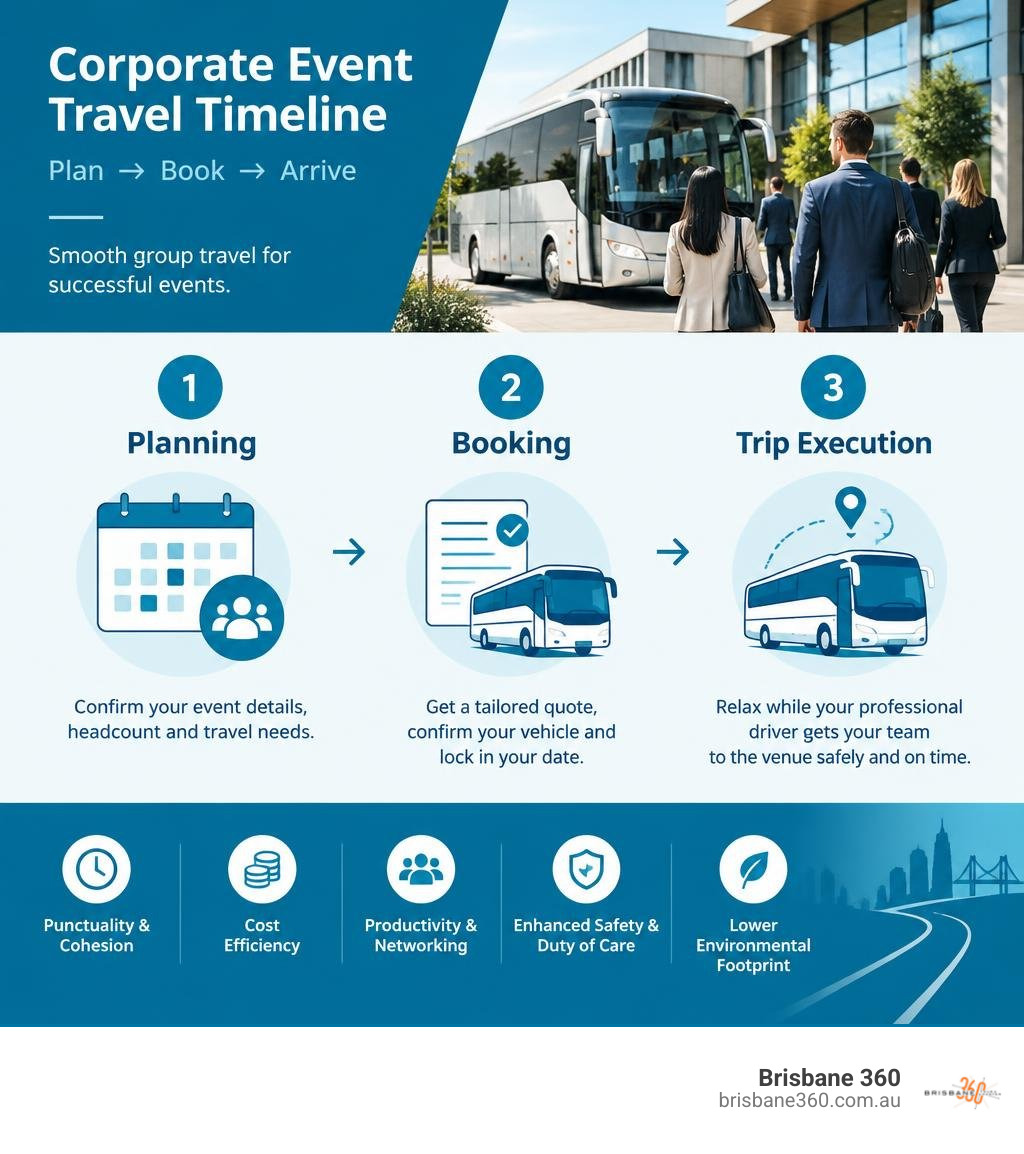
How to Plan Corporate Bus Hire for an Event

A useful corporate transport plan starts with practical details. Confirming the group size, itinerary and venue access early gives you a clearer basis for choosing the right vehicle and planning the day.

Start With Your Passenger Numbers

How many people can a corporate bus take? Capacity depends on the vehicle selected and your event requirements. The available fleet ranges from smaller vehicles for executive groups through to larger coaches for conferences and major events.

Start by confirming how many employees or delegates will travel, whether everyone is following the same route, and whether passenger numbers are final. It is also helpful to identify luggage, presentation equipment and accessibility requirements before requesting a quote. Accurate information helps the transport plan suit the group rather than leaving people to make separate arrangements.

Choose the Right Bus for Your Group

Vehicle selection should reflect the number of passengers, the itinerary and what the group needs to bring. Available vehicle sizes include:

  • 7 seats: small executive groups and private business travel.
  • 13 seats: smaller corporate groups.
  • 24–33 seats: team days, workshops and site visits.
  • 37/39 seats: larger corporate groups.
  • 57–61 seats: larger conferences and major events.

Some vehicles may include features such as climate control, reclining seats, Wi-Fi, USB charging and PA systems. Confirm the configuration required for your booking, especially if the group needs specific onboard features. Our corporate coach hire guide provides further detail on vehicle options.

Plan Pickup and Drop-Off Points Carefully

How do corporate bus pickups work? The organiser and transport provider agree on clear locations and times, then share those details with passengers before the event.

Confirm the exact pickup point, hotel entrance or office location, as well as venue access, coach bays, loading zones and drop-off arrangements. Check whether height restrictions, temporary road access or designated meeting points affect the plan. If attendees need to walk to a suitable pickup area, make that clear in the event communication so no one is left searching for the vehicle.

Allow Enough Time for Boarding and Traffic

Journey time is only one part of an event-day schedule. Allow time for passenger boarding, multiple pickups, venue access and movement between locations, as well as normal traffic conditions.

For South East Queensland events, practical buffers can be important around routes such as the M1, Gateway Motorway and Riverside Expressway. A well-planned itinerary does not remove every variable, but it gives the group a more realistic schedule and helps the organiser communicate expectations clearly. For a more detailed booking checklist, see our guide to corporate bus hire in Brisbane.

Consider Safety and Duty of Care

When staff, executives or visitors travel together, it is sensible to consider how the journey will be managed as part of the wider event plan. Queensland’s public passenger transport system includes driver authorisation requirements for relevant passenger services.

For your event, provide clear travel information, allow adequate boarding time and identify any accessibility needs before the day. These practical steps support a smoother group movement and help attendees know what to expect.

When Does Corporate Bus Hire Make the Most Sense?

Corporate bus hire is useful whenever a group needs to travel on a shared schedule and the organiser wants one clear plan rather than multiple individual journeys.

Conferences and Business Events

Conference delegates may need to travel between accommodation, a conference venue and an evening function. Group transport gives the organiser a way to communicate one itinerary and keep attendees together between planned locations.

Company Team Days

For a team day, employees can leave from an office or agreed meeting point and travel to the activity together. This can reduce the need for employees to drive separately, organise parking or work out unfamiliar directions before the day begins.

Corporate Functions and Celebrations

A corporate function or celebration can involve travel to a restaurant, venue or activity outside the usual workplace. A private bus or coach gives the group a planned way to move together before or after the event, with a professional driver handling the journey.

Multi-Venue Events

Multi-venue events benefit from an itinerary that includes each pickup, stop and return movement. Whether the day involves a meeting followed by a function, or a hotel followed by a conference and dinner, you can organise the group’s travel as one coordinated sequence.

Frequently Asked Questions

Is corporate bus hire suitable for small groups?

Yes. Smaller vehicles can be suitable for executive groups and smaller business teams, depending on passenger numbers, the route and the event itinerary. The right option is the vehicle that comfortably supports the group’s planned journey.

Can a corporate bus take people to multiple venues?

Yes. Multi-stop itineraries can be planned around your event schedule, subject to the route, timings and vehicle requirements. Share every stop and required arrival time when requesting a quote so the itinerary can be considered properly.

Does corporate bus hire include a driver?

Yes. Private bus and coach transport is provided with a professional driver; it is not vehicle-only hire.

How far in advance should I book a corporate bus?

Book once your date, passenger numbers and basic itinerary are known, particularly for larger groups or more complex events. Early planning gives you more time to confirm vehicle suitability, pickup locations and venue access.

What information do I need when requesting a corporate bus hire quote?

Provide the following details where possible:

  • Event date and required travel times
  • Passenger numbers
  • Pickup and drop-off locations
  • Additional stops or multi-venue requirements
  • Required arrival time and return arrangements
  • Accessibility requirements
  • Luggage or equipment requirements

The more clearly these details are set out, the easier it is to build a transport plan that fits your event.

Choosing Corporate Bus Hire for Corporate Group Transport in Brisbane

Corporate bus hire makes event days easier because it turns multiple individual journeys into one coordinated transport plan. With clear pickup points, an appropriate vehicle size and enough time for boarding and travel, organisers can reduce unnecessary transport administration and give attendees a simpler way to travel together.

Brisbane360 brings hands-on experience coordinating private group travel across Brisbane and South East Queensland. Whether you are planning a conference, team day, business function or multi-venue event, our team can help you organise private bus or coach transport with a professional driver. Request a tailored transport quote for your upcoming event here.

Planning the event itself or looking at transport options for a larger business function? These Brisbane360 guides can help you take the next step:

corporate event transportation options

Corporate Event Transport Planning

Companies hire buses for corporate events because moving a group together is far easier to coordinate than asking employees or delegates to arrange separate travel. A private bus or coach gives the organiser one planned transport solution, with agreed pickup times, a professional driver, and a clear route for the whole group.

This is useful for conferences, seminars, team days, offsites, corporate functions, award nights, and events with more than one venue. If you are comparing corporate event transportation options, the practical question is not simply how people will travel. It is how to get the right people to the right place at the right time without creating extra work for the event team.

I’m Cam Storey, and I’ve worked in passenger transport since 2009. Through Brisbane360, I’ve helped coordinate private group travel across Brisbane and South East Queensland, including route planning, vehicle selection, pickups, and event logistics. I’ve seen how much difference early transport planning makes when a large group needs to arrive together and stay on schedule.

  • A coordinated vehicle keeps employees and delegates travelling together.
  • Planned pickup and drop-off times support the event timetable.
  • Group transport reduces the parking, directions, and rideshare coordination an organiser would otherwise manage.
  • Different vehicle sizes can suit anything from a small leadership group to a large conference delegation.
  • One professional driver and transport provider gives the event team a single point of coordination.

Why Do Companies Hire Buses for Corporate Events?

A private bus or coach gives the event organiser one coordinated transport plan instead of relying on multiple cars, rideshares, or separate travel arrangements. It keeps the group together, makes arrival times easier to manage, and reduces the practical work involved in moving people between venues.

To Keep Employees and Delegates Together

When staff or delegates travel from a shared departure point, it is easier to confirm numbers, communicate last-minute changes, and make sure everyone reaches the venue together. This is particularly helpful for conferences, team days, and offsites where a delayed arrival can hold up registrations, presentations, or activities.

It also makes moving between venues more straightforward. Instead of relying on separate cars, rideshares, and individual directions, the group follows one agreed plan. That means fewer missed turns, fewer people arriving at different times, and less chasing people on the day.

To Keep Corporate Events on Schedule

Transport should be treated as part of the event timeline, not as an afterthought. A good plan allows for boarding, luggage or equipment, realistic travel time, venue access, and a sensible arrival buffer. It cannot remove traffic from the road, but it can reduce avoidable coordination problems.

For corporate event transport, scheduled pickups and agreed arrival windows help organisers build a more realistic run sheet. This becomes even more valuable when the group needs to move between a hotel, conference venue, dinner location, or offsite activity.

To Simplify Corporate Event Logistics

Without a group transport plan, an organiser may need to manage individual vehicles, parking instructions, rideshares, meeting points, directions, late arrivals, and return travel. A private bus or coach centralises those moving parts into one itinerary.

Brisbane360 provides corporate transport services with a professional driver, so organisers and attendees are not responsible for driving, navigation, or managing the vehicle during the event. The focus stays on the event itself rather than the transport details.

To Avoid Parking Problems

Parking can become complicated when a large group travels separately, especially around CBD venues, hotels, conference centres, entertainment precincts, and busy event locations. Multiple cars can mean different arrival times, unclear meeting points, and a longer wait for everyone to assemble.

Travelling together allows the group to use an agreed pickup and drop-off point. It is a practical way to make arrivals and departures more orderly without asking every attendee to solve the same parking and navigation problem individually.

What Makes a Bus Practical for Corporate Events?

Executive coach interior with corporate passengers

Private bus and coach transport works well for corporate events because the vehicle, route, and timing can be planned around the group rather than left to individual arrangements. The right option depends on the size of the group, the itinerary, the amount of luggage or equipment, venue access, and any accessibility requirements.

Different Bus Sizes Suit Different Corporate Groups

Vehicle selection should start with the actual number of passengers, then consider journey length, stops, luggage, and boarding arrangements. A small leadership group does not need the same vehicle as 60 conference delegates, and a full-day itinerary may need more space than a short city transfer.

Our fleet of luxury mini buses is constantly growing and updating to provide premium travel across Brisbane. Available capacities include 7, 13, 24, 33, 37/39, 57, and 61 seats, helping Brisbane360 match private bus hire or private coach hire to the group and itinerary without turning the booking into a one-size-fits-all decision.

Professional Drivers Take Care of the Journey

With corporate bus hire, a professional driver handles the driving and route management. That means employees and organisers do not need to nominate drivers, navigate unfamiliar locations, or manage a vehicle while trying to run an event.

The organiser can share the itinerary, pickup requirements, and venue details in advance, then focus on delegates, presentations, and event delivery on the day. It is a practical distinction between private group transport with a driver and vehicle-only hire.

Comfort Matters on Longer Corporate Trips

Comfort can influence how delegates feel when they arrive, particularly for longer journeys or full-day events. Relevant features may include comfortable seating, climate control, charging access where available, luggage space, and suitable room for the group.

These details are not about adding unnecessary extras. They help attendees arrive ready to participate rather than having to manage a long or complicated journey before the event begins.

Accessibility Can Be Planned in Advance

Accessibility should be part of the booking conversation, not a last-minute addition. Discuss wheelchair accessibility, boarding needs, passenger assistance, vehicle suitability, and pickup or drop-off arrangements early so the right vehicle can be planned for the group.

Brisbane360 has accessible vehicle options, including vehicles fitted with certified wheelchair lifts. Giving clear requirements during the planning stage helps make the travel arrangements more inclusive and practical for every delegate.

Accessible passenger lift and ergonomic seating

When Does It Make Sense to Hire a Corporate Bus?

A private bus or coach is most useful when the event involves a group that needs to travel together, arrive within a planned window, or move between locations. It gives organisers a single transport plan instead of a collection of individual arrangements.

Conferences and Seminars

Conferences and seminars often involve travel between hotels, venues, parking areas, and additional sessions. For larger groups, coordinated transport helps manage scheduled movements and makes it easier for attendees to arrive for registration or the next part of the programme at roughly the same time.

Company Team Days and Offsites

A team day or offsite is easier to start when employees do not need to organise their own route, parking, and arrival time. Group transport gives everyone a shared departure point and helps the day begin with the whole team together rather than staggered arrivals.

Corporate Functions and Award Nights

For evening functions and award nights, coordinated transport can simplify both arrival and departure. It can be especially useful where the itinerary includes a workplace pickup, a venue with limited parking, or more than one planned stop.

Multi-Venue Corporate Events

Private group transport becomes particularly useful when an event includes several locations. For example, a day may involve a hotel, a conference venue, a dinner venue, and then a return journey. Mapping the route and stops in advance helps the organiser account for boarding time, venue access, and realistic travel buffers.

How Do You Plan Corporate Bus Transport for an Event?

Start With the Guest List

Confirm the number of passengers, whether staff and external delegates are travelling together, accessibility needs, and any luggage or equipment. These details help determine the most suitable vehicle size and whether one vehicle or a coordinated set of movements is needed.

Map the Itinerary

Provide the pickup locations, destination, additional stops, event start time, return journey, and venue access details. The clearer the itinerary, the easier it is to plan the pickup order and allow enough time for each movement.

Allow Time for Boarding and Traffic

A workable schedule needs more than the estimated driving time. Include time for people to board, luggage or equipment to be loaded, access at each venue, changing traffic conditions, and a reasonable arrival buffer. This helps reduce rushed transitions during the event.

Book Early for Larger Events

The right booking lead time depends on group size, event date, vehicle requirements, and how detailed the itinerary is. Larger conferences and multi-day events generally benefit from earlier planning because it provides more time to confirm capacity, stops, and operational details. For more practical timing guidance, see Brisbane360’s guide to planning corporate transport for end-of-year functions.

Corporate event coordinator reviewing itinerary details

Frequently Asked Questions

Why should a company hire a bus instead of asking employees to drive?

A private bus or coach gives the organiser one coordinated travel plan instead of multiple individual journeys. It can simplify parking, meeting points, arrival timing, and movement between venues while keeping the group together.

How many people can a corporate bus take?

Brisbane360 has vehicles with 7, 13, 24, 33, 37/39, 57, and 61 seats. The most suitable option depends on passenger numbers, luggage or equipment, journey length, stops, venue access, and accessibility needs.

Can a corporate bus make multiple stops?

Yes. Pickup and drop-off points can be built into the itinerary where they suit the route and vehicle requirements. Additional stops should be discussed early because each one affects travel time and the overall schedule.

Can corporate buses pick employees up from different locations?

Multiple pickup points may be possible, but they need to be planned in advance. A clear pickup order helps account for added travel time and keeps the event timetable realistic.

Can corporate buses accommodate wheelchair users?

Accessible vehicle options are available. Share wheelchair access, boarding, assistance, and pickup or drop-off requirements during booking so an appropriate vehicle can be arranged.

How far in advance should I book a corporate bus?

Timing depends on the group size, event date, required vehicle, and itinerary. Larger or multi-day events generally benefit from earlier planning, particularly where multiple stops or accessibility requirements are involved.

Does Brisbane360 provide a driver with corporate bus hire?

Yes. Brisbane360 provides private bus and coach transport with a professional driver. It is not a self-drive vehicle hire service.

Why Companies Choose Corporate Bus Hire

Companies hire buses for corporate events because group transport makes the practical side of an event easier to coordinate. Rather than managing multiple cars, parking arrangements, directions, and individual arrival times, organisers can build one transport plan around the event itinerary.

For corporate events across Brisbane and South East Queensland, Brisbane360 can help you explore corporate transport services, arrange general passenger transport, or request a tailored corporate transport quote based on your group size, timing, and route.

If you’re planning corporate group transport, these Brisbane360 guides can help you work through the next steps:

What are the challenges of workforce transport?

What Are the Challenges of Workforce Transport?

Moving employees or corporate groups can sound straightforward until a business needs to coordinate people, locations, schedules, vehicle capacity and arrival times at once. Workforce transport becomes more difficult when staff work different shifts, live across several suburbs, cannot rely on public transport at the required time, or need to travel together for a corporate event.

The main workforce transport challenges are scheduling, coordinating multiple pickup locations, selecting suitable vehicle capacity, managing traffic and delays, accommodating shift times and helping employees arrive safely and on time. A well-planned group transport arrangement gives businesses a more structured way to manage those moving parts.

Hi, I’m Cam Storey, owner of Brisbane360. I have worked in passenger transport since 2009, and I have seen how quickly a simple travel plan can become complicated when a team is spread across South East Queensland or working outside standard hours. At Brisbane360, we use our hands-on experience coordinating private group travel to help businesses plan practical pickup arrangements, vehicle choices and schedules that support reliable staff transport.

Key Takeaways

  • Workforce transport becomes difficult when people, locations and schedules do not line up.
  • Shift work and early or late operating hours can make standard public transport impractical.
  • Multiple pickup points need careful route and timing coordination.
  • Vehicle size should match the number of employees or corporate guests travelling.
  • Corporate bus hire with a professional driver can give businesses a clearer way to manage group transport.

What Are the Main Challenges of Workforce Transport?

Workforce transport is challenging because businesses need to move the right people to the right place at the right time while balancing convenience, travel time and operational requirements. The specific issues vary between workplaces, worksites and events, but most staff transport problems come back to coordinating people, places and schedules.

Coordinating Different Staff Locations and Pickup Points

Employees may be travelling from Brisbane, Ipswich, Logan, Moreton Bay, the Gold Coast or many different suburbs in between. Collecting everyone from home can create an inefficient route with too many stops, while asking people to travel to a practical meeting point may not suit every shift or location.

Planned employee transport starts by identifying where people are travelling from, where they need to arrive and which collection points make sense for the group. A corporate bus hire arrangement can then consolidate suitable pickup areas into a structured route that balances passenger convenience with realistic travel times.

Matching Transport With Staff Working Hours

One of the biggest workforce transport challenges is finding transport that operates when employees actually need it, particularly for early-morning, late-night or rotating shifts. Standard public transport may not align with factory starts, warehouse handovers, weekend work or staggered rosters.

For employers, the issue is not simply whether transport exists. It is whether it reaches the right pickup points and arrives at the workplace when the team needs to begin. Scheduled staff transport can be organised around agreed start and finish times, making it easier to support transport for shift workers without expecting every employee to solve the journey alone.

Managing Traffic, Delays and Arrival Times

Peak-hour congestion, roadworks, weather and unexpected delays can affect any journey. The challenge becomes greater when employees arrive separately, a shift handover has a tight timing requirement, or a corporate event has a fixed start time.

A coordinated group transport plan does not remove traffic, but it makes timing easier to manage. With a clear route, agreed pickup times and a professional driver, businesses can plan realistic travel windows and communicate one shared schedule instead of relying on dozens of individual journeys.

Choosing the Right Vehicle Capacity

Choosing a vehicle that is too small can leave people without a seat or require additional trips. Choosing one that is much larger than the group can be inefficient. The right option depends on passenger numbers, route length, pickup points, comfort expectations and whether luggage or equipment needs to travel too.

Brisbane360 can provide private bus and coach transport with a professional driver in a range of vehicle sizes, including 7, 13, 24, 33, 37 or 39, 57 and 61 seats. Rather than treating capacity as a fleet catalogue decision, businesses should choose transport around the actual journey and the people using it.

Keeping Group Transport Organised

Informal carpooling can work for a small team, but it becomes harder to manage when drivers change, people cancel at the last minute or staff arrive at different times. Unclear pickup arrangements and constant group messages can also make workplace transport harder to coordinate than it needs to be.

A dedicated corporate transport arrangement creates a clearer structure. It gives the group agreed pickup points, a defined schedule and one transport plan for the journey. That can be useful for regular employee bus transport as well as one-off travel for staff events or business functions.

What Challenges Can Corporate Bus Hire Help Solve?

Corporate bus hire can help businesses organise travel when staff or guests need to reach the same destination on a shared schedule. It is not a replacement for every individual commute, but it can provide a practical option when a group is travelling to a workplace, worksite, meeting or event.

dedicated passenger coach operating along a scheduled South East Queensland route

Creating a More Reliable Staff Transport Schedule

A dedicated vehicle can be organised around staff start times, finish times, shift changes, agreed pickup locations and required arrival windows. This gives managers a clearer basis for planning than asking everyone to make their own way.

When we plan staff transport solutions, we look at the likely passenger catchment, roster times and practical pickup corridors before confirming the route. This helps businesses build a schedule that suits the job rather than forcing a standard route onto a workforce with different needs.

Making Corporate Event Transport Easier to Coordinate

Corporate event transport can be useful for conferences, company functions, team events, staff celebrations, corporate meetings and off-site events. When everyone travels separately, organisers may need to manage late arrivals, parking questions, unfamiliar venues and repeated directions.

Transport hire for corporate events allows a group to travel together from agreed locations. It can simplify communication, make arrival planning more consistent and let guests focus on the event rather than navigating the journey individually.

Reducing the Need for Employees to Drive Separately

When employees travel together, there can be fewer individual journeys to coordinate and less pressure on parking at the destination. It can also help groups arrive at a similar time and reduce the need for staff to navigate unfamiliar routes after a long day or before an important event.

Group transport for employees is particularly worth considering when a workplace has limited parking, a remote location, a large shift change or a group travelling to the same venue. The aim is not to make unrealistic promises about every commute, but to give businesses a more manageable transport option where it is useful.

Having a Professional Driver Handle the Transport

Employees boarding a modern passenger coach for corporate transport.

Brisbane360 provides private bus and coach transport with a professional driver. That means the business is arranging the vehicle and driver together rather than asking an employee to take responsibility for driving a larger group.

This approach can be especially helpful for unfamiliar routes, multiple pickup locations, larger groups, corporate events and journeys with a tight schedule. A professional driver allows the organiser and passengers to focus on the purpose of the trip while the travel is managed as part of one agreed plan.

How Can Businesses Make Workforce Transport Easier to Manage?

Start With the Number of People Travelling

Passenger numbers are the starting point for vehicle selection and route planning. Confirm how many employees or guests are likely to travel, then allow for any expected changes between shifts, event sessions or pickup locations.

Map Pickup Locations Before Choosing the Route

Before choosing a route, identify where employees or guests are travelling from, which collection points are practical, where the group is going and when they need to arrive. Grouping nearby passengers at sensible pickup points can make staff transportation more efficient without making the plan inconvenient for everyone.

Build Time Into the Schedule

Allow time for boarding, traffic, multiple stops, venue access and shift handover. For shift-based workplaces, arriving around 10 to 15 minutes before the required start time can be a useful planning buffer, depending on site entry, safety requirements and the number of passengers. It should be treated as a practical recommendation, not a fixed rule for every operation.

Choose Transport Around the Job, Not Just Passenger Numbers

Headcount matters, but it is only one part of the decision. The right vehicle also depends on the trip type, route, travel time, number of pickup points, passenger comfort and event requirements. A shorter staff route may need a different arrangement from transport for a company event with luggage or equipment.

Work With a Provider That Can Coordinate the Journey

Businesses benefit from a provider that can help turn travel details into a workable plan. Brisbane360 has hands-on experience coordinating private group travel across Brisbane and South East Queensland, including Brisbane, Ipswich, Logan, Moreton Bay and the Gold Coast. We provide private bus hire and private coach hire with professional drivers for businesses that need organised staff transport or corporate group transport.

Frequently Asked Questions About Workforce Transport

What is workforce transport?

Workforce transport is organised travel for employees moving between home, workplaces, worksites or other business locations. It can include regular staff transport for shifts or group travel for meetings and events.

What is the biggest challenge with workforce transport?

The biggest challenge is coordinating people, locations and schedules while maintaining reliable arrival times. Multiple pickup points, different shifts, traffic and changing passenger numbers can all affect the plan.

Is corporate bus hire suitable for staff transport?

Yes. Corporate bus hire can suit staff transport when a group is travelling to the same workplace, worksite or corporate event and the business needs a clearer shared travel plan.

Can a corporate bus be used for shift workers?

Yes. Private group transport can be scheduled around early, late or rotating shifts, provided the pickup locations, passenger numbers and required arrival times are planned in advance.

How do you organise staff pickup points?

Start by identifying where employees are located, then group nearby passengers into practical collection areas. The route should balance convenient pickup points with realistic travel time to the destination.

What size bus do I need for employee transport?

The right size depends on passenger numbers and the journey itself. Consider the route, number of stops, travel time and whether passengers are carrying equipment or luggage before choosing the vehicle.

Can corporate bus hire be used for company events?

Yes. It can be used for conferences, team events, corporate functions, meetings and other organised business travel where moving the group together makes coordination easier.

Does Brisbane360 provide a driver with corporate bus hire?

Yes. Brisbane360 provides private bus and coach transport with a professional driver.

Making Workforce Transport Challenges Easier to Manage

Employees boarding a modern passenger coach for business transport.

Workforce transport challenges usually come down to coordinating people, places and schedules. A planned private bus transport arrangement gives businesses a structured way to move employees or corporate groups without relying on everyone to organise their own journey.

If your transport needs extend beyond regular staff travel or corporate events, General Charter provides another option for organising private group travel with a professional driver.

Planning transport for your next workforce trip, corporate event or group journey? Get a quote from Brisbane360 and talk to our team about the vehicle, route and schedule that suits your needs.

For more detail on planning employee and group travel, these related Brisbane360 resources may help:

  • Employee Transport Solutions explains practical options for regular workplace travel.
  • Staff Transport outlines how we support organised roster-based journeys across Brisbane and South East Queensland.
  • Corporate Bus Hire covers vehicle capacity, routes and scheduling for company functions, meetings and other group trips.

Choosing Bus Hire for Seniors: A Practical Guide for Group Organisers

Finding the Right Bus Hire for Seniors

Private coach ready for a senior group outing in South East Queensland

Booking reliable bus hire for seniors means choosing transport that suits the group’s mobility needs, comfort expectations, and day’s itinerary. Prioritise suitable entry access, storage for walking aids, patient professional drivers, and a realistic pace so older passengers can travel safely without unnecessary fatigue.

Organising group travel for older adults involves specific logistical requirements that standard passenger services rarely address. When comparing bus hire for seniors, look beyond the number of seats. Compare accessibility, boarding ease, seating comfort, storage, driver support, journey pacing, and total trip cost. Our team helps organisers plan dependable private group transport across South East Queensland for mature travellers.

In this guide, you will learn how to compare vehicle options, discuss mobility equipment, plan sensible journey buffers, and assess the factors that shape a tailored quote. If you are arranging an outing for a club, retirement community, or social group, explore our senior group travel options for practical support with private transport planning.

I am Cam Storey, owner of Brisbane 360, and I have worked in passenger transport across South East Queensland since 2009. Over the years, I have helped community organisations coordinate safe, comfortable private group travel for older passengers. My hands-on experience with route planning, vehicle selection, pick-ups, and event logistics helps me identify the practical details that make a senior group outing run smoothly.

Key Takeaways

  • Match vehicle size to the actual passenger count, luggage, and space needed for walking aids.
  • Discuss entry access, wheelchair requirements, and safe storage for mobility equipment before booking.
  • Choose professional drivers who allow realistic time for boarding, seating, and disembarking.
  • Build rest stops and journey buffers into the itinerary to keep the day comfortable.
  • Compare quotes based on vehicle size, travel time, distance, pick-up points, and itinerary complexity.

Key Factors in Choosing Bus Hire for Seniors

Selecting the best private transport for older travellers involves more than matching passenger numbers to seat counts. Older passengers appreciate a smooth ride, simple boarding, clear communication, and thoughtful route planning. When coordinating group transport for retirement communities, Probus clubs, or local social groups, four foundational considerations matter most: vehicle size, physical accessibility, driver capability, and passenger safety.

Brisbane bus hire for seniors, offering accessible and comfortable group transport.

Brisbane 360 is a family-owned bus and coach company based in Brisbane, Queensland. We provide private transport with professional drivers across South East Queensland, backed by comprehensive public liability insurance. When you evaluate transport providers, confirm that the proposed option is suitable for the group’s needs and that safety requirements are discussed clearly before booking.

Evaluating Fleet Types and Accessibility in Bus Hire for Seniors

Choosing a vehicle for a senior group is about more than simply counting passengers. Brisbane360’s fleet includes 7, 13, 24, 33, 37/39, 57 and 61-seat configurations, giving organisers different options depending on group size, comfort requirements and the type of trip.

As a general guide:

  • Small groups: A 7 or 13-seat vehicle may suit smaller groups where compact pickups and easy manoeuvrability are important.
  • Mid-sized groups: A 24 or 33-seat vehicle can provide more passenger space while still being practical for organised day trips and outings.
  • Larger groups: A 37/39-seat vehicle may be suitable when more passengers are travelling together and additional capacity is needed.
  • Large groups: A 57 or 61-seat vehicle can accommodate larger groups while providing the capacity needed for longer outings and additional luggage or equipment.

These are general comparisons rather than fixed booking rules. The right vehicle also depends on your passengers’ mobility requirements, luggage or walking aids, pickup locations, route, itinerary and the level of comfort required for the journey. When requesting a quote, provide as much detail as possible so the appropriate vehicle configuration can be considered.

Accessibility should also be discussed before booking rather than assumed from a vehicle’s size or appearance.

Ask whether passengers using wheelchairs can board the proposed vehicle, whether folding wheelchairs and walkers can be stored safely, whether the entry access suits the group, and whether anyone needs to remain in their wheelchair while travelling. Share these requirements when requesting a quote so we can help identify a suitable private transport option. Depending on the vehicle selected, additional luggage capacity or accessibility options may be available, so a vehicle-specific discussion is essential.

For broader planning considerations, see our accessible bus hire guide.

Checklist for senior bus tours highlighting benefits of bus hire for seniors.

Safety Standards, Driver Support, and Passenger Comfort

Senior transport benefits from an experienced, courteous driver who understands the importance of steady driving, smooth braking, and patient boarding. Across all our services, professional drivers prioritise passenger comfort and gentle journeys. A dedicated driver can allow passengers time to board, handle luggage carefully, and make sure everyone is safely seated before moving; any individual assistance requirements should be discussed before booking.

Comfort amenities can make a substantial difference on longer journeys. Ask which features are available on the proposed vehicle, such as climate control, high-back seating, lap-sash seatbelts, PA systems, and suitable luggage capacity. Vehicle configurations can vary, so confirming the amenities that matter to your group helps passengers travel more comfortably and with less worry. Having an accredited driver handle navigation, traffic, and parking lets everyone relax and enjoy the outing together.

Accommodating Wheelchairs, Walkers, and Mobility Aids

Mobility requirements vary greatly across senior groups. Many passengers walk independently but travel with collapsible walking frames or lightweight folding wheelchairs for use at the destination. Tell your transport provider what equipment the group will bring, how much storage is required, and whether any passengers need assistance while boarding.

Some accessibility requirements need a vehicle-specific assessment. If a passenger cannot manage standard entry steps or needs to stay in their wheelchair during the journey, raise this at the quote stage. We can discuss the group’s requirements and confirm whether an appropriate vehicle is available for the requested trip.

Planning, Pricing, and Itinerary Best Practices for Older Adults

Organising a group outing for mature adults requires dedicated time buffers and realistic travel pacing. Rushing from venue to venue can cause unnecessary fatigue, whereas a well-spaced schedule creates an enjoyable, relaxing day out.

How Much Does Bus Hire for Seniors Cost?

The cost of bus hire for seniors depends on the vehicle required, number of passengers, trip duration, travel distance, pick-up locations, and itinerary. We provide tailored quotes based on the specific journey, so organisers can receive pricing that reflects the group’s practical needs rather than a generic estimate.

When comparing quotes, make sure each provider understands the full trip plan. The vehicle size, total kilometres, number of collection points, waiting time, parking or toll costs, and seasonal demand can all affect the final price. Sharing mobility requirements and luggage needs at the quote stage also helps us recommend a suitable private transport option for the group.

For a clearer comparison, ask what is included in the quote and whether there are any variable out-of-pocket costs, such as road tolls or venue parking fees. This approach makes it easier to compare options fairly and choose transport that suits the group’s comfort, accessibility, and budget requirements.

Structuring Itineraries, Boarding Windows, and Rest Stops in Bus Hire for Seniors

The operational pacing for senior transport differs from general passenger transport. Allow extra time for boarding and disembarking, especially when passengers use walking aids, need assistance, or are joining the group from several pick-up points. The right buffer will vary with passenger numbers, mobility needs, vehicle type, and the layout of each collection point, so build a practical allowance into the itinerary rather than relying on a fixed time estimate.

When designing the route, plan comfort stops around the group’s needs, the journey length, the day’s activities, and the availability of suitable facilities. Choose venues with clean, accessible public restrooms, flat walking paths, and sheltered seating where possible. Queensland’s senior travel guidance also directs travellers to practical transport and facilities resources. The timing and frequency should be agreed as part of a practical itinerary rather than treated as a fixed rule.

South East Queensland offers accessible destinations that can suit senior group outings. Organisers might consider gentle strolls through regional botanic gardens, cultural matinee performances in city arts precincts, or relaxed winery lunches in the hinterland.

Popular local destinations include:

  • Brisbane and Moreton Bay: Brisbane Botanic Gardens Mt Coot-tha, South Bank Cultural Precinct, and seaside luncheons at Redcliffe.
  • Gold Coast and Hinterland: Broadwater Parklands, Tamborine Mountain craft villages, and accessible dining across Southport, Helensvale, and Coomera.
  • Sunshine Coast: Coastal boardwalks around Caloundra, Mooloolaba harbour views, and scenic drives through the Noosa hinterland.

Coordinating smooth pick-up and drop-off points is vital for passenger safety. Select locations with wide kerbside access, level footpaths, and shelter from sun or rain. Avoid narrow residential cul-de-sacs or steep driveways where a coach cannot safely turn. Door-to-door group coordination from community clubrooms or retirement village main entrances minimises walking distances and keeps everyone together.

Securing Reliable Bus Hire for Seniors

Benefits of private bus hire for seniors, including safety and punctuality.

Organising private transport for older adults is simpler when you partner with an experienced provider that values safety, patience, and punctuality. By selecting a vehicle that suits the group, allowing adequate boarding time, discussing mobility needs early, and planning regular comfort stops, you can support a safe and enjoyable journey for every passenger.

At Brisbane 360, our hands-on experience coordinating private group travel across Brisbane, Logan, Ipswich, Redlands, Moreton Bay, the Gold Coast, and the Sunshine Coast helps outings run smoothly from start to finish. Cam Storey and our professional drivers provide private bus and coach transport for community groups, aged care communities, and social clubs. Whether you are organising a local outing or a regional excursion, we can help you plan a practical journey across South East Queensland.

Ready to plan your next group trip? Explore the services that best fit your group:

Planning Worker Transport for Remote and Regional Worksites

Transporting Workers to Remote Project Sites

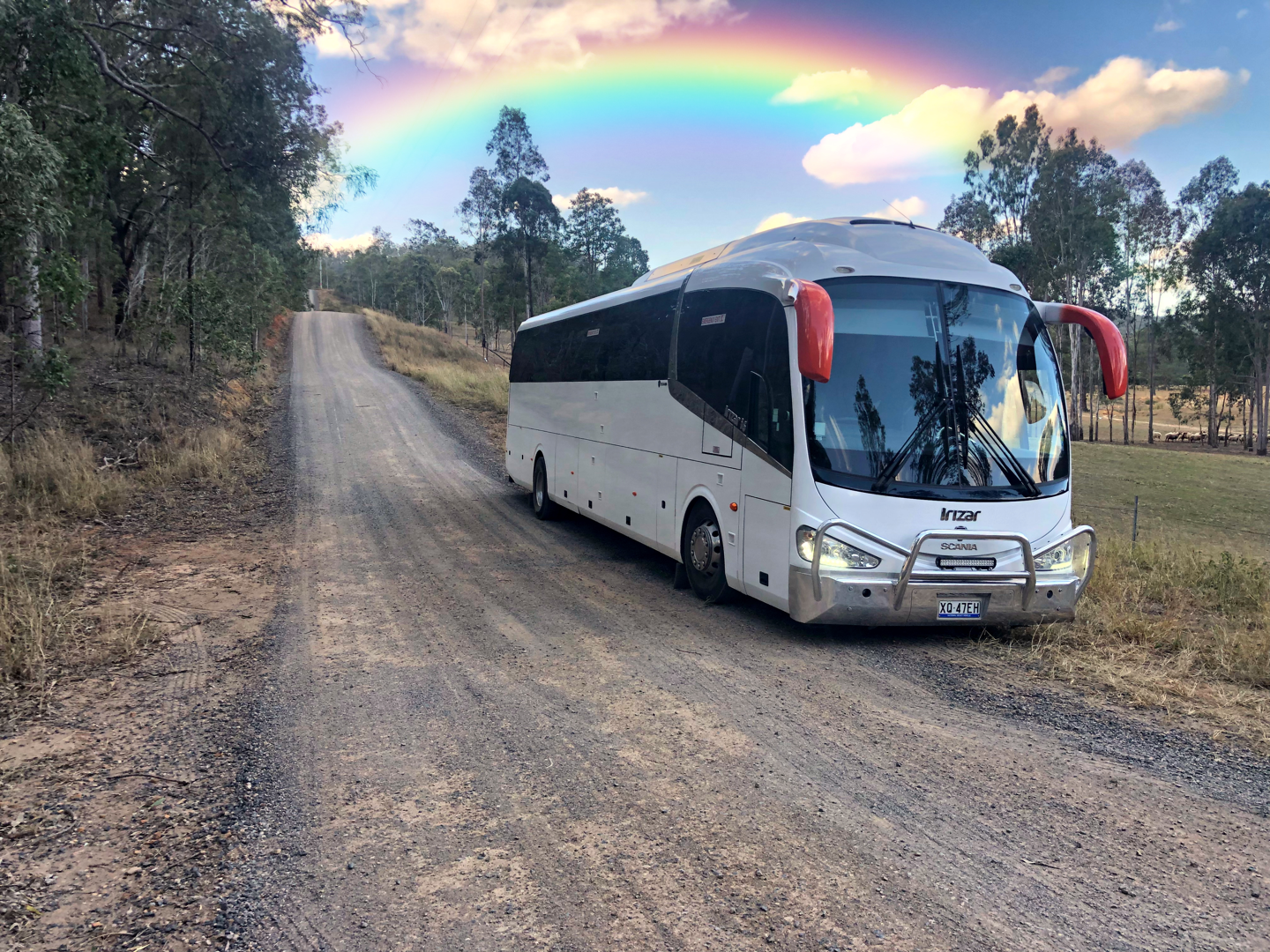
White Irizar Scania coach bus used for worker transport to remote project sites in South East Queensland.

Transporting workers to a remote project site comes down to getting a few practical things right: suitable vehicles, a route that works in real conditions, reliable timing and a professional driver. For projects within practical driving distance of Brisbane and South East Queensland, private bus and coach transport can make it easier to move your crew between accommodation, collection points and the worksite without every person having to organise the trip separately.

If you are coordinating rosters, accommodation, site access and deadlines, transport can quickly become another pressure point. A crew may finish later than planned, a pickup location may change, or the last few kilometres into site may be tighter than they appeared on a map. This guide walks through the details that make the difference, from choosing the right vehicle to allowing for site-entry delays and roster changes.

I’m Cam Storey, and I’ve worked in passenger transport since 2009. Through Brisbane360, I’ve helped coordinate private group travel across Brisbane and South East Queensland, including route planning, vehicle selection, pickups and event logistics. One thing I’ve found is that the smoothest days are usually the ones where the crew timetable, access conditions and likely changes have been talked through before the first pickup.

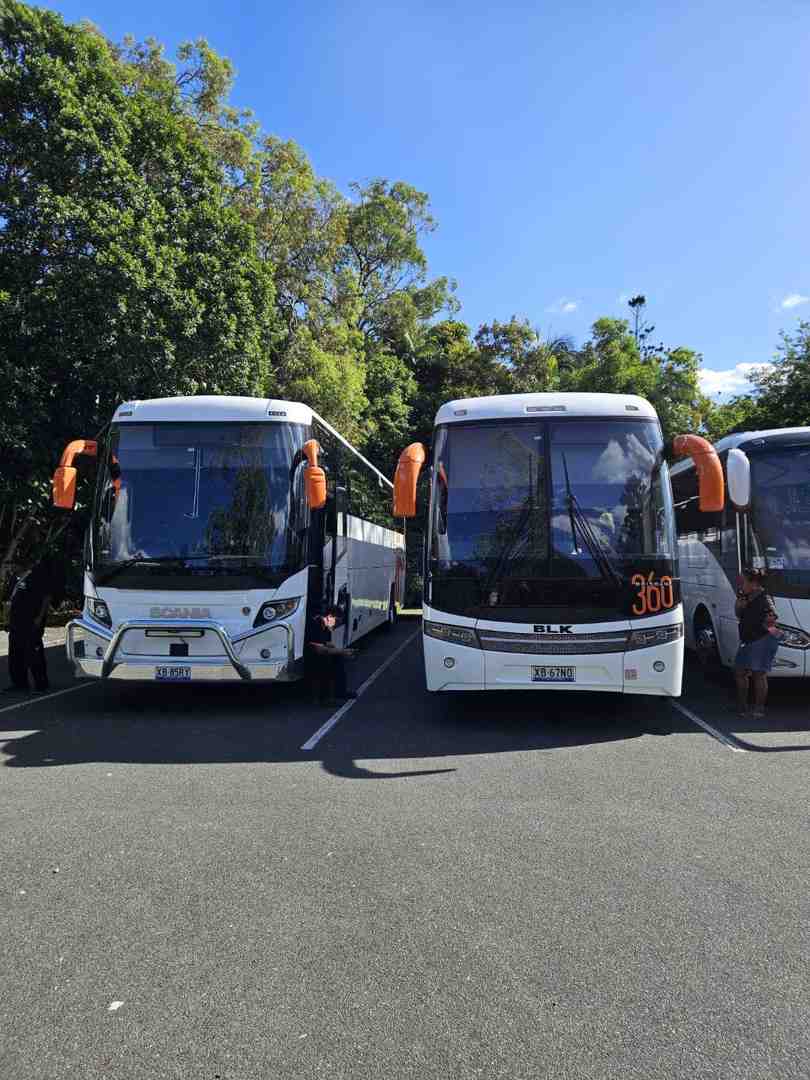
Bus hire fleet in South East Queensland for transporting workers to remote sites.

Key Takeaways

  • Plan the complete journey, including pickup points, regional roads, the final access route and site-entry procedures.
  • Choose a vehicle around crew numbers, equipment, road conditions and likely roster changes—not seat numbers alone.
  • Allow realistic time for shifts, traffic, weather and gate-access delays.
  • Give workers clear departure details and one reliable contact point for changes.
  • Agree on a practical response if a shift runs late, crew numbers change or access is disrupted.

Choosing the Right Transport for a Remote Project Site

For a regional worksite that can be reached safely by road, moving crews together in a dedicated private bus or coach can reduce the number of individual vehicles arriving at site. It also gives you one journey to coordinate between accommodation, collection points and the worksite, rather than asking every worker to manage the drive separately.

In practice, the vehicle with the most seats is not always the right choice. Before you book, look at the route from end to end: the road surface, turning space, gradients, wet-weather conditions, permitted vehicle size, passenger set-down area and the time it takes to get through the gate. A route can look straightforward on a map, then become quite different once you reach the final approach.

What Should You Consider When Transporting Workers to a Remote Site?

Start with the whole movement, not just the vehicle. Work out how many people are travelling on each shift, where they will be collected, how far they need to travel and when they genuinely need to arrive at site. Then look at the conditions that can change the trip: road quality, weather exposure, vehicle size, gate procedures and the space available for workers to board and get off safely.

Personal protective equipment, luggage and other permitted items can take up more room than expected, especially when workers are travelling from regional accommodation for an extended roster. It is also worth deciding early who will communicate a changed departure time and what the fallback plan is if weather, access or crew numbers interrupt the usual arrangement. Those are the details that matter when the day does not go exactly to schedule.

How to Choose the Right Bus Size for a Remote Worksite

Begin with the number of workers on each shift, then think about what else comes with them. Luggage, personal protective equipment, changing crew numbers at handover and the room available at pickup and set-down points can all affect the choice. If the roster changes regularly, it is better to raise that before the service begins than assume the same vehicle will suit every movement.

Brisbane360 has 7, 13, 24, 33, 37/39, 57 and 61-seat buses and coaches available. A smaller private bus can be a better fit for a regular crew movement on a constrained route, while a larger coach may suit higher passenger numbers where the road and turning area allow it. The tricky part is matching the vehicle to the journey your crew is actually making, rather than simply selecting the biggest option.

What If the Worksite Is Difficult to Access?

Difficult access does not automatically rule out group transport, but it does mean the route should be assessed before the vehicle is selected. Narrow roads, limited turning areas, steep sections, unsealed surfaces, wet-weather conditions, restricted entry points and a tight passenger set-down area can all change what is practical.

Share those conditions early, including any site rules for entry and the final approach from the main road. That gives the transport provider a clearer picture of vehicle suitability and timing. It is far easier to work through a constraint before workers are due to travel than discover on the day that a larger vehicle cannot safely complete the final part of the journey.

For projects with regular crew movements, employee transport solutions can help bring pickup locations, timetables and an appropriate passenger vehicle into one workable plan.

Planning Worker Transport Around Shifts and Site Access

Man using smartphone to coordinate worker transport logistics for remote sites.

The best time to sort out workforce transport is before the first shift, when you and your transport provider can talk through the journey properly. That early conversation can take pressure off later, especially when workers are staying in different places, site access takes longer than expected or departure times change at short notice.

Rather than working from a generic process, focus on the questions that apply to your crew and the road they will actually travel.

Remote-Site Planning Checklist

  • How many workers will travel on each shift, including busier roster-change days?
  • Where are workers staying, and which pickup points are both practical and safe?
  • What time does each shift begin and finish, allowing for induction, security or gate-entry time?
  • What vehicle size suits the passenger numbers, equipment and route?
  • Can that vehicle safely use the regional road, final access track and passenger set-down area?
  • Where will workers board, and who will communicate a changed departure time or crew number?
  • What is the agreed response if a shift runs late, access is disrupted or weather affects the route?
  • How far ahead should recurring movements be arranged so capacity and timing can be confirmed?

How Do You Transport Workers to a Construction Site?

For a construction site that is accessible by road, private buses or coaches can move workers as a group from accommodation or agreed collection points. The aim is simple: have your crew arrive with enough time for the shift start, site entry and any induction or sign-in process, without building a timetable so tight that one normal delay causes a problem.

Vehicle choice still comes back to the real route and site conditions. A larger coach may suit a higher-volume movement where access and turning space allow it; a smaller private bus may be more appropriate where the approach is constrained. Bringing workers together can also reduce the number of individual vehicles arriving at the worksite, although that depends on crew size, parking arrangements and how entry is managed.

How Do You Plan Transport Around Shift Changes?

Normal daily movements are often easier than roster-change days. Different shift start times, late finishes and changing crew numbers can all alter both the passenger load and the time your workers need to be collected. One of the easiest things to overlook is what happens when the roster changes: a route that works well for 20 people on a normal day may need a different arrangement when 40 workers change over at once.

Late finishes are another common pressure point. If a crew is delayed on site, everyone needs to know who will confirm the revised departure time and how that update will reach the workers. Clear contact points and sensible time allowances are usually more helpful than an overcomplicated process.

What Information Does a Transport Provider Need?

Before arranging workforce transport, have the passenger numbers, pickup locations, destination, shift times, required arrival time, expected frequency, vehicle-access information and any known site restrictions ready. This turns a broad request into a transport plan that can be properly considered.

Passenger numbers and likely roster changes help determine vehicle size. Pickup locations and the destination make it possible to look at the route as one complete journey. Shift times and the required arrival time allow for traffic, boarding and site entry, rather than treating the scheduled shift start as the arrival time. Frequency matters too, because a one-off movement and a recurring service can need different planning. Finally, access information—such as gate arrangements, turning space, road surface or wet-weather limits—helps avoid choosing a vehicle before the final approach has been considered.

For longer-running projects, long term bus hire can provide a practical framework for scheduled workforce movements, while still allowing the plan to be reviewed when rosters, accommodation or site conditions change.

What Often Gets Overlooked When Planning Worker Transport?

From my experience, it is often the small details that create the biggest headaches. A transport plan can look straightforward until your crew needs to be through the gate before the shift begins, the usual pickup point changes, or the vehicle reaches site and there is not enough safe space to wait or turn around.

Before services begin, confirm the required arrival time instead of working back only from the shift start. Allow for boarding, the final approach, site-entry procedures and any walk from the set-down area. It is also worth checking where the private bus or coach can wait safely if access is delayed, and whether the turnaround area still works in wet weather or while other site traffic is moving through.

Think through the less predictable parts of the day as well. What happens if a shift finishes late, crew numbers change at handover or weather affects the access road? Give workers one clear meeting point, a departure time and a contact person for updates. When everyone knows where to be and who is making the call, there is less confusion to manage when plans change.

Managing Safety, Fatigue and Reliable Workforce Transport

Bus fleet transporting workers to remote project sites in South East Queensland.

Good workforce transport planning can support a safer, more predictable journey, but it needs to reflect the actual operating conditions. One thing I have found is that the practical issues are often the ones that catch teams out: a tight turnaround after a shift, a changed pickup location, poor weather on a regional road or more time than expected at the site gate.

A useful transport plan covers these five areas before services begin and returns to them when conditions change:

  1. Route assessment: Review the whole journey, including road surface, turning areas, gradients, weather exposure, approved entry points and safe passenger set-down locations. This helps you identify whether the proposed vehicle and timing make sense before the service starts.
  2. Driver fatigue management: Build realistic travel times and buffers into the schedule so transport arrangements support the operator’s fatigue-management responsibilities. For fatigue-regulated heavy vehicle operations, drivers must follow NHVR work and rest requirements. The exact obligations depend on the operating circumstances and the hours option in use.
  3. Vehicle suitability: Confirm that the passenger vehicle suits crew size, equipment, route conditions and access restrictions. A larger vehicle can help with passenger numbers, but it may not suit every regional road or worksite entrance.
  4. Passenger and departure coordination: Give workers clear pickup locations, boarding times and a contact point for roster changes. When people know where they need to be and who to contact, the start and finish of a shift are easier to manage.
  5. Contingency planning: Agree in advance on what happens if weather, roadworks, delayed shifts, changed access conditions or unexpected crew changes affect the journey.

When transport is coordinated with accommodation, site access and shift handovers, it can remove one source of pressure from a busy project team and reduce unnecessary vehicle movements at the worksite.

Frequently Asked Questions

What is the best way to transport workers to a remote worksite?

For a worksite that can be reached safely by road, the best starting point is to plan the full journey before choosing a vehicle. Confirm crew numbers, pickup locations, shift times, road and weather conditions, site-entry requirements and the final set-down area. A dedicated private bus or coach can make group movements easier to coordinate, particularly when workers are travelling from accommodation or shared collection points.

How do you choose a bus for transporting workers?

Choose the vehicle around the journey, not headcount alone. Consider the number of workers on each shift, luggage or permitted equipment, road width and surface, turning space, site-access restrictions and whether numbers increase at roster changeovers. In practice, the vehicle with the most seats is not always the right fit for the final access road.

What information is needed to arrange worker transport?

Provide passenger numbers, pickup locations, the destination, shift start and finish times, the required arrival time, how often the service is needed, vehicle-access details and any site restrictions. That gives the transport provider enough information to consider a suitable vehicle, a realistic timetable and practical arrangements for boarding and site entry.

How far in advance should employee transport be booked?

For recurring workforce movements, arrange transport as early as practical. Fixed shift times, limited accommodation options, changing crew numbers and constrained site access can all affect vehicle availability and route planning. Early discussions make it easier to confirm capacity, collection points, travel buffers and what happens if the usual plan changes.

Can a bus access a rural or unsealed worksite road?

It depends on the road and site conditions. Narrow roads, steep sections, unsealed surfaces, wet-weather limitations, restricted entry points and limited turning areas can all affect which vehicle is suitable. The route should be assessed before a vehicle is selected, rather than assuming every bus or coach can safely use the final approach.

Can worker transport be arranged around rotating shifts?

Yes, but it needs to be planned around the actual roster. Different start times, late finishes and larger changeover days can alter passenger numbers and collection times. Agreeing in advance who will communicate delays or roster changes helps keep workers informed when the day does not run exactly to schedule.

Transporting Workers to Remote Project Sites with Brisbane360

White coach bus transporting workers to a remote project site in South East Queensland.

Transporting workers to remote project sites is easier to manage when the route, vehicle, pickup locations, crew numbers and shift times are treated as one plan. For road-accessible projects around Brisbane and South East Queensland, Brisbane360 can coordinate private bus and coach transport with a professional driver for workforce movements between accommodation, collection points and active worksites.

If you are balancing rosters, access arrangements and changing site conditions, talking through the transport early can remove one uncertainty from the day. Our team can help you consider a suitable road-based option for the journey your crew actually needs to make.

Explore relevant services:

Door-to-Door Group Transport in Brisbane: Bus & Coach Hire Guide

Door-to-Door Group Transport in Brisbane: Bus & Coach Hire Guide

Passengers boarding a Brisbane360 coach

Door-to-door group transport gives your group one private bus or coach, a professional driver, and planned pickup and drop-off points. It is a practical option for corporate events, weddings, school excursions, community outings, sporting events, study tours, and private group trips across Brisbane and South East Queensland.

The process is straightforward: confirm passenger numbers, pickup locations, timings, luggage, and return plans, then select a suitable vehicle and itinerary. Travelling together can make arrival times, venue access, and group coordination easier to manage.

I’m Cam Storey, and I’ve worked in passenger transport since 2009. My hands-on experience coordinating private group travel across Brisbane and South East Queensland includes planning routes, matching vehicles to group needs, organising pickups, and managing event logistics so journeys run to a clear plan.

Key Takeaways

  • Door-to-door group transport uses a dedicated bus or coach with a professional driver.
  • Your group can travel between agreed pickup points and the destination in one coordinated journey.
  • Vehicle choice depends on passenger numbers, luggage, mobility aids, equipment, and the planned route.
  • Costs vary according to distance, time, vehicle size, stops, and itinerary requirements.
  • Providing clear travel details early helps us prepare an accurate quote.

How Door-to-Door Group Transport Works

Passengers boarding a modern private bus together

Door-to-door group transport collects passengers from agreed locations and takes the group to the destination in a private vehicle with a professional driver. It removes the need to coordinate several drivers, separate parking arrangements, and different arrival times.

Planning the Journey

  1. Confirm the group size, travel date, and destination.
  2. List pickup points in a logical route order.
  3. Choose a vehicle that allows for passengers, luggage, equipment, and accessibility needs.
  4. Set the arrival time and any return collection time.
  5. Share final pickup details with passengers before the journey.

Why One Vehicle Can Simplify Group Travel

A single planned journey gives organisers one itinerary to manage rather than multiple cars travelling separately. It can reduce parking pressure at busy venues, make timing easier to communicate, and keep passengers together throughout the trip. For larger parties, transport for large groups can be easier to coordinate when the route, vehicle, and return arrangements are planned together.

When Is It Useful?

Door-to-door group transport can suit corporate bus transport for conferences and team events, wedding guests travelling between venues, school excursions, sporting fixtures, concerts, community outings, study tours, and private day trips. The important consideration is whether the group benefits from travelling together to a shared schedule.

Costs and Vehicle Options for Group Travel

Modern private minibus and coach fleet parked side-by-side

The cost of door-to-door group transport depends on the journey rather than a one-size-fits-all rate. Passenger numbers, vehicle size, travel distance, hire duration, number of stops, waiting time, tolls, venue access, luggage, mobility aids, and itinerary complexity can all affect the quote.

Queensland Government data reported 118.65 million passenger trips on government-contracted bus services in South East Queensland during 2024-25. That figure relates to public bus services rather than private bus and coach hire, but it provides useful context for the scale of passenger travel across the region.

What Size Vehicle Does Your Group Need?

Our fleet of luxury mini buses is constantly growing and updating, with 7, 13, 24, 33, 37/39, 57, and 61-seat options.

  • 7 to 24 seats: Suitable for smaller corporate outings, family groups, weddings, and excursions.
  • 33 to 39 seats: A practical fit for medium-sized social groups and sporting teams.
  • 57 to 61 seats: Suitable for larger school excursions, conferences, and major events.

Passenger numbers are only one part of the decision. Luggage, equipment, mobility aids, venue access, and multiple pickup locations may also influence the most suitable vehicle. Explore group bus rental options when comparing vehicle capacity for your trip.

What Is Included in a Group Transport Quote?

A clear quote should reflect the vehicle, professional driver, planned route, and agreed timetable. Sharing complete details at the start helps avoid changes later and allows the journey to be planned around real travel needs rather than assumptions.

How to Book Door-to-Door Group Transport in Brisbane

Professional driver assisting passengers during boarding

A well-prepared enquiry makes it easier to plan a practical group journey. We provide private bus and coach hire with a professional driver across Brisbane and South East Queensland, including Brisbane, the Gold Coast, Sunshine Coast, Ipswich, Logan, Redlands, Moreton Bay, and Arundel.

Information to Provide for a Quote

  • Passenger numbers
  • Travel date
  • Pickup location or locations
  • Destination
  • Pickup and required arrival times
  • Return journey requirements
  • Number of planned stops
  • Luggage or equipment requirements
  • Accessibility requirements
  • Venue access or coach parking restrictions

Planning Multiple Pickup Locations

Arrange stops in a sensible route order and allow enough time for boarding and luggage loading at each one. Confirm the exact pickup point, communicate it clearly to passengers, and set a firm return departure time before the event. If your group has accessibility requirements, mention them early so the vehicle and boarding arrangements can be considered during planning.

For social clubs and organised local outings, community group transport can be planned around the group’s schedule, locations, and practical needs.

Frequently Asked Questions

What is door-to-door group transport?

Door-to-door group transport is a private bus or coach journey that collects a group from agreed locations and takes everyone to the destination with a professional driver.

Is a driver included with private bus hire?

Yes. We provide private bus and coach transport with a professional driver rather than vehicle-only hire.

Can a bus collect passengers from multiple locations?

Yes, multiple pickup points can be included when they suit the route and available travel time. Providing the addresses and preferred pickup times early helps create a workable itinerary.

How much does group transport cost in Brisbane?

Pricing depends on factors including passenger numbers, vehicle size, distance, duration, stops, waiting time, and the requirements of the itinerary. A quote can be prepared once those details are confirmed.

Can Brisbane360 provide transport outside Brisbane?

Yes. We provide private group transport across Brisbane and South East Queensland, including locations such as the Gold Coast, Sunshine Coast, Ipswich, Logan, Redlands, Moreton Bay, and Arundel.

How far ahead should I book?

Book as early as practical, especially for weddings, school excursions, major events, and busy dates. Early planning gives more time to confirm the right vehicle and itinerary.

Can group transport accommodate luggage and accessibility needs?

Yes, provided these requirements are discussed when booking. Luggage, equipment, and mobility aids can affect vehicle selection and boarding arrangements.

Plan Door-to-Door Group Transport in Brisbane

Door-to-door group transport works best when passenger numbers, pickup points, timing, vehicle needs, and return travel are planned together. A dedicated vehicle and professional driver can help groups travel on one coordinated schedule across Brisbane and South East Queensland.

Busing in Schools: Safe School Transport in Brisbane

Busing in Schools: Safe School Transport in Brisbane

Brisbane 360 bus on a school excursion, facilitating safe school transport.

Busing in schools is a practical way to move students and staff together for excursions, camps, sporting fixtures, study tours and other off-campus activities. For Brisbane schools, private bus and coach hire can simplify the day by keeping the group on one coordinated itinerary with a professional driver.

The right arrangement starts with clear passenger numbers, locations and timings. This guide explains when schools may need group transport, what to plan before booking, and how to organise a comfortable, well-managed trip across Brisbane and South East Queensland.

Cam Storey here, owner of Brisbane360, and I have worked in passenger transport since 2009, including hands-on group and event transport across South East Queensland. Through Brisbane360, I have practical experience with route planning, vehicle selection, pickups and event logistics. From my experience, a smooth school trip comes down to communicating the full itinerary early, allowing realistic travel time and making sure the vehicle suits the group, luggage and supervision needs.

What Does Busing in Schools Mean?

In a modern school setting, busing in schools means arranging transport for students and supervising staff when an activity takes place away from campus. It can cover a single journey to a local venue, a return trip with timed pickups, or a multi-day itinerary with several stops.

This is different from a school’s regular daily route. Private group transport is arranged around a specific activity, group size and timetable. It gives organisers one point of coordination for the vehicle, driver, pickup location and return plan.

When Do Schools Need Private Bus and Coach Hire?

Schools often organise private transport for:

  • Educational excursions and curriculum-based visits
  • School camps and multi-day activities
  • Sports carnivals, competitions and training days
  • Inter-school events and performances
  • Performing arts and cultural outings
  • University, TAFE and career visits
  • Orientation days and large student group activities
  • Study tours and educational travel

For example, a school planning an overnight program can use Brisbane360’s school camp transport information to think through travel times, luggage and group coordination before making an enquiry. For shorter curriculum trips, the school excursion bus hire guide can help organisers plan the practical details.

Brisbane360 bus supporting an organised school excursion in Brisbane

Why Use Private Group Transport for School Activities?

Private bus and coach hire helps a school keep students and staff travelling together rather than splitting the group across several private vehicles. That makes attendance checks, departure times and arrival arrangements easier to manage.

A professional driver also lets teachers and supervisors focus on students, communication and the purpose of the trip. Organisers can set a pickup point, confirm planned stops and build the itinerary around the activity instead of coordinating separate drivers.

For larger groups, the main benefit is consistency. Everyone follows the same departure schedule, arrives at the same location and returns under one organised plan.

How to Choose the Right School Transport

A useful booking conversation begins with the practical details. Schools should confirm passenger numbers, including staff and support personnel, before selecting a vehicle. It is also important to allow for bags, sports equipment, musical instruments or camp supplies.

Other details to prepare include:

  • Pickup and drop-off locations
  • Departure and return times
  • Journey distance and expected duration
  • The number of stops and waiting periods
  • Accessibility requirements
  • Supervision arrangements at each pickup point
  • A contact person who can make decisions on the day

Vehicle size should suit the full group, not just the student headcount. A trip with equipment may need more room than a simple city excursion. Likewise, a multi-stop itinerary needs realistic allowances for loading, headcounts and Brisbane traffic.

School Transport Safety and Coordination

Safe school group travel relies on good planning before the vehicle arrives. Provide the final itinerary, school contact details, passenger numbers and any site-specific access instructions early. Teachers can then set clear meeting points and check-in procedures for students.

On the day, allow enough time for orderly boarding and establish clear meeting arrangements at each stop. For longer journeys, schedule sensible breaks and confirm where students will rejoin the vehicle. These small decisions reduce uncertainty for staff and help the driver follow the agreed plan.

Brisbane360 provides private bus and coach transport with a professional driver, rather than vehicle-only hire. We can help schools organise suitable pickup arrangements, travel times and routes for activities across Brisbane, Ipswich, Logan, Redlands, Moreton Bay, the Gold Coast and the Sunshine Coast.

Brisbane360 coach arranged for safe school group travel across South East Queensland

How Does Private School Transport Work?

The process is straightforward:

  1. Share the date, passenger numbers and purpose of the trip.
  2. Confirm the pickup point, destination, planned stops and return time.
  3. Select a suitable vehicle for the group and its equipment.
  4. Finalise the itinerary and school contact details.
  5. Coordinate boarding and timing with staff before departure.
  6. Travel with a professional driver under the agreed plan.

For school groups needing help with practical planning, Brisbane360’s school transport services are designed around excursions, camps, sporting events and educational travel.

Planning for Brisbane and South East Queensland Trips

Local travel conditions matter. A city excursion may need extra time for peak traffic and venue access, while trips to the Gold Coast or Sunshine Coast need a clear departure plan, comfort breaks and realistic return timing. School groups travelling to Ipswich, Logan, Redlands or Moreton Bay also benefit from confirming the precise pickup area and any restrictions at the destination.

Early planning is especially helpful for popular school-event periods. A complete itinerary gives organisers more confidence that the vehicle and timing will match the group’s needs.

FAQs About School Bus Hire and Transport

What does busing in schools mean?

Busing in schools means arranging transport for students and supervising staff when an activity takes place away from campus. It can include a local excursion, a return journey with timed pickups or a multi-day itinerary with several stops.

How do I hire a bus for a school excursion?

Provide the date, group size, pickup location, destination, planned departure and return times, plus any equipment or accessibility requirements. The transport provider can then recommend an appropriate arrangement.

Can schools hire a bus with a driver?

Yes. Brisbane360 provides private bus and coach hire with a professional driver for organised school group travel across Brisbane and South East Queensland.

How many students can a school bus transport?

Capacity depends on the vehicle selected and the total requirements of the trip. Confirm the full passenger count, supervising staff and luggage or equipment when enquiring so the right option can be arranged.

Can schools arrange transport for camps and sports teams?

Yes. Private group transport can be organised for school camps, sporting competitions, excursions, performances, study tours and other activities where the group needs to travel together.

How far ahead should a school book transport?

Brisbane360 coach prepared for organised school group transport in Brisbane

Book once the date, expected passenger numbers and itinerary are reasonably clear. Earlier planning is helpful for busy periods, multi-day trips and larger groups.

What information should a school have ready?

Have the date, group size, pickup point, destination, return time, number of stops, luggage or equipment needs, accessibility requirements and an on-the-day contact ready before requesting a quote.

Organise Busing in Schools with Brisbane360

Brisbane360 coach for school group travel in Brisbane and South East Queensland

For schools, organised group transport works best when the trip is planned around the group’s real needs: the right vehicle, clear timing, practical pickup arrangements and a professional driver. Brisbane360 brings hands-on experience coordinating private group travel across Brisbane and South East Queensland for excursions, camps, sport and educational activities.

School Camp Transport Brisbane: The Complete Guide to Safe, Reliable Bus & Coach Hire

School Camp Transport Specialists in Brisbane

School camp transport in Brisbane is usually arranged through private bus or coach hire with a professional driver, moving students, teachers and camp equipment between the school, activity venue and accommodation.

The right vehicle depends on passenger numbers, luggage volume, journey length, accessibility needs, destination access, and the school’s supervision and safety requirements.

For schools across Brisbane and South East Queensland, experienced school camp transport specialists can coordinate the vehicle, driver, route and itinerary as one practical transport plan.

  • Choose the vehicle around passenger numbers and luggage, not seats alone.
  • Confirm accreditation, safety processes, insurance and vehicle suitability before booking.
  • Allow realistic time for boarding, traffic, rest stops and venue access.
  • Plan overnight camps around equipment, accommodation timing and longer travel days.
  • Request availability early for peak school excursion periods.
  • Provide the complete itinerary so access, turning areas, stops and regional roads can be assessed.

Students boarding a school camp coach in Brisbane

Hi, I’m Cam Storey, and I’ve worked in passenger transport since 2009, with hands-on experience in route planning, vehicle selection, pickups and event logistics. Through Brisbane360, my team and I have coordinated private group travel across Brisbane and South East Queensland, so I know that a successful camp trip starts well before students board the vehicle.

Our school camp transport service brings the driver, vehicle, routing and timing together around the school’s itinerary.

Choosing the Right School Camp Transport

The best school camp transport plan matches the group, the gear and the journey, rather than simply filling the biggest available vehicle. Schools should look for clear communication, a suitable vehicle, a professional driver, practical route planning and a provider that can work from the full itinerary.

What should schools look for in a transport provider?

Start by checking whether the provider can understand the trip as a whole: student and staff numbers, luggage, pickup arrangements, destination access, planned stops and return timing. A clear quote should reflect the actual route and travel days rather than relying on a generic one-size-fits-all arrangement.

It is also worth confirming who the main contact will be before and during the trip, how changes are communicated, and whether the provider has considered loading space, turning areas and venue access. These details help teachers maintain supervision while the driver focuses on the road.

What safety requirements should schools check?

Queensland Department of Education excursion guidance says schools using a private bus service should obtain and record evidence of the operator’s current operation accreditation number. The same guidance calls for appropriate rest stops on long-distance travel, attention to child restraints, and approved mechanisms for securing mobility devices when needed.

Schools should also ask about vehicle suitability, seatbelts where fitted, driver authorisation, maintenance and pre-trip checks, insurance, emergency procedures and how the itinerary will be managed if traffic, weather or access conditions change. The Queensland Code of Conduct for school students travelling on buses also places responsibilities on both operators and drivers when students are travelling.

This approach is more useful than relying on broad safety statements. It gives the school a practical record of the questions considered during planning and helps align transport arrangements with its own risk-management process.

What size bus or coach does a school camp need?

Vehicle size should start with the total number of students, teachers and supervisors, then account for the trip type and the access at both ends of the journey.

Group size Possible vehicle Best suited for
Small groups Minibus Small classes and staff groups
Medium groups Midi coach School excursions and smaller camps
Large groups Full-size coach Whole-year-level groups and larger camps

The table is a starting point rather than a final booking decision. Whole-year groups and camps with substantial equipment may need a full-size coach or more than one vehicle.

Our fleet of luxury mini buses is constantly growing and updating, with 7, 13, 24, 33, 37/39, 57 and 61-seat options. For a closer look at vehicle choices, see our school camp transport options. The final choice should consider safe seating, luggage storage, the road to the venue and whether teachers need space to supervise students effectively.

How much luggage space does a school camp need?

Luggage can change the vehicle decision completely. Sleeping bags, bedding, backpacks, sporting equipment, musical instruments, outdoor activity gear, catering supplies and teacher resources all need a secure place that does not block aisles or seating.

A bus that seats 50 people is not automatically the right fit for 50 students travelling with camp equipment. Listing expected items early lets the transport team assess underfloor storage and loading requirements before the school confirms the final vehicle.

Accessibility and special transport requirements

Accessibility needs should be raised during the first planning conversation, not on the day of departure. Schools may need to consider mobility devices, access at pickup and venue locations, seating arrangements, medical equipment, additional boarding time and the supervision plan. Sharing these requirements early allows the journey plan to be checked against the vehicle and destination.

Planning School Camp Transport in Brisbane

Good planning turns school camp bus hire into an organised movement schedule rather than a last-minute transport task. It gives schools time to confirm the passenger list, assess equipment, plan supervision and ensure the vehicle can access each location safely.

What information should schools provide?

Give the provider the school address, pickup and loading time, destination and accommodation addresses, return arrangements, student and staff numbers, year levels, primary contacts, planned stops and any special access needs. Include early estimates for bags, bedding and equipment even when final attendance is still being confirmed.

For Brisbane schools travelling to outdoor education centres, the itinerary should also identify gate access, coach parking, turning areas and any narrow or unsealed approach roads. The same preparation helps with multi-stop movements across the Gold Coast, Sunshine Coast, Ipswich, Logan, Redlands and Moreton Bay.

Planning pickups, routes and rest stops

A realistic itinerary allows for attendance checks, loading, peak traffic, comfort breaks, venue entry and unloading. On longer regional journeys, rest stops should be planned into the schedule rather than treated as an afterthought. Teachers remain responsible for supervision, so agreed stop locations and roll-check procedures are just as important as departure time.

Share activity finish times as well as the main camp timetable. A group that leaves an activity late, needs extra loading time or encounters wet-weather conditions can affect the next movement, particularly when the group is travelling back to Brisbane from a regional destination.

Day trips and overnight school camps

Day trips are usually simpler, but they still need clear pickup timing, supervision points, planned stops and a suitable vehicle. Overnight camps add bedding, larger bags, accommodation access, possible equipment storage and a return journey after several days away.

The practical difference is rarely just distance. Overnight travel often involves more luggage, more loading time, more venue coordination and a greater need to keep the group comfortable and organised across several movements.

Regional and long-distance school camp travel

Regional destinations can involve winding roads, restricted turning areas, wet-weather changes and longer travel times. A route review should consider the vehicle’s size, clearance, venue access and where the group can stop safely. Planning is particularly important for camps travelling from Brisbane towards the Sunshine Coast hinterland, Gold Coast valleys or other outdoor education locations across South East Queensland.

How far ahead should schools book?

Schools should request availability as early as possible, particularly when excursion calendars are busy. Early planning gives the transport provider more opportunity to match vehicle capacity, luggage requirements and timing to the itinerary. It also gives the school time to refine passenger numbers and camp details without rushing the core transport plan.

How much does school camp bus hire cost in Brisbane?

The cost of school camp bus hire in Brisbane varies with passenger numbers, vehicle type, travel distance, trip duration, number of travel days, pickup locations, luggage requirements, waiting time and itinerary complexity. Because every camp follows a different route and schedule, a tailored quote is more meaningful than a single standard price.

Schools can make the quoting process faster by providing dates, expected numbers, travel times, full addresses and known stops from the outset. For broader planning support, our bus hire for schools page explains the information that helps match a group with the right transport arrangement.

The scale of education travel makes this preparation worthwhile. The Australian Bureau of Statistics recorded 889,635 Queensland school enrolments in 2025, combining 564,846 government and 324,789 non-government students. While each camp is different, that figure underlines how important safe, organised group travel is across the state.

How to book school camp transport

  1. Confirm the expected number of students, teachers and supervisors.
  2. Prepare the full itinerary, including pickup, activities, accommodation and return.
  3. List bags, bedding, sporting equipment and other bulky items.
  4. Discuss vehicle capacity, storage and destination access.
  5. Request a tailored quote with dates, times and locations.
  6. Review final contacts, loading arrangements and timing before travel.

School Camp Transport Checklist

A written checklist helps the school, the driver and the camp venue work from the same essential information. It also makes it easier to identify missing details before the travel day.

Before requesting a quote

  • [ ] Number of students
  • [ ] Number of teachers and supervisors
  • [ ] School departure address
  • [ ] Camp and accommodation addresses
  • [ ] Departure and return times
  • [ ] Number of travel days
  • [ ] Planned activity or meal stops
  • [ ] Bags, bedding and equipment list
  • [ ] Accessibility or mobility requirements
  • [ ] Venue access, parking and turning information
  • [ ] Primary school contact and emergency contact process

Before the day of travel

Confirm final passenger numbers, seating or supervision arrangements, loading location, contact numbers and the schedule for every stop. Teachers should know where attendance checks will take place and what happens if students are delayed or a timetable changes. It is also helpful to remind families about luggage limits, departure timing and any school-specific behaviour expectations.

On the day

Allow enough time for the group to gather, check rolls and load gear without blocking school traffic or creating unnecessary pressure. Keep aisles clear, secure bags in the agreed storage areas and use the planned contact person for updates. At each stop, confirm the student count before the vehicle departs.

What should schools ask their bus hire provider?

Ask how the provider will match the vehicle to the group and equipment, what information is needed for a tailored quote, how destination access is assessed, and how the driver receives final itinerary changes. Schools should also ask about operation accreditation, vehicle safety features, insurance, accessibility arrangements, rest-stop planning and the communication process for the travel day.

Frequently Asked Questions

What is the best bus for a school camp?

The best vehicle is the one that safely fits the full group, staff and equipment while remaining suitable for the route and destination access. Seat count matters, but luggage capacity and the camp itinerary matter too.

How much does school camp bus hire cost in Brisbane?

Pricing depends on the group size, vehicle, distance, travel days, timing, pickup points, waiting time and luggage requirements. A complete itinerary is the best basis for an accurate tailored quote.

How far in advance should a school book camp transport?

Request availability as early as practical, especially around popular school excursion periods. Early booking improves the chance of securing a vehicle that suits both the group size and equipment needs.

How many students can a school camp bus carry?

Capacity depends on the vehicle selected. Brisbane360 has options from 7 seats through to 61 seats, but the right choice should include teachers, supervisors, bags and destination access in the decision.

How much luggage can a school camp bus carry?

Capacity varies by vehicle and the size of the items being carried. Provide a list of bedding, backpacks and equipment early so storage can be assessed before the booking is confirmed.

Can buses travel to regional outdoor education centres?

Yes, provided the route and venue access are suitable for the selected vehicle. Early itinerary review helps identify turning areas, road conditions, rest-stop needs and any access restrictions.

Can Brisbane360 support overnight school camps?

Yes. Brisbane360 provides private bus and coach hire with a professional driver for school camp travel across Brisbane and South East Queensland, including planning around overnight luggage, timing and regional routes.

Planning School Camp Transport with Brisbane360

The strongest school camp transport plan starts with clear information: who is travelling, where they are going, how much they are carrying and what the day needs to look like. By checking safety requirements, choosing for luggage as well as seats, and allowing time for loading and stops, schools can create a calmer and more reliable journey for students and staff.

Brisbane360 applies hands-on experience in vehicle selection, route planning and private group travel coordination across Brisbane and South East Queensland. When your camp itinerary is ready, explore the next step: