
All Aboard! Exploring Community Group Transport Options
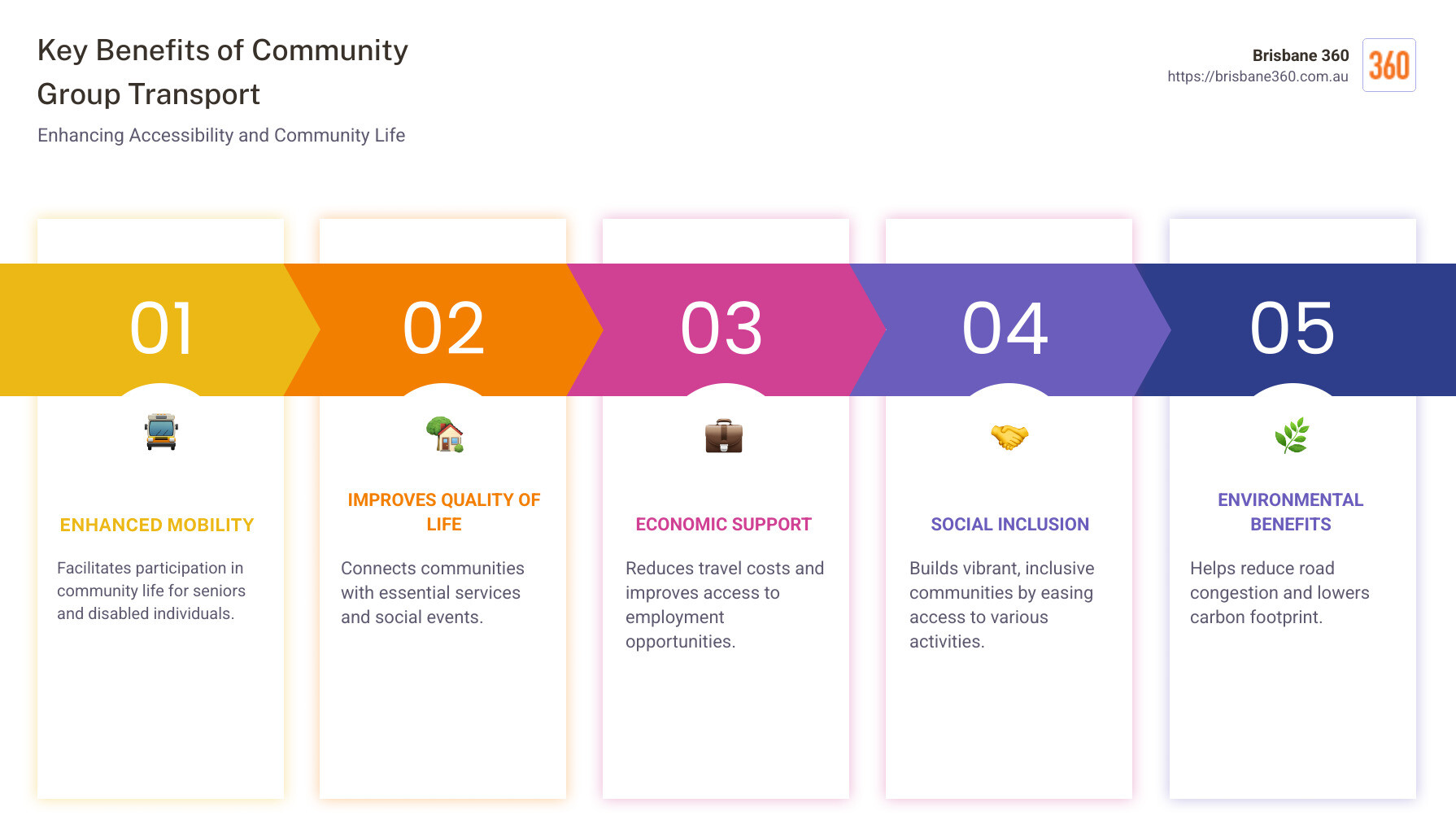
Community group transport makes a big difference in people’s lives by easing everyday travel for groups—even those with unique needs. At its core, it boosts mobility, giving everyone a chance to access local services, leisure activities, and vital appointments.
Key Highlights:
- Improved Mobility: Makes it easier for seniors and disabled individuals to participate in community life.
- Improves Quality of Life: Connects communities with local amenities, social events, and essential services.
- Economic Support: Reduces travel costs for people and facilitates better access to employment.
With community group transport, vibrant, connected communities become possible. It’s about more than just getting from point A to B; it’s about creating accessible, inclusive spaces where everyone can thrive.
I’m Cam Storey, founder of Brisbane360. My path from hospitality to establishing a trusted transport company has been driven by a mission to improve lives through exceptional, people-focused transport services.

Understanding Community Group Transport
Community group transport is about more than just moving people from one place to another. It’s a vital service that fills mobility gaps, providing access and movement options for those who might otherwise be left behind.
What is Community Transport?
Community transport is a service designed to help people who face challenges using traditional public transport. This includes seniors, people with disabilities, and those living in areas with limited transport options. The aim is to ensure everyone can access essential services, social activities, and community events.
Key Features:
-
Door-to-Door Services: Many community transport services offer door-to-door pick-up and drop-off, making it easy for users to get where they need to go without the hassle of navigating public transport systems.
-
Adaptable Vehicles: These services often use vehicles that are wheelchair-friendly and equipped to handle various mobility aids, ensuring inclusivity and comfort for all passengers.
Addressing Mobility Gaps
In many areas, especially rural or underserved urban communities, public transport is sparse or non-existent. Community group transport bridges these gaps, acting as a lifeline for those who need it most.
Case in Point:
-
Dial-a-Ride Schemes: These provide on-demand transport for people who can’t use regular bus services, ensuring that everyone has the opportunity to participate in daily life.
-
Volunteer Car Services: Dedicated volunteers use their vehicles to transport community members to medical appointments, shopping trips, and social gatherings. This not only improves mobility but also fosters a sense of community and support.
Enhancing Access and Movement
Community transport is crucial in promoting access and movement across various demographics. It empowers individuals by providing reliable and affordable transport options, thus enhancing their quality of life.
Impact:
-
Social Inclusion: By offering accessible transport, these services help combat loneliness and social isolation, especially among the elderly and disabled.
-
Economic Opportunities: Reliable transport opens up employment possibilities for those who might otherwise be constrained by mobility issues.
Community group transport creates a network of support that enables individuals to live more independent and fulfilling lives. It’s about ensuring that everyone, regardless of their circumstances, can engage with and contribute to their community.
In the next section, we’ll dive into the benefits of community group transport, exploring how it contributes economically, improves health, and reduces road congestion.
Benefits of Community Group Transport
Community group transport is a game-changer for cities and towns, offering numerous benefits that extend far beyond just getting people from A to B. Let’s explore some of these advantages:
Economic Benefits
Community group transport can significantly boost local economies. When people have reliable transport options, they can access jobs, education, and shopping more easily. This increased access leads to higher local business sales and greater economic activity.
-
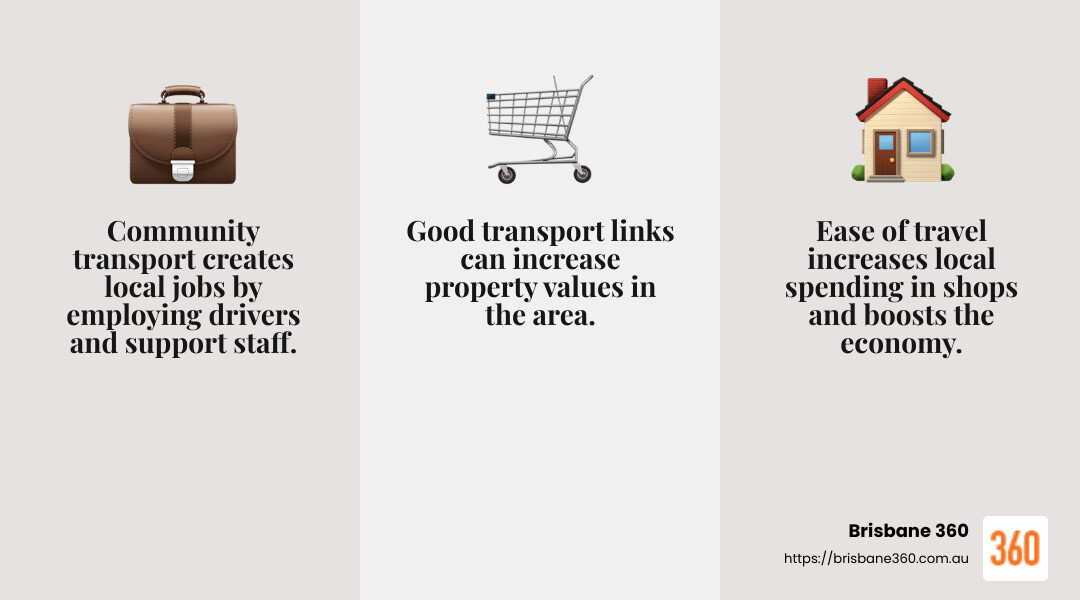
Job Creation: Community transport services often employ local drivers and staff, providing jobs within the community.
-
Increased Spending: When people can travel easily, they tend to spend more in local shops and businesses, helping to keep the local economy vibrant.
-
Property Value Boost: Areas with good transport links often see an increase in property values. This is because people want to live in places where they can easily get around.
Health Benefits
Using community transport has health perks too. People who rely on these services often walk more, as they need to get to pick-up points or steer to their final destinations after being dropped off.
-
Increased Physical Activity: Walking to and from transport stops adds steps to daily routines, promoting better health.
-
Access to Healthcare: Community transport ensures that people can make it to medical appointments, which is crucial for maintaining good health, particularly for those with chronic conditions.
-
Mental Well-being: Regular social interaction during trips reduces feelings of loneliness and isolation, especially for seniors and those with mobility issues.
Reducing Road Congestion
Community group transport helps cut down on the number of cars on the roads. This leads to less traffic congestion, which is a win for everyone.
-
Fewer Cars, Less Traffic: By offering shared transport options, fewer people need to drive their own cars, reducing overall traffic.
-
Lower Emissions: With fewer cars on the road, there’s a decrease in harmful emissions, contributing to a cleaner environment.
-
Efficient Use of Road Space: Community transport vehicles, like minibuses and vans, can carry multiple passengers at once, making them an efficient use of road space compared to multiple single-occupancy cars.
Community group transport is not just a convenience—it’s a vital service that improves economic potential, improves public health, and makes our roads less congested. In the next section, we’ll look at the different types of community group transport services available.
Types of Community Group Transport Services
When it comes to community group transport, there are several types that cater to different needs and situations. Let’s explore these options and see how they serve communities.
Non-Medical Transportation (NMT)
NMT is a lifesaver for those needing to get to non-emergency medical appointments. It ensures that individuals can access healthcare services even if they don’t have their own transportation. This type of service is crucial for maintaining health and well-being, especially for seniors and those with chronic illnesses. For instance, as noted in research, services like these are designed to ensure timely arrival for appointments, providing peace of mind for users.
Public and Private Transport
Community transport services often bridge the gap between public and private transport. They offer flexible, custom solutions that public transport might not provide. For example:
-
Community Buses: These are often run by local volunteer groups and provide scheduled services to areas poorly served by regular buses. They’re a lifeline for isolated communities, offering regular trips to day centers, shops, and social activities.
-
Volunteer Car Services: These offer a more personal touch, with volunteer drivers using their own vehicles to transport individuals to essential appointments. This service is particularly valuable in rural areas where public transport options are limited.
Accessibility
Accessibility is at the heart of community transport. Services are often designed to be inclusive, ensuring that everyone, regardless of mobility challenges, can access transport.
-
Wheelchair-Friendly Vehicles: Many community transport services invest in vehicles that can accommodate modern wheelchairs and other mobility aids. This commitment to inclusivity ensures that individuals with disabilities can travel comfortably and safely.
-
Training for Special Assistance Roles: To further support accessibility, many services train their staff to assist passengers with special needs, ensuring a smooth and respectful travel experience.
Community group transport is all about filling the gaps left by traditional transport services. By offering these custom solutions, community transport ensures that everyone can participate in society, regardless of their personal circumstances. Next, we’ll explore how community group transport is making a difference in urban areas.
Community Group Transport in Urban Areas
Urban areas present unique challenges and opportunities for community group transport. As cities grow, so does the need for effective and inclusive transport systems that cater to everyone. Here’s how urban design and transit-oriented development are reshaping community transport.
Urban Design and Community Transport
Urban design plays a crucial role in making cities more accessible. By integrating community transport into urban planning, cities can ensure that transport services are available where they’re needed most. This means designing cities where community group transport can operate efficiently, connecting neighborhoods and reducing the need for car travel.
-
Neighborhood Integration: Roads should link communities, not divide them. Effective urban design ensures that local roads connect seamlessly with larger transit routes, making community transport a viable option for residents.
-
Density and Proximity: High-density areas near transit hubs support the demand for community transport. This proximity allows for shorter, more convenient trips, making it easier for people to access work, education, and social activities.
Transit-Oriented Development (TOD)
Transit-oriented development focuses on creating urban spaces that revolve around public transport. This approach improves the efficiency of community group transport by ensuring that transit options are within easy reach for everyone.
-
Mixed-Use Developments: TOD encourages mixed-use developments, where residential, commercial, and recreational spaces coexist. This reduces the need for long commutes and supports the use of community transport for short trips.
-
Accessibility and Convenience: By situating amenities close to transit stations, TOD makes community transport a practical choice for daily activities, reducing reliance on personal vehicles and lowering traffic congestion.
Inclusive Transit Systems
Inclusivity is key to a successful community transport system. An inclusive transit system ensures that everyone, regardless of ability or income, can access reliable transport.
-
Accessible Vehicles and Facilities: Investing in wheelchair-accessible vehicles and user-friendly facilities is essential. This ensures that individuals with disabilities can travel without barriers.
-
Community Partnerships: Collaborations with local organizations and volunteer groups improve the reach of community transport, providing custom services that meet the specific needs of urban populations.
-
Safety and Training: Ensuring that drivers are trained to assist all passengers, including those with special needs, promotes a safe and respectful environment for everyone.
Urban areas are vibrant and diverse, and community group transport helps to weave these communities together. By focusing on urban design, transit-oriented development, and inclusivity, cities can create transport systems that support all residents.
Frequently Asked Questions about Community Group Transport
What is Community Group Transport?
Community group transport is a service that connects people to essential amenities and services, helping those who might otherwise struggle with mobility. It is particularly crucial for vulnerable groups, such as the elderly, individuals with disabilities, and those living in remote areas. The Community Transportation Association of America (CTAA) champions the idea that mobility is a basic human right, ensuring that everyone, regardless of age, ability, or income, has access to reliable and affordable transportation.
How does Community Group Transport improve accessibility?
Community group transport significantly improves accessibility by offering custom services that cater to the specific needs of vulnerable populations. This includes:
-
Door-to-Door Services: For those with mobility issues, door-to-door services eliminate the need for long walks to bus stops, making it easier to attend medical appointments, go shopping, or engage in social activities.
-
Wheelchair-Accessible Vehicles: Investing in vehicles that can accommodate modern wheelchairs and other mobility aids ensures that transportation is inclusive for everyone.
-
Volunteer and Dial-a-Ride Services: These services provide flexibility and personal attention, allowing users to pre-book trips and plan their journeys with ease.
By breaking down barriers to mobility, community group transport fosters independence and social inclusion, enabling more people to participate fully in community life.
What are the economic benefits of Community Group Transport?
Community group transport offers several economic advantages that extend beyond individual users to benefit the broader community:
-
Job Creation and Local Economy Boost: Transport services often employ local drivers and support staff, creating jobs and stimulating the local economy.
-
Increased Access to Employment: By providing reliable transport options, community group transport allows individuals to access job opportunities that were previously out of reach due to transportation barriers.
-
Reduced Traffic Congestion: By decreasing the reliance on personal vehicles, community transport helps to reduce traffic congestion, leading to lower emissions and improved air quality.
-
Health and Social Care Savings: Ensuring that people can attend medical appointments and engage in social activities reduces healthcare costs and improves overall well-being.
Community group transport is more than just a means of getting from point A to point B; it’s a vital component of a thriving community. By improving accessibility and offering economic benefits, these services play a crucial role in enhancing the quality of life for all residents.
Let’s Travel Together!
At Brisbane 360, we believe in providing community group transport that prioritizes safety, affordability, and exceptional service. As a family-owned bus and coach company based in Brisbane, Queensland, we pride ourselves on our commitment to connecting people with the services and amenities they need.
Our fleet is equipped with a variety of vehicles, from luxury sedans to full-size coaches, ensuring we can accommodate groups of all sizes. Whether you’re planning a school trip, a corporate event, or a family outing, we’ve got you covered with our reliable and flexible passenger transport services.
Safety and Comfort First
Safety is at the heart of everything we do. Our vehicles are maintained to the highest standards, and our drivers are not only skilled but also trained in first aid and customer service. We understand that comfort is key, which is why our vehicles come with features like climate control, high-back seating, and onboard PA systems.
Affordability Without Compromise
We offer competitive pricing without compromising on quality. Our goal is to make transportation accessible to everyone, ensuring that you can enjoy a stress-free journey without breaking the bank. We also provide discounts for non-profits and large groups, making it easier for community organizations to access our services.
A Partner You Can Trust
With a strong presence in Brisbane and the surrounding areas, including the Gold Coast and Logan, we are well-positioned to meet all your transport needs. From airport transfers to special events, our team is dedicated to delivering a seamless experience every step of the way.
Choose Brisbane 360 for your next journey and experience the difference that comes with a company that truly cares about your travel needs. Let’s work together to make community transport a cornerstone of our thriving community.
