
No More Commute Stress with Gold Coast Staff Transport
No More Commute Stress with Gold Coast Staff Transport
Gold Coast staff transport helps employers keep teams moving across South East Queensland without leaving arrival times to chance. As commercial precincts expand from Coomera and Helensvale down to Robina and Coolangatta, daily employee travel crosses major congestion zones, busy coastal corridors, and large workplace parking demands.
For site managers, HR teams, and operations leaders, that makes staff travel more than a convenience issue. It affects shift changeovers, employee fatigue, absenteeism, customer service, and the ability to keep critical roles covered during peak periods.
At Brisbane 360, we’re setting the standard for passenger transport with tailored private transport solutions for major employers across South East Queensland. As a family-owned bus and coach company, we work directly with site managers and operations teams to design practical travel routes, match vehicle sizes to roster demand, and support safer, more reliable employee journeys.
Hi, I’m Cam Storey, Director of Brisbane 360. I’ve spent years coordinating passenger transport for workplaces, schools, corporate groups, events, and community organisations across South East Queensland, and I use that hands-on experience to shape the practical guidance in this blog. My goal is to help employers make confident staff transport decisions based on real local conditions, including route planning, vehicle selection, driver standards, safety considerations, and reliable shift movement.
Navigating Workforce Logistics Across South East Queensland

Peak traffic bottlenecks along the M1 motorway, Gold Coast Highway, and key inland arterials like Olsen Avenue can add significant uncertainty to a simple morning commute. Even when employees leave home early, accidents, roadworks, wet weather, school traffic, and event diversions can quickly disrupt arrival times.
For employers, those delays can affect more than one worker. A late team can slow shift handovers, delay opening procedures, reduce customer-facing capacity, or place extra pressure on staff who arrived on time.
For companies operating round-the-clock facilities or non-standard shift schedules, public transit options often fall short. When site start times fall outside standard hours, or when hundreds of employees need to arrive simultaneously, reliance on general public transport or private cars creates operational bottlenecks.
Structured group transport gives employers more control. Instead of hoping each person finds a reliable route, businesses can coordinate shared pick-up points, planned departure windows, direct transfers, and clear backup options for high-risk travel periods.
Modern Options for Gold Coast Staff Transport
Modern workplace logistics require moving away from passive commute expectations toward managed solutions. Brisbane 360’s growing fleet of luxury mini buses offers options across 7, 13, 24, 33, 37/39, 57, and 61 seats. That range gives employers flexible Gold Coast staff transport for small teams, large workforces, and changing roster demands.
A smaller team may only need a regular mini bus transfer from a central meeting point. A larger employer may need multiple vehicles, staggered departures, or separate routes for different suburbs and shift groups.
When evaluating Staff Transport Services, businesses generally look at three primary delivery models:
- Fixed Commuter Routes: Scheduled pick-up and drop-off loops linking key transit hubs directly to workplace entrances.
- Shift-Aligned Direct Transfers: Dedicated point-to-point group travel timed specifically around shift rotations.
- Inter-Site Mobility: Transfers for organisations operating across multiple precincts, such as health, education, industrial, and hospitality facilities.
By using dedicated Employee Transport Across SEQ, companies establish door-to-door or hub-to-hub reliability aligned with exact shift patterns. This helps reduce uncertainty for employees while giving managers a clearer view of arrival planning.
Practical Planning Questions for Employers
Before choosing a staff transport model, employers should review the way their workforce actually travels. The best routes are usually built from roster data, staff location patterns, start times, finish times, car park pressure, and known congestion points.
Useful planning questions include:
- Which shifts experience the highest rate of late arrivals?
- Are staff travelling from the same suburbs or from widely spread locations?
- Which sites have limited parking or difficult access at peak times?
- Do workers finish outside normal public transport operating windows?
- Are there safety concerns for staff travelling early in the morning or late at night?
- Would a hub-based pick-up model or door-to-door model be more practical?
- How many employees need transport on a normal day compared with peak periods?
These questions help separate a generic charter booking from a genuine workforce transport strategy. They also make it easier to choose the right vehicle size, route structure, frequency, and contingency plan.
Key Lessons from Local Workplace Travel Profiles
Real-world workplace travel profiles across South East Queensland show how tailored transport strategies solve persistent operational challenges. Employers that conduct thorough travel audits often find that uncoordinated commuting leads to lost time, delayed shifts, and parking friction.
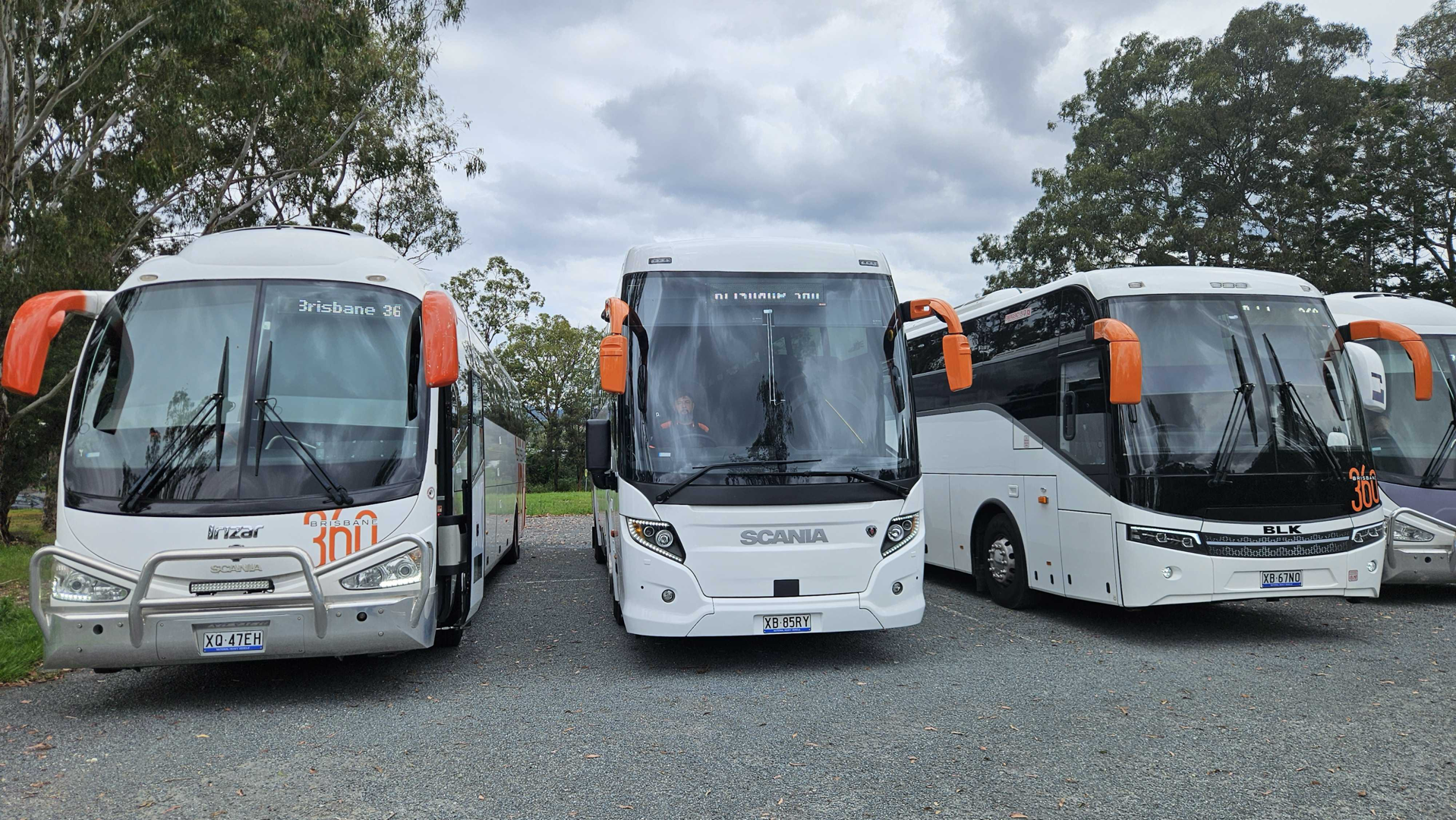
Individual private vehicles often face low roster alignment due to M1 delays and heavy parking demand on site. Dedicated group transport provides stronger roster alignment, zero parking impact on operational spaces, and fixed agreement pricing.
Partnering with a dedicated service provider for Corporate Transport Solutions allows commercial entities to capture these efficiencies without taking on vehicle fleet overheads. It also helps employers avoid the internal burden of sourcing vehicles, managing driver availability, and coordinating daily travel changes alone.
For example, large health, education, hospitality, and industrial employers around Southport, Robina, Coomera, and Coolangatta often need staff moving at the same time. Gold Coast staff transport gives those organisations a practical way to coordinate arrivals, reduce parking pressure, and keep service teams available when demand peaks.
Safety, Comfort, and Professional Standards
A strong staff transport plan should protect both operational reliability and employee wellbeing. Long, stressful commutes can affect morale, punctuality, and readiness for work, especially when staff are driving before dawn, after late shifts, or after physically demanding days.
Professional group transport can reduce that burden by giving employees a predictable, comfortable journey. A clean vehicle, experienced driver, planned route, and clear arrival process all help workers begin and end shifts with less travel stress.
From an employer perspective, professional standards matter because transport reflects the organisation’s duty of care culture. While every workplace has different obligations, choosing an experienced passenger transport provider supports a more consistent, documented approach to staff movement.
Brisbane 360’s service includes professional drivers, suitable passenger vehicles, fuel, and comprehensive insurance as part of custom quoted transport arrangements. That gives employers a clearer operating model than informal lift-sharing or ad hoc taxi reimbursements.
Overcoming Congestion and Event Logistics
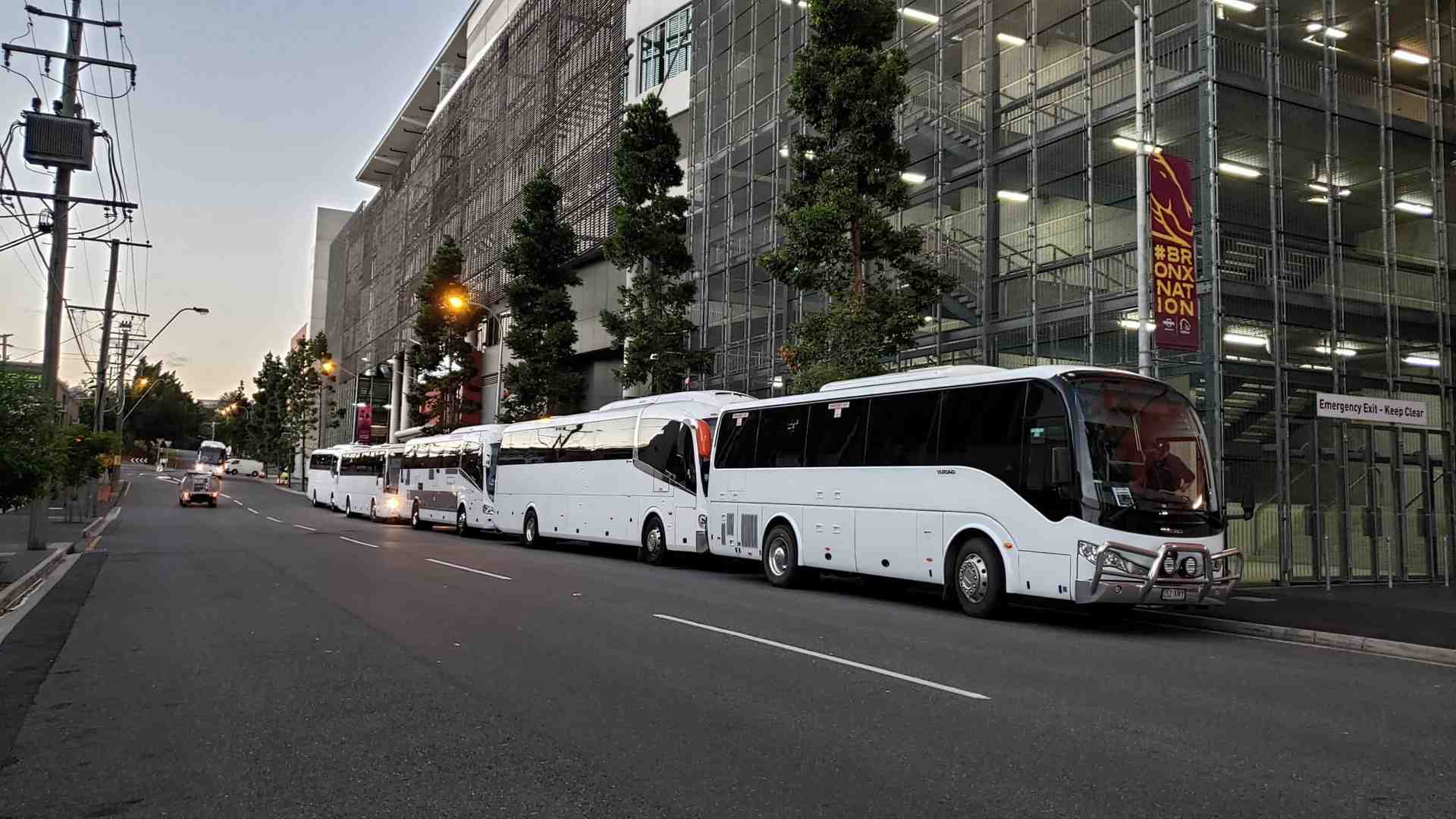
Special events and seasonal tourism regularly disrupt Gold Coast road networks. Major events can create road closures, traffic control points, temporary parking restrictions, and heavy visitor movements around coastal precincts.
For employers, these disruptions can be especially challenging when they overlap with early starts, evening finishes, venue staffing, hospitality peaks, healthcare rosters, or large customer service periods. A normal commute route may no longer be realistic on event days.
Navigating these disruptions requires operational expertise and advance route planning:
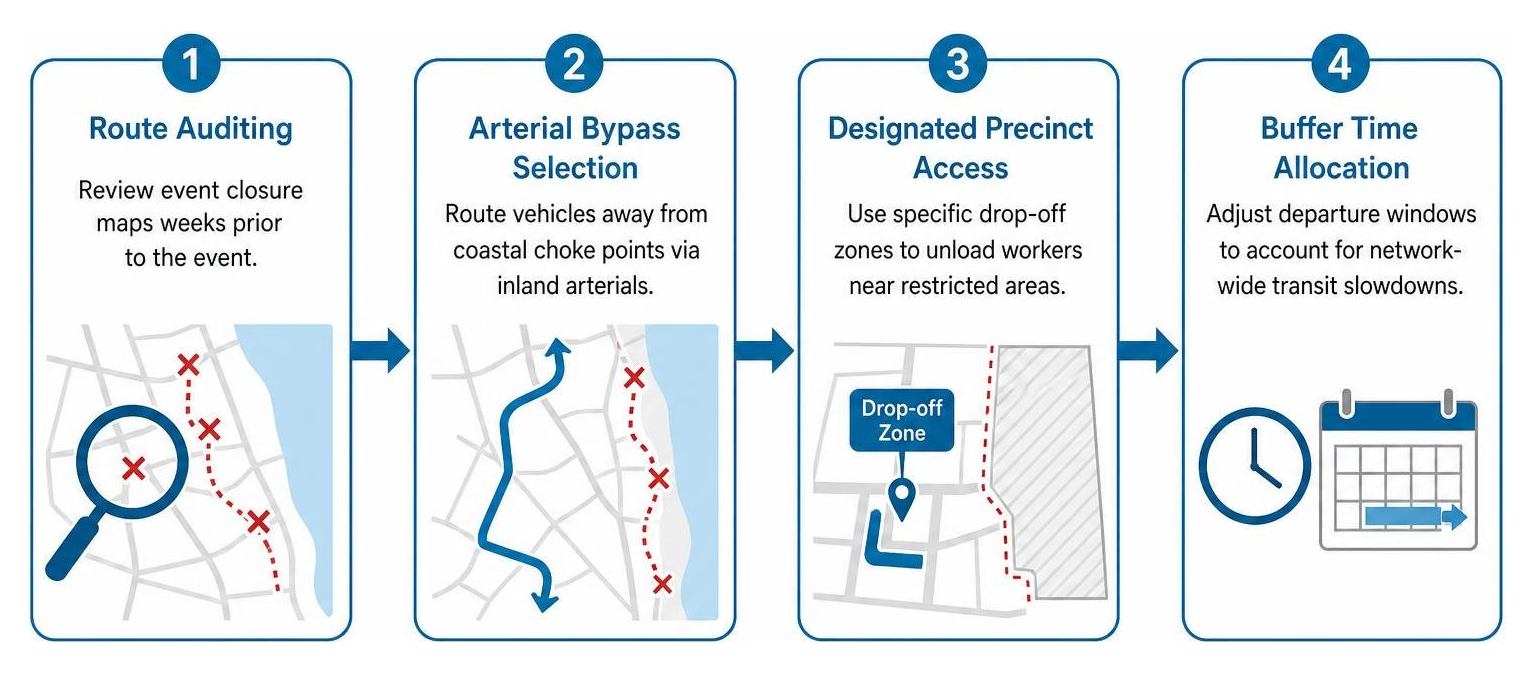
- Route Auditing: Reviewing official event road closure schedules before the event.
- Arterial Bypass Selection: Routing passenger vehicles away from coastal choke points via suitable inland arterials.
- Designated Precinct Access: Using practical drop-off zones to safely unload workers near restricted areas.
- Buffer Time Allocation: Adjusting departure windows to account for network-wide transit slowdowns.
- Staff Communication: Sharing clear pick-up times, meeting points, and contingency instructions before travel day.
At Brisbane 360, we’re setting the standard for passenger transport by helping workforces reach their shifts on time, even when major coastal arterials are closed to general traffic. Our General Transport Services support route planning for planned events, temporary access changes, and high-demand seasonal periods.
Operational Benefits of Gold Coast Staff Transport

Investing in organised group travel yields clear operational and financial returns. When employees share dedicated vehicles, workplace parking capacity is preserved for visiting clients, operational vehicles, contractors, and paying customers.
From a management perspective, group transit improves roster reliability and reduces disruption caused by traffic delays. It also supports employee wellbeing by replacing stressful solo commutes with predictable, comfortable travel.
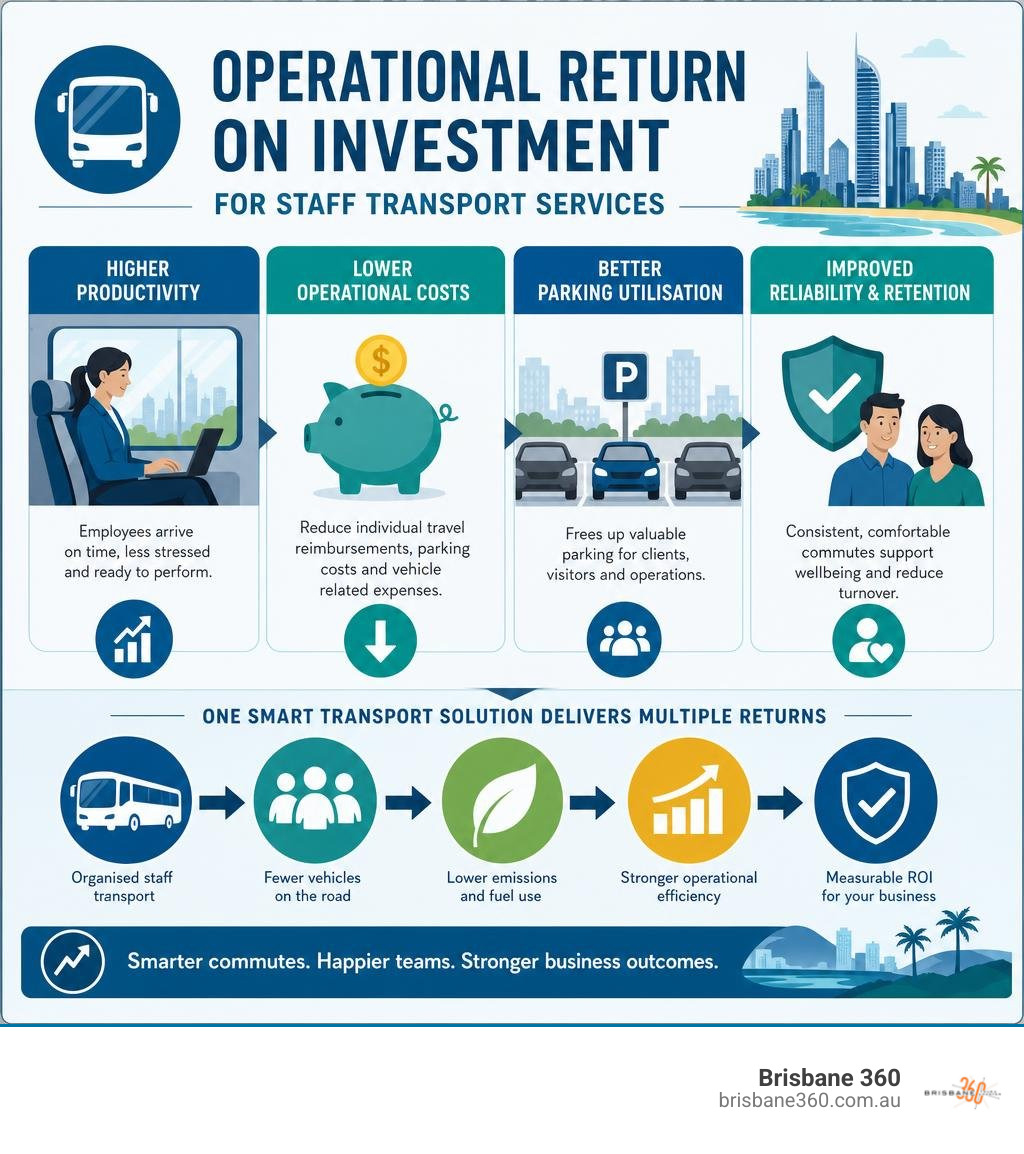
Operational benefits may include:
- More reliable shift starts: Teams arrive together, reducing scattered late arrivals.
- Lower parking pressure: Fewer private vehicles compete for limited workplace spaces.
- Improved staff experience: Employees can avoid daily navigation through high-stress congestion.
- Simpler workforce planning: Managers can align transport times with rosters and site access windows.
- Better event resilience: Planned routes can account for closures, diversions, and seasonal tourism demand.
- Scalable capacity: Vehicle size and route frequency can adapt as staffing needs change.
Private transport services are reliable, effective, and affordable, with custom quotes structured to precise operational needs. Standard inclusions feature a professional driver, fuel, and comprehensive insurance. Variable factors include vehicle size, total distance, schedule duration, passenger numbers, pick-up complexity, and seasonal demand.
How Brisbane 360 Builds a Staff Transport Plan
A useful staff transport plan starts with listening. Brisbane 360 works with employers to understand where staff are travelling from, when they need to arrive, how many passengers are involved, and what operational risks the business needs to reduce.
A typical planning process may include:
- Initial needs review: Confirming worksite locations, shift times, expected passenger numbers, and transport goals.
- Route mapping: Identifying practical pick-up points, travel corridors, and likely congestion areas.
- Vehicle matching: Selecting a mini bus or coach size that suits the workforce without creating unnecessary cost.
- Schedule alignment: Building departure and arrival windows around rosters, handovers, and site access requirements.
- Quote preparation: Providing a custom transport quote based on distance, duration, vehicle type, and service frequency.
- Ongoing adjustment: Reviewing the arrangement when staffing levels, routes, or operating hours change.
This consultative approach gives employers a service that matches real-world conditions rather than a one-size-fits-all charter. It also helps demonstrate practical experience, transparency, and trustworthiness for organisations comparing transport providers.
Brisbane 360 brings practical local expertise to each staff travel plan. As a family-owned bus and coach company operating across Brisbane, the Gold Coast, Logan, Redlands, Ipswich, Moreton Bay, and the Sunshine Coast, the team combines professional passenger transport experience with a strong focus on safety, affordability, and reliable service.
Future-Proofing Productivity with Gold Coast Staff Transport
Implementing a structured transport plan turns daily commute challenges into an operational advantage. At Brisbane 360, we’re setting the standard for passenger transport by using deep local knowledge across the Gold Coast, Brisbane, Logan, Redlands, Ipswich, Moreton Bay, and the Sunshine Coast to deliver tailored route optimisation.
Our modern fleet management and strict driver safety protocols help your team travel in comfort and arrive focused. For employers, that means fewer transport surprises, more predictable roster coverage, and a stronger employee experience.
By replacing traffic stress with reliable group transfers, businesses build workforce resilience, lower parking demand, and maintain schedule integrity year-round. That makes Gold Coast staff transport a practical investment for employers that depend on punctual teams, safe travel, and consistent service delivery.
The strongest transport outcomes come from planning early. If your business is growing, opening a new site, changing rosters, managing event pressure, or struggling with staff parking, a tailored workforce transport plan can help protect productivity before commute problems become daily operational risks.
To learn how tailored group transit can optimise your daily operations, explore our options or reach out directly to our team:
- Learn more about our Corporate Transport Services
- Get in touch via our Contact Brisbane 360 page
- Submit a quick form to Request a Transport Quote