
The Complete Guide to Affordable Study Tour Coach Options
The Complete Guide to Affordable Study Tour Coach Options
How Do Costs and Transport Options Compare for an Affordable Study Tour Coach?
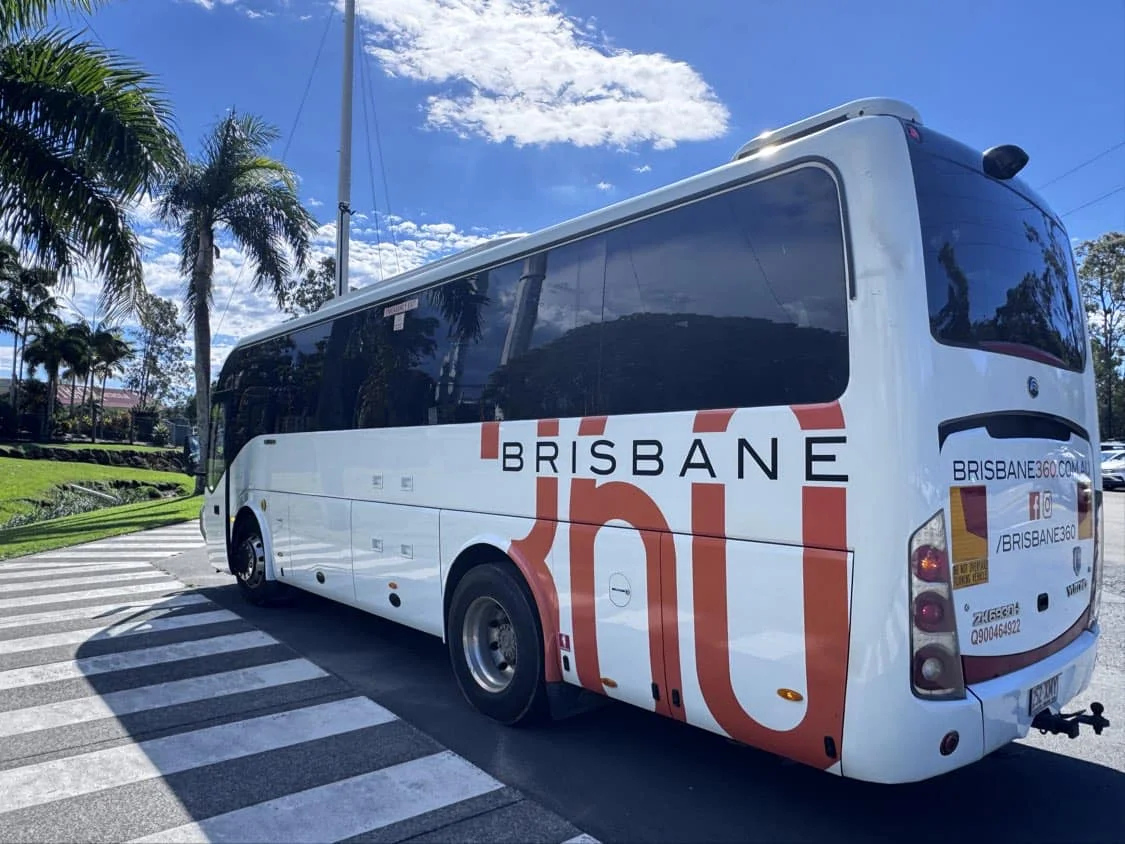
When organising educational trips across Brisbane, the Gold Coast, and the Sunshine Coast, managing travel expenses is essential for teachers and group leaders. Choosing a study tour coach is not only about finding the lowest seat price. Schools also need to compare how each transport option affects timing, supervision, luggage, route control, student management, and the overall reliability of the learning programme.
Our fleet of luxury mini buses is constantly growing and updating to cater to groups of all sizes, featuring 7, 13, 24, 33, 37/39, 57, and 61 seat options. Matching the right vehicle to the student group size helps schools avoid paying for unnecessary capacity while still allowing room for supervising teachers, bags, and equipment.
Brisbane360 offers straightforward pricing based on total passenger numbers, travel distances, itinerary duration, number of destinations, pick-up location, luggage requirements, and seasonal demand. Our comprehensive quotes include the vehicle, professional driver, fuel, and public liability insurance. For additional planning details, explore our Study Tours Transport Solutions Complete Guide.
I’m Cam Storey. Since 2009, I’ve worked in passenger transport across South East Queensland, including hands-on group and event transport planning for schools, universities, tour operators, and private groups. At Brisbane360, my role is to help turn a proposed study tour into a practical transport plan: choosing the right vehicle, checking timing between destinations, allowing for luggage or equipment, and making sure the quote reflects the actual itinerary rather than simply selling a seat count.
What Determines the Cost of Study Tour Transport?
Study tour transport costs are shaped by the real work required to move the group safely and efficiently. A short Brisbane excursion with one pick-up point will usually be priced differently from a full-day itinerary across several campuses, museums, field sites, meal stops, or coastal destinations.
| Cost factor | Why it affects the quote |
|---|---|
| Group size | Determines the vehicle capacity required, including seats for students, teachers, support staff, guides, and any parent helpers. |
| Travel distance | Longer journeys generally require more driving time, fuel, route planning, and driver availability. |
| Trip duration | Full-day and multi-day itineraries require more vehicle and driver time than a simple point-to-point movement. |
| Number of destinations | Multiple stops can increase journey time, access planning, loading time, and waiting time between activities. |
| Pick-up location | The starting point affects routing, travel time, vehicle positioning, and how easily the group can depart on schedule. |
| Luggage and equipment | Overnight bags, sports gear, instruments, classroom materials, or science equipment may influence the vehicle recommended. |
| Date and demand | Peak school excursion periods, major events, and busy travel dates can affect availability and pricing. |
When reviewing a study tour request, one of the first things I look at is whether the itinerary matches the available travel time. Small changes, such as grouping nearby stops together, adjusting a pick-up time, or reducing unnecessary waiting time, can sometimes lower the hire requirement while keeping the learning programme intact.
How Do Private Coaches Compare with Smaller Vehicles and Public Transport?
Private coach transport is usually the strongest option when a school needs one coordinated movement, a predictable schedule, luggage capacity, and a professional driver who stays aligned with the itinerary. For larger groups, the value often comes from keeping students, staff, and equipment in one planned movement instead of splitting the trip across several arrangements.
In my experience, split transport becomes harder for teachers once the group has multiple campuses, field sites, or meal stops in one day. Even if separate vehicles look simple on paper, one late departure or different arrival point can affect supervision, activity timing, and the way students move between locations.
Multiple smaller vehicles may look lower-cost at first for very small groups, but they can create extra coordination work. Schools may need to manage separate departure times, different arrival points, more supervision challenges, and less control if one vehicle is delayed. For groups that need consistent timing across several destinations, those hidden coordination costs can matter as much as the quoted transport price.
Public transport can work for simple, low-risk city movements, but it gives schools less control over timing, seating, luggage, route changes, and group supervision. It may also be less practical for regional field sites, multi-stop itineraries, younger students, equipment-heavy excursions, or trips that need direct movement between learning locations.
| Option | Best suited to | Practical trade-off |
|---|---|---|
| Private coach or mini bus | School groups needing coordinated travel, luggage space, direct routing, and driver-led transport. | Usually requires a tailored quote, but gives the school stronger control over timing, supervision, and itinerary flow. |
| Multiple smaller vehicles | Very small groups with simple routes and limited equipment. | May increase coordination work, split supervision, and make timing less predictable. |
| Public transport | Simple city-based movements where timing is flexible and the group can travel light. | Lower route control, less privacy, limited luggage flexibility, and more supervision complexity. |
What Size Vehicle Does My School Group Need?
The right vehicle depends on the total number of students, teachers, support staff, and any parents or guides travelling with the group. Schools should also allow for bags, sports gear, instruments, presentation materials, science equipment, or overnight luggage where relevant.
For smaller education groups, a mini bus can often be the most practical option because the school is not paying for more seats than it needs. Larger school groups may need a full-size coach so everyone travels together, which can reduce coordination issues compared with splitting students across multiple vehicles. Brisbane360 can help match the group size and itinerary to the most suitable vehicle in the fleet.
When I’m helping a school choose a vehicle, I do not look at the student count in isolation. I also check how many adults are travelling, whether the group has luggage or equipment, how long students will be onboard, and whether extra space will make the day run more comfortably.
What Should Schools Provide When Requesting a Transport Quote?
To receive an accurate quote, schools should provide the proposed travel date, pick-up and drop-off locations, passenger numbers, destination list, preferred arrival times, expected return time, and any luggage or equipment requirements. If the itinerary is still being finalised, sharing a draft plan is still useful because it allows the transport team to flag timing, access, or vehicle-size considerations early.
Schools should also mention whether the trip involves multiple stops, waiting time between activities, regional travel, or after-hours movement. These details help Brisbane360 build a quote that reflects the real transport requirements rather than a rough estimate.
How Can Schools Reduce Study Tour Transport Costs?
Schools can often reduce study tour transport costs by grouping nearby destinations on the same day, minimising unnecessary waiting time, confirming passenger numbers early, and choosing a vehicle size that fits the group without excessive spare capacity. Clear pick-up arrangements also help avoid delays that can add time to the booking.
Booking early gives schools more flexibility with vehicle availability, especially during peak excursion periods. Where possible, sharing the itinerary with Brisbane360 before finalising activity times can also help identify a more efficient route across Brisbane, the Gold Coast, Sunshine Coast, Ipswich, Logan, Moreton Bay, or other South East Queensland destinations.
Can a Private Coach Accommodate Luggage and Equipment?
Yes, private coach hire can accommodate luggage and equipment when this is planned in advance. Schools should advise Brisbane360 about overnight bags, musical instruments, sports gear, classroom materials, or specialist equipment so the right vehicle can be recommended.

For multi-day tours or equipment-heavy excursions, luggage capacity can be just as important as seat count. Confirming these details early helps avoid last-minute vehicle changes and ensures students, staff, and trip materials can travel together comfortably.
How Can Educators Plan, Customise, and Fund Successful Educational Trips?

Executing an enriching educational trip requires balancing curriculum goals with clear transport logistics. For schools, that means choosing transport that can support the learning schedule, keep the group together, and adapt to real-world timing around campuses, museums, field sites, accommodation, meals, and return travel.
How Can Schools Plan an Affordable Study Tour Coach Itinerary to Maximise Budget and Safety?
Clustering destinations geographically reduces driving hours and overall hire costs while maintaining a comfortable pace for students. When visiting destinations around Brisbane, Logan, Moreton Bay, or the Gold Coast, grouping nearby field sites on the same day minimises fuel and hourly charges. Brisbane360 plans private group transport around driver fatigue management, regular vehicle servicing, and high-level safety standards on every journey.
Why Do Schools Choose Brisbane360 for Study Tour Transport?
We’ve coordinated passenger operations for study tours, school groups, university groups, tour operators, and event organisers across South East Queensland, so I understand how quickly a simple excursion can become complicated once timing, access, luggage, supervision, and multiple destinations are involved.
When planning transport for a school group, one of the first things to look at is how the education itinerary will work on the road. A timetable that looks straightforward on paper may need extra time for loading students, moving equipment, navigating campus access, allowing rest breaks, or reaching regional destinations safely. That practical planning is where experience matters.
Brisbane360 provides private bus and coach transport with a professional driver included, so schools are not left trying to manage vehicle logistics themselves. Our team considers group size, route sequencing, vehicle capacity, luggage needs, destination access, timing windows, and the number of stops before recommending a transport option.
That also shapes how quotes are prepared. Rather than simply selling a vehicle size, Brisbane360 builds quotes around the actual itinerary, including passenger numbers, distance, duration, timing, seasonal demand, and any equipment or luggage requirements. This helps schools understand what they are paying for and gives coordinators a clearer basis for comparing options.
How Far in Advance Should Schools Book Study Tour Transport?
Schools should book study tour transport as early as possible once dates, passenger numbers, and destination priorities are reasonably clear. Early booking is especially important for large groups, peak school excursion periods, regional itineraries, and trips requiring a specific vehicle size.
If the programme is not fully finalised, schools can still speak with Brisbane360 during the planning stage. Early discussion helps identify realistic travel times, practical route sequencing, access requirements, and vehicle availability before the school locks in activity bookings.
How Does Brisbane360 Manage Long-Distance School Trips?
Long-distance school trips require careful route planning, realistic timing, suitable vehicle selection, and driver fatigue management. Brisbane360 plans journeys around safe travel windows, rest requirements, destination access, and the amount of time students need at each learning site.
For longer trips across South East Queensland, schools should share the complete itinerary, passenger list, luggage needs, and any time-sensitive activities. This helps the transport team recommend a practical schedule that keeps the group together, avoids unnecessary backtracking, and supports a smooth learning experience from departure to return.
In my experience, long-distance study tours work best when the transport plan is built before the school locks in every activity time. That gives us room to check realistic travel windows, student comfort, rest timing, luggage needs, and whether the route creates avoidable backtracking.
What Should Groups Look for When Selecting a Transport Partner and Integrating Educational Content?
Groups should choose an accredited operator with comprehensive public liability insurance, experienced local drivers, and flexible scheduling. Experienced drivers who know local traffic patterns in SEQ can avoid delays and keep itineraries on schedule. Brisbane360 works with educators to align pick-up and drop-off times with field activities, laboratory sessions, and university campus lectures.
What Financial Options Help Students Afford Study Tours?
Schools can draw on several funding channels to support student participation and ensure every student has equal access to educational travel:
- Academic and Government Grants: Apply for regional educational subsidies supporting STEM, geography, or language programmes.
- Community Fundraising Events: Host local events supported by school committees, P&C associations, and local business sponsors.
- Digital Campaigns: Establish online fundraising portals for family and community contributions.
- Flexible Payment Plans: Offer manageable term instalments for families to spread the cost over several months.
How Should Schools Book Reliable Study Tour Transport with Brisbane360?

Choosing the right study tour coach comes down to matching the vehicle, driver, timing, luggage space, route plan, and budget to the educational itinerary. Brisbane360 supports primary schools, high schools, universities, and study tour organisers across South East Queensland with private bus and coach transport planned around real group movement, not just seat numbers.
With hands-on experience coordinating school, university, and group transport, Brisbane360 can help educators choose a practical vehicle size, plan realistic travel windows, and keep students moving safely between campuses, field sites, accommodation, meals, and learning destinations.
To plan your next educational trip, explore the most relevant Brisbane360 services: